

Is My Neighbor Totoro Safe? A Parent's Guide to Ghibli's Gentle Classic
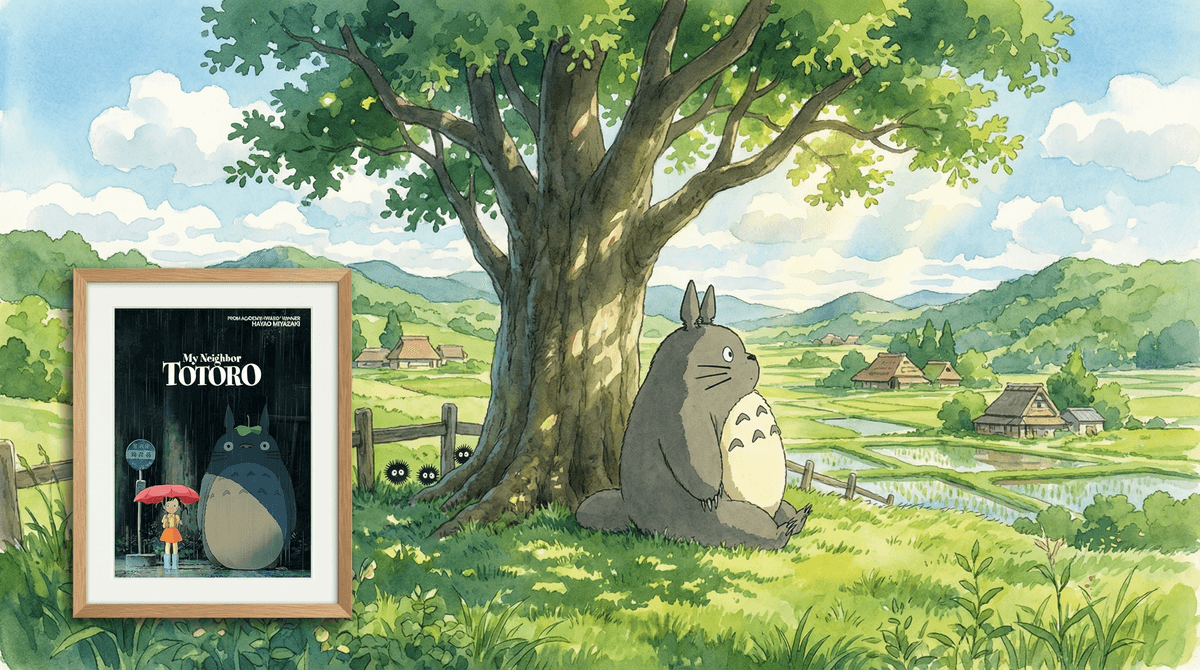
My Neighbor Totoro is one of the safest, most wholesome family films you'll find. Ages 3+ can handle it, though some sensitive kids might need reassurance during a few emotional moments. There's no violence, no scary villains, and no nightmare fuel. The biggest "concern" is that it's slow-paced and contemplative, which means some kids raised on rapid-fire YouTube content might fidget. But that's actually a feature, not a bug.
The real question isn't whether it's safe — it's whether your kid is ready for a film that asks them to slow down and feel something.
If you're used to modern animated movies with their constant jokes, pop culture references, and hyperactive pacing, Totoro will feel like stepping into a different world. Released in 1988 by Hayao Miyazaki and Studio Ghibli, this film operates on a completely different wavelength.
There's no traditional plot structure. No villain to defeat. No hero's journey with clear stakes and rising action. Instead, it's a gentle story about two sisters — 10-year-old Satsuki and 4-year-old Mei — who move to the countryside with their father while their mother recovers from an illness in a nearby hospital.
They discover magical forest spirits, including the iconic Totoro (a giant, furry creature who's basically a woodland deity), and the film follows their summer of adjustment, imagination, and occasional worry about their mom.
That's it. And it's beautiful.
The Hospital Scenes
The concern: Their mother is sick and in the hospital. Some scenes show the girls visiting her, and there's genuine uncertainty about her condition.
The reality: This is the most emotionally heavy element of the film, but it's handled with such gentleness that it rarely traumatizes kids. The illness is never specified (it's implied to be tuberculosis, which was serious in 1950s Japan). The mother is shown as warm and loving during visits, not scary or frail in a frightening way.
What might happen: Sensitive kids might ask questions about sickness, hospitals, or death. If your family has dealt with serious illness recently, this could hit harder. But for most kids, it provides a safe way to process the idea that parents can be sick but also get better.
The "Scary" Forest Spirits
The concern: Totoro is a massive creature with big teeth. There are also soot sprites (little black fuzzballs with eyes) and a giant Cat Bus with multiple legs and glowing eyes.
The reality: These creatures are presented as magical and benign from the start. Totoro is essentially a gentle giant who sleeps, gives the girls rides, and helps their garden grow. The Cat Bus is weird-looking but friendly. The soot sprites are more cute than creepy.
What might happen: Very young kids (2-3) might be startled by Totoro's size or the Cat Bus's appearance during their first viewing. But the film's tone is so reassuring that most kids quickly understand these aren't threats.
The Lost Child Sequence
The concern: Near the end, young Mei goes missing while trying to walk to the hospital alone. There's a genuine search, and for a few minutes, the film lets you sit with the fear that something terrible might have happened.
The reality: This is the most tense sequence in the film, and it's meant to be. Satsuki's panic feels real, and there's a moment where she sees a sandal in a pond and fears the worst. But Totoro and the Cat Bus help find Mei, and everything resolves safely.
What might happen: Kids who've experienced being lost or separated from parents might find this sequence stressful. But it's also a beautiful depiction of sibling love and community support during a crisis.
Ages 3-5: Totally fine for most kids in this range. The slow pace might lose their attention, but there's nothing that will scare them if they're used to any fantasy content. The soot sprites and Totoro are charming rather than frightening. Just be ready to pause and answer questions about why the mom is in the hospital.
Ages 6-8: The sweet spot. Kids this age can follow the emotional arc, appreciate the magic, and handle the hospital subplot without too much anxiety. They'll probably want to rewatch it multiple times.
Ages 9+: Still wonderful, though some kids in this range might find it "babyish" if they're in their "I'm too cool for wholesome content" phase. But many older kids and teens rediscover Ghibli films and fall in love with their emotional depth.
For sensitive kids: If your child is particularly anxious about illness, separation, or getting lost, you might want to preview the film yourself first. But honestly, Totoro handles these themes with such care that it often helps kids process these fears rather than amplifying them.
Unlike most modern animated films that reward constant stimulation, Totoro teaches kids to notice small things. The way light filters through leaves. The sound of wind in the grass. The feeling of waiting for something good to happen.
It's a masterclass in patience, observation, and finding magic in everyday life. The girls don't have smartphones or tablets (obviously — it's set in the 1950s). They explore, imagine, and create their own fun.
This is the opposite of brain rot.
If your kid can sit through Totoro and engage with it, that's actually a great sign about their ability to handle slower, more contemplative content. If they can't, that's useful information too — maybe they need more practice with media that doesn't constantly ping their dopamine receptors.
The original Japanese version with subtitles is beautiful, but most young kids can't read fast enough to keep up. The English dub (featuring Dakota and Elle Fanning as the sisters) is genuinely excellent — one of the best dubs of any foreign film. The voice acting is natural, the translation is faithful, and kids can focus on the visuals.
Recommendation: Go with the dub for kids under 8. Older kids who are strong readers can try the subtitled version, which preserves the original voice performances.
If your kid loves Totoro, you're in luck — Studio Ghibli has an incredible catalog. But not all of them are as gentle.
Similar safety level:
- Kiki's Delivery Service (Ages 5+)
- Ponyo (Ages 4+)
- The Cat Returns (Ages 6+)
A bit more intense:
- Spirited Away (Ages 8+, some genuinely creepy imagery)
- Howl's Moving Castle (Ages 8+, war themes)
- Princess Mononoke (Ages 12+, violence and mature themes)
For a full breakdown of which Ghibli films work for different ages, check out this guide to Studio Ghibli movies for kids.
My Neighbor Totoro is about as safe as family films get. The "risks" are emotional, not frightening — it asks kids to sit with uncertainty about a parent's illness and to experience the fear of a lost sibling. But it handles these themes with such warmth and wisdom that most kids come away feeling reassured rather than scared.
The bigger question is whether your family is ready for a film that moves at a human pace, that values quiet moments, and that doesn't feel the need to entertain you every single second. If you are, Totoro is a gift.
Watch it together. Talk about what the kids notice. Ask them what they think Totoro is. Let them wonder whether the magic is real or imagined. This is the kind of film that rewards conversation and reflection.
And if your kid asks for a Totoro plush afterward, just accept your fate. Those things are everywhere for a reason.
- Watch it: My Neighbor Totoro is available on Max and for rental on most streaming platforms
- Explore more Ghibli: Check out this guide to age-appropriate Studio Ghibli films
- Want more slow, beautiful content? Look into cozy games for kids that have a similar gentle vibe