

Screen Time Before Bed: How to Help Kids Sleep Better
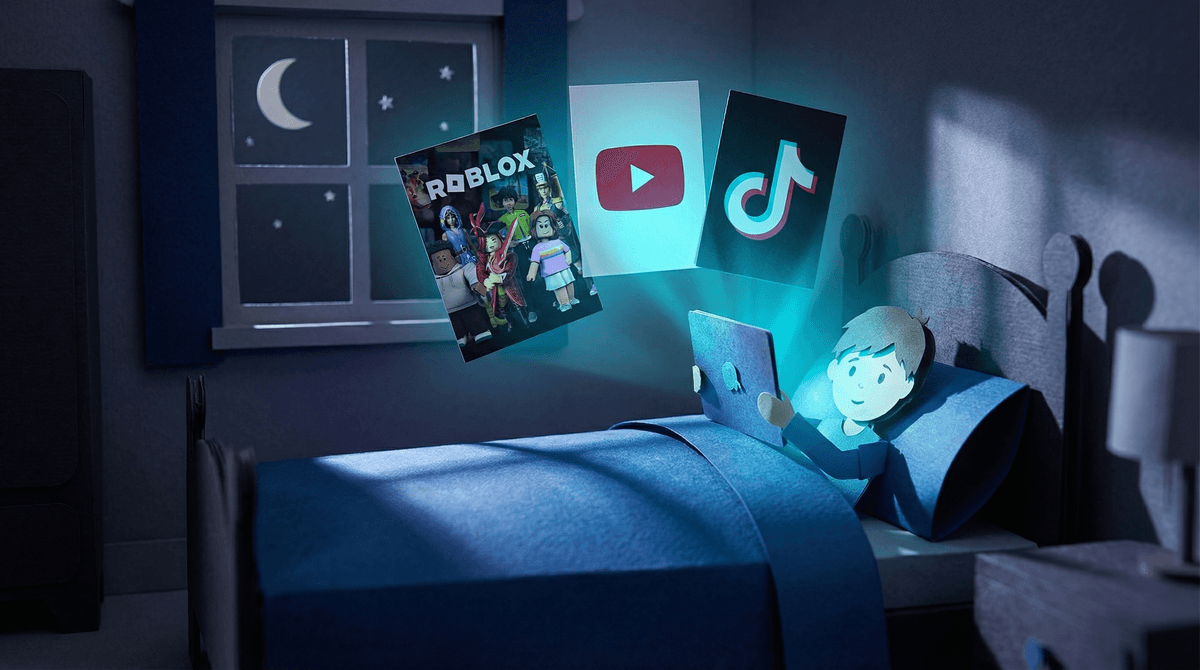
Look, we all know the drill. You finally get the kids into bed, teeth brushed, stories read, and then... the glow of a screen under the covers. Or maybe you're more lenient and screens are part of the wind-down routine. Either way, if your kid is staring at a device right before bed and then taking forever to fall asleep (or waking up groggy), you're not imagining things. The science is pretty clear here.
Here's the thing: blue light from screens suppresses melatonin production. Melatonin is the hormone that tells your brain "hey, it's time to sleep now." When kids (or adults, let's be real) stare at bright screens in the evening, their brains get confused and think it's still daytime. The result? They're wired when they should be winding down.
But it's not just the blue light. The content matters too. Watching something exciting, playing a competitive game, or scrolling through social media creates mental stimulation that's the opposite of what we need for sleep. Your kid's brain is firing on all cylinders processing that last Roblox session or whatever YouTube drama just unfolded, and then we expect them to just... turn off?
Research shows that kids who use screens within an hour of bedtime get less sleep, have worse sleep quality, and are more tired during the day. Elementary kids need 9-12 hours of sleep. Middle schoolers need 8-10 hours. High schoolers need 8-10 hours. Most aren't getting it, and screens before bed are a big part of why.
Kids aren't trying to be difficult (well, not always). Here's what they're experiencing:
Everyone else is doing it. And honestly, a lot of kids ARE on their devices late. That doesn't make it a good idea, but it does make your boundaries feel extra unfair.
FOMO is real. Group chats are popping off at night. Discord servers are active. If they're not online, they feel like they're missing out on social connection.
Screens help them decompress. After a long day of school, homework, and activities, scrolling or gaming genuinely feels relaxing to them. The irony is that while it might feel calming, it's actually preventing the deeper rest they need.
They're not tired yet. Especially with teens, their circadian rhythms naturally shift later. They're legitimately not sleepy at 9pm. But adding screens into the mix makes this biological challenge even worse.
Ages 5-8: This is the easiest age to establish firm boundaries because you still have more control. Screens should end at least 1 hour before bed, ideally 90 minutes. At this age, you can create a physical charging station outside their room and make it non-negotiable. Bedtime routines should include books, quiet play, or conversation—not tablets.
Ages 9-12: They're starting to push for more independence, but their brains are still developing rapidly and they need that sleep. Consider a 1-hour screen-free buffer before bed. This is a great age to explain the science—they're old enough to understand how blue light works. Let them have some agency: "You can watch one episode of Bluey or play Minecraft until 8pm, then we're switching to books or board games."
Ages 13-15: Now it gets real. They have phones, they have social lives, they have homework that's sometimes actually on devices. A full hour without screens before bed is ideal, but even 30 minutes helps. Consider "night mode" settings on all devices (more on that below) and have honest conversations about how they feel the next day after late-night screen sessions.
Ages 16-18: You're mostly in influence mode now, not control mode. Share the research, model good behavior yourself (yeah, that means you too), and help them notice the connection between their screen habits and how they feel. Some teens genuinely need devices for homework late at night—that's real. But scrolling TikTok until midnight is a choice, and helping them see that distinction matters.
Create a charging station. All devices—phones, tablets, gaming devices—go on a charger in a common area at a set time. Not in bedrooms. Yes, even if they "need it for an alarm." Get them an actual alarm clock. They're like $10.
Use Night Shift/Night Mode. Every device has settings to reduce blue light in the evening. iPhones have Night Shift, Android has Night Light, computers have similar features. Set them to activate automatically at sunset. It's not a perfect solution, but it helps.
Screen time curfews, not bedtime. Instead of battling about when they go to sleep, set a time when screens turn off. What they do after that is more flexible—read, listen to music, journal, stare at the ceiling and contemplate existence. Just not screens.
Replace, don't just remove. If you're taking away the phone before bed, what are you offering instead? A good book? A conversation? Some kids genuinely don't know what to do without a screen. Help them rediscover that books exist, that podcasts like Wow in the World can play with the screen off, that drawing or journaling are options.
The whole family does it. This is the hard part. If you're scrolling Instagram in bed while telling your kid to put their phone away, that's not going to land well. Consider a family charging station. Model what you're asking of them.
Adjust for homework reality. Sometimes kids legitimately need devices for homework late at night. Acknowledge that. Help them plan better when possible, but also recognize that a teen writing an essay at 9pm on a laptop is different from scrolling social media. Use screen time tracking to see what's actually happening.
"But I need my phone for my alarm!" → Get an alarm clock.
"Everyone else has their phone in their room!" → Maybe. But you're not everyone else's parent. (Also, learn more about what percentage of kids actually have this freedom — it might not be as many as they think.)
"I'm not even tired yet!" → That's partially because of the screens. Let's try this for a week and see if that changes.
"This is so unfair!" → I know it feels that way. But my job is to help you get the sleep your brain needs, even when it's annoying.
"I need it for homework!" → Let's look at your schedule and figure out how to get homework done earlier. And if you genuinely need a device at 9pm for school, let's talk about what apps need to be accessible and which ones can wait.
Perfect adherence isn't the goal here. Life happens. Sometimes there's a movie night that runs late. Sometimes they're texting a friend who's going through something. Sometimes you're just too tired to enforce the rule. That's real parenting.
But if screen time before bed is the default in your house and sleep is suffering, something needs to change. Start with one small shift—maybe devices charge outside bedrooms, or screens end 30 minutes before bed. See what happens. Adjust from there.
The research is clear: kids who get better sleep do better in school, have better emotional regulation, and are healthier overall. Screens before bed directly interfere with that sleep. It's not about being anti-technology. It's about being pro-sleep.
And honestly? Once you see your kid actually falling asleep faster and waking up less grumpy, the bedtime battles start to feel worth it.
- Set up a family charging station this week
- Enable Night Shift/Night Mode on all devices
- Have a conversation (not a lecture) with your kids about how they feel after late-night screen time
- Experiment with a 30-60 minute screen-free buffer before bed for one week and see what changes
- Check out alternatives to screen time before bed that actually help with wind-down
You've got this. And hey, maybe you'll sleep better too.