

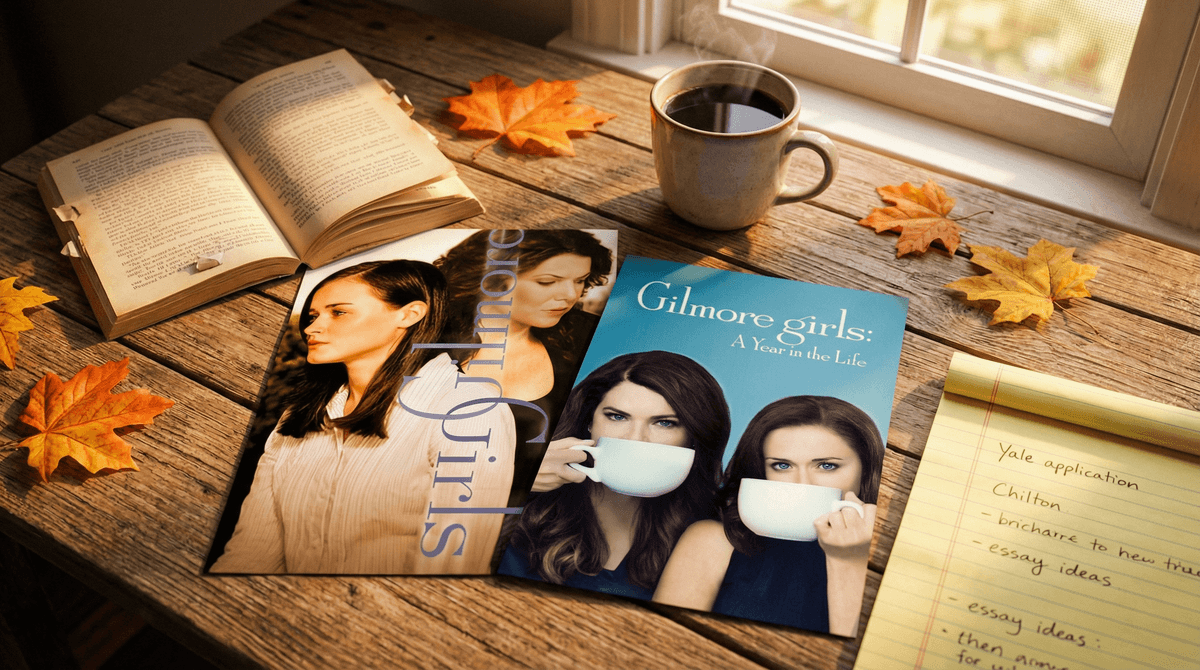
Gilmore Girls ran from 2000-2007 (plus a 2016 Netflix revival), and it's having a serious moment with Gen Z and younger millennials discovering it on streaming. The show follows Lorelai Gilmore and her daughter Rory through their incredibly close mother-daughter relationship in the quirky town of Stars Hollow, Connecticut.
Here's the thing about this show that makes it relevant for today's parents: Rory Gilmore starts as a 16-year-old academic overachiever with big dreams, and we watch her navigate high school, college, relationships, and the pressure to be absolutely perfect. And honestly? Her journey is a masterclass in what happens when a "gifted kid" meets real-world challenges — for better and worse.
If your teen is watching Gilmore Girls (or you're thinking about watching it together), you're actually stumbling into some really valuable territory. The show depicts teen life in a way that feels both idealized and surprisingly honest about certain pressures.
The academic pressure is real. Rory's entire identity is wrapped up in being the smart girl who's going to Harvard (then Yale). She has a literal meltdown when she gets one critical note from a mentor. Sound familiar? This is the same pressure our kids face with college admissions, AP classes, and the constant message that one mistake could derail everything.
The relationship dynamics are complex. Rory dates three main guys throughout the series (Dean, Jess, and Logan), and honestly, the show does something interesting here — it doesn't always frame these relationships as healthy or unhealthy. Sometimes Rory makes terrible choices. Sometimes she's the one who hurts people. Sometimes she stays in situations way too long. This ambiguity is actually perfect for conversation starters about what healthy relationships look like.
The "good girl" trap is everywhere. Rory is constantly praised for being responsible, mature, and perfect. And when she inevitably isn't perfect? She completely falls apart. This is such an important thing to talk about with teens who are dealing with the pressure to be flawless on social media, in school, and in their activities.
Let's be real about what you're getting into:
The show is pretty tame content-wise. It's rated TV-PG, and while there are relationships and some sexual content (mostly implied), it's not graphic. There's minimal violence, some drinking (mostly in later seasons), and the language is clean. If you're looking at age-appropriateness, most 13+ kids can handle the content, though younger teens might miss some of the more nuanced emotional storylines.
But the messages are complicated. And that's actually a good thing. Rory isn't a perfect role model — she makes selfish decisions, she cheats on boyfriends, she has an affair with a married ex. The show doesn't always call this out explicitly, which frustrated a lot of viewers (especially in the revival). But this creates amazing opportunities to pause and discuss: "Do you think what Rory did here was okay? How would you handle this differently?"
The privilege is off the charts. Lorelai and Rory are supposed to be scrappy underdogs, but Rory goes to a $30K/year private high school (paid for by her wealthy grandparents), and both mother and daughter have safety nets most families can't imagine. This is worth acknowledging with your teen — talk about how privilege shapes opportunities and how Rory's "self-made" story isn't quite what it seems.
The mother-daughter relationship is goals... and maybe too much? Lorelai and Rory are best friends who tell each other everything. It's heartwarming and also occasionally crosses into territory where Rory seems more like Lorelai's peer than her daughter. Some parents love this dynamic as inspiration; others see it as a cautionary tale about boundaries. Where you land probably depends on your parenting philosophy, but it's worth thinking about.
Ages 13-15: The show works well for this age group, but they might need more context about why certain behaviors (like Rory's entitlement in later seasons) are problematic. Watch together if you can, or at least check in regularly about what's happening. The academic pressure storylines will hit especially hard for kids in this age range who are starting to think about high school and college.
Ages 16-18: Older teens will get more out of the relationship dynamics and can probably watch independently. But they're also more likely to either idolize or harshly judge Rory, so it's worth having conversations about how people can be complicated — good in some ways, flawed in others.
College age and beyond: Honestly, this is when the show hits different. The later seasons showing Rory in college and beyond are almost more valuable for young adults who are navigating similar challenges around identity, career pressure, and relationships.
Here's where Gilmore Girls becomes genuinely useful:
Talk about failure and resilience. When Rory faces criticism or setbacks, she often spirals. Ask your teen: "How do you handle it when something doesn't go the way you planned? What would you do differently than Rory?"
Discuss relationship red flags. Dean's possessiveness, Jess's emotional unavailability, Logan's privilege and entitlement — these are all worth naming. "What do you notice about how Rory's boyfriends treat her? What would you want in a relationship?"
Explore identity beyond achievement. Rory's whole sense of self is tied to being "the smart one." When that's threatened, she doesn't know who she is. This is so relevant for high-achieving teens today. "Who are you when you're not being productive or successful?"
Question the "perfect daughter" narrative. The show rewards Rory for being agreeable and pleasant, even when it means not advocating for herself. Talk about the difference between being kind and being a people-pleaser.
Gilmore Girls isn't going to corrupt your teen, but it's also not a simple "good role model" show. It's a character study of a girl who has everything going for her and still makes mistakes, faces challenges, and sometimes acts entitled or selfish.
And honestly? That's exactly why it's worth watching with your teen or at least talking about after they watch. The show gives you a shared language to discuss pressure, perfectionism, relationships, privilege, and identity — all wrapped up in a cozy, fast-talking package.
The key is to watch with a critical eye and use it as a jumping-off point for real conversations. Rory Gilmore doesn't have to be perfect to be valuable. In fact, her imperfections might be the most important thing about her.
- Watch a few episodes together and see what your teen notices about Rory's choices
- Check out other shows that tackle teen life with nuance
- Talk to your teen about academic pressure and identity
- If you're looking for more shows to watch together, explore our parent-teen co-viewing recommendations