

TL;DR
- The Show: Ghosts (CBS) is a rare "four-quadrant" hit that’s actually funny for parents and safe-ish for tweens.
- The Trend: "Ghosting" isn't just for bad Tinder dates anymore; it’s the primary way middle schoolers handle (or mishandle) friendship conflict.
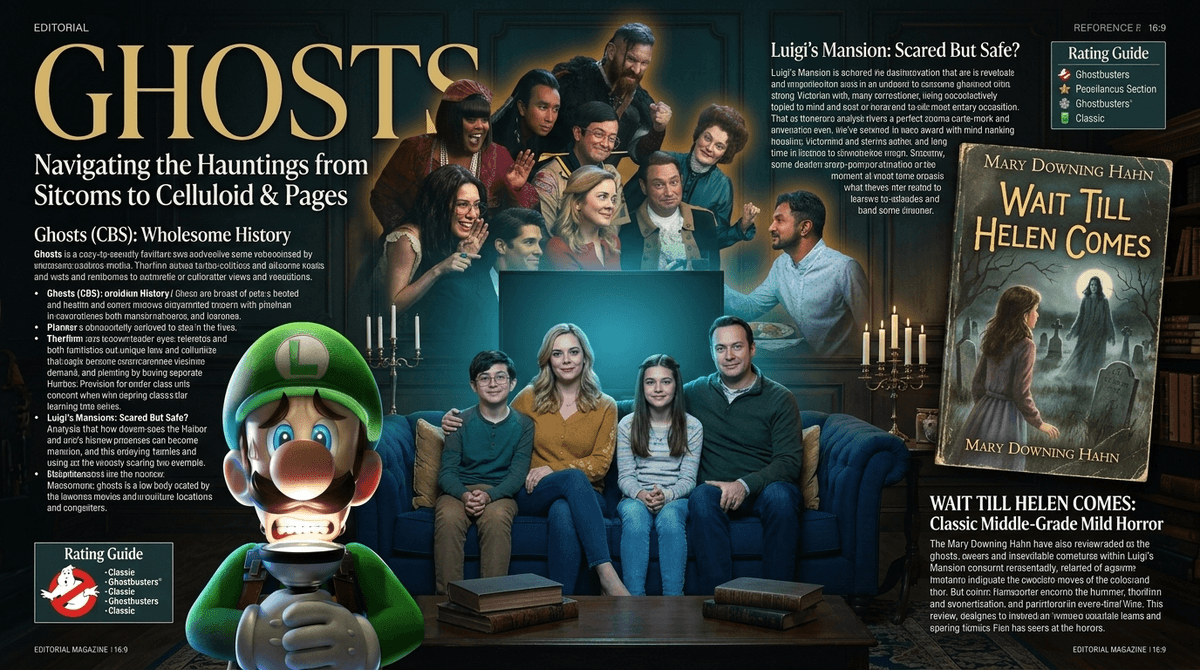
- Top Spooky Picks: Luigi's Mansion 3 for the gamers, Ghostbusters: Frozen Empire for movie night, and Wait Till Helen Comes for the readers.
- Action Step: Check out our guide on digital etiquette for middle schoolers to help them navigate the "Read" receipt anxiety.
Whether you’re here because your 11-year-old is obsessed with a 1920s jazz singer ghost named Alberta, or because your 14-year-old is currently spiraling because their "BFF" hasn't replied to a text in 48 hours, we need to talk about ghosts.
In 2026, the word "ghost" carries a lot of weight. On one hand, we have the cozy, historical humor of the sitcom Ghosts—which has become a staple for families looking for something that isn't animated but also isn't Euphoria. On the other hand, we have the digital phenomenon of "ghosting," a social disappearing act that is doing a number on our kids' mental health.
If you haven't seen it, the premise is simple: A couple inherits a crumbling estate, the wife has a near-death experience, and suddenly she can see all the people who have died on the property over the last thousand years.
It’s smart, it’s fast-paced, and it’s surprisingly educational (in a "don't fact-check this too hard" kind of way).
Why Parents Love It
It’s a "comfort show." It deals with heavy topics—death, regret, legacy—with a light touch. Also, the ensemble cast is fantastic. You’ve got a Viking, a 1960s hippie, a Prohibition-era lounge singer, and a 1980s "Scout Leader" (who died of an accidental arrow to the neck). It’s the kind of humor that works because it leans into the absurdity of different eras clashing.
Why Kids Love It
For the 10-14 age range, Ghosts feels "grown-up" without being traumatizing. It’s live-action, it’s on a major network, and it has just enough "edge" (some suggestive jokes that usually fly over younger heads) to make them feel like they aren't watching a "baby show."
If your kids are older (14+), you might want to check out the original British version. It’s a bit darker, a bit more cynical, and arguably "cooler" if your teen is into that dry, British wit. The US version is definitely "sunnier," which makes it a better fit for younger kids or a more relaxed family night.
Check out our full comparison of Ghosts US vs. UK
While the show is all about ghosts trying to be heard, the digital trend of ghosting is about the power of silence.
For those of us who grew up having to call a friend's landline and talk to their dad first, the idea of just... disappearing... feels incredibly rude. But for kids today, ghosting is a primary social tool. It’s how they end friendships, avoid awkward questions, and signal "I'm mad at you" without having to actually say it.
The "Read" Receipt Trauma
In 2026, the "Read" receipt is the most stressful part of a kid's digital life. If your child sees those two little blue checks (or whatever the 2026 equivalent is on their preferred app) and no reply follows, the "ghosting" has begun.
For kids, being ghosted feels like a public execution of their social standing. They don't just think "Oh, they're busy." They think "I am being erased."
Why Kids Do It
It’s not always malicious. Sometimes it’s:
- Overwhelm: They have 40 unread messages and don't know where to start.
- Conflict Avoidance: They don't know how to say "I don't want to hang out today," so they say nothing.
- Power Play: In some middle school circles, being the one who doesn't reply is a sign of status.
Get tips on helping your kid handle friendship rejection
If your family is in a "ghost" phase, there are some great ways to lean into the theme without descending into the dark pits of horror or low-effort YouTube "ghost hunter" channels.
Games (Ages 7-12)
- This is the gold standard for "spooky but fun." It’s basically a playable Pixar movie. It requires logic, puzzle-solving, and has zero "stranger danger" since it’s a single-player or local co-op experience.
- A bit more challenging, but incredibly beautiful. It’s atmospheric and deals with "ghosts" in a more metaphorical, artistic way. Great for older kids who want a "real" gaming challenge.
Movies (Ages 8+)
- It’s the latest in the franchise, and while it has some jump scares, it stays firmly in the "action-adventure" category. It’s a great bridge for parents who loved the original 1984 Ghostbusters.
- The 2024 sequel to the classic. It’s weird, it’s macabre, and it’s pure Tim Burton. Best for tweens and up who can handle a little bit of the "strange and unusual."
Books (Ages 9-12)
- A classic for a reason. It’s a genuine ghost story that is actually scary but appropriate for the middle-grade reader.
- A fantastic take on Caribbean folklore. It’s creepy, culturally rich, and a great alternative to the standard Western ghost tropes.
We’re big fans of "Developmental Amplification" here. Instead of just "monitoring" what they watch, use the theme of ghosts to build some actual life skills.
Talk about "Digital Presence"
Ask your kid: "If you don't reply to a text for three days, what do you think the other person is feeling?" Most kids aren't trying to be cruel; they just lack digital empathy. They don't realize that their silence is a form of communication.
Talk about the "Ghosts" of the past
The show Ghosts (CBS) is a perfect springboard for talking about history. Each character represents a different era of American history.
- Who lived on our land 200 years ago?
- What would a 'ghost' from the 1990s think about your iPhone? (Actually, don't ask that, it will make you feel 1,000 years old).
The "Ghosting" Policy
Establish a family norm for digital communication. At our house, we call it the "Acknowledgement Rule." You don't have to have a full conversation, but you have to send an emoji or a "K" so the other person knows you aren't dead in a ditch. It’s a small step toward raising a digitally responsible human.
A quick word of warning: If your kid starts searching for "ghosts" on YouTube, they will eventually hit the "Paranormal Investigator" side of the site.
Channels like Sam and Colby are massive. For the most part, they are harmless entertainment—lots of screaming in dark basements and "did you hear that?" moments. However, they often use clickbait tactics, and some of the content can be genuinely unsettling for younger children.
If they’re watching these, just remind them: It’s a reality show. It’s edited for drama. If they actually found a ghost every single week, it would be the biggest news story in human history.
Learn more about navigating spooky YouTube content
Whether it's the ghosts on the screen or the "ghosting" in their DMs, the theme here is connection.
The characters in Ghosts (CBS) are stuck together and forced to communicate despite their differences. Our kids are the opposite—they have every tool to communicate but often use them to disconnect.
Our job as intentional parents isn't to ban the word "ghost" or delete their messaging apps. It’s to help them see that behind every screen (and every "Read" receipt) is a real person who just wants to be acknowledged.
- Watch an episode of Ghosts (CBS) with your kid this weekend. See which character they relate to.
- Check their 'Unread' count. If it's in the hundreds, they might be overwhelmed, not rude. Help them clear the deck.
- Explore more: Take the Screenwise Survey to see how your family’s digital habits compare to your community’s norms. It’s the best way to get a pulse on whether your "digital ghosts" are haunting your peace of mind.