

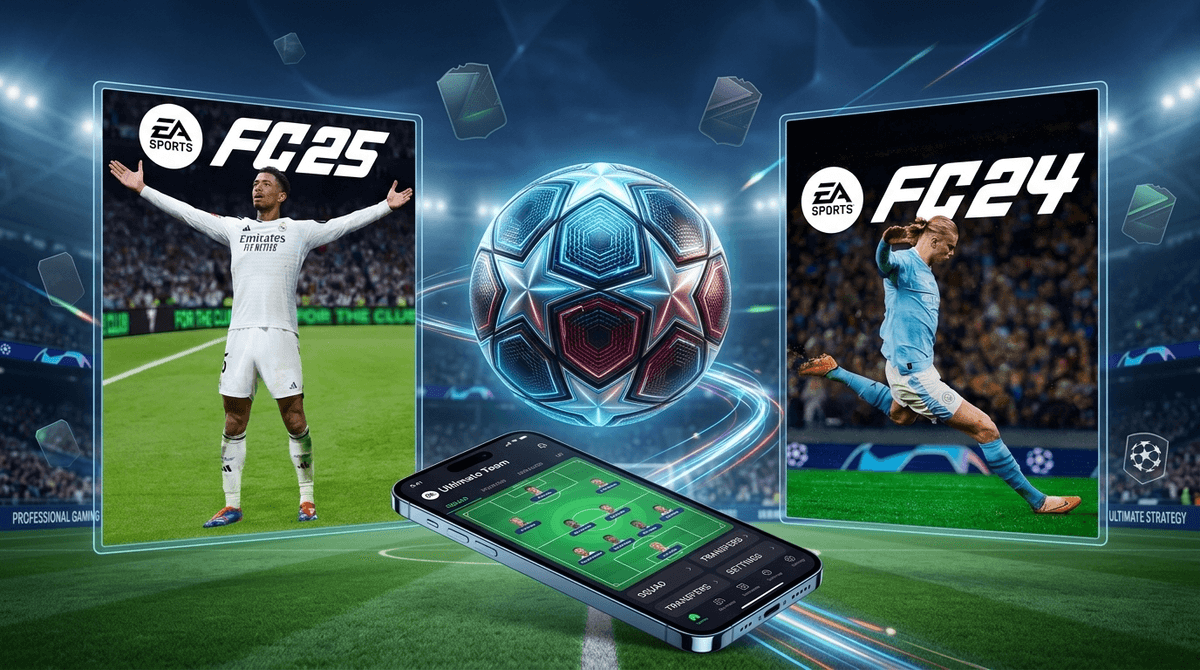
TL;DR: EA Sports FC 25 (formerly known as FIFA) is the gold standard for soccer simulation. It’s visually stunning, highly social, and generally safe in terms of "content" (no gore, no guns). However, the "Ultimate Team" mode is a loot-box-driven ecosystem that can feel a lot like gambling and can drain a bank account faster than a kid can say "Ohio."
Quick Links:
If you’ve been looking for "FIFA 25" on the shelves and coming up empty, don’t worry—you haven't lost your mind. After a thirty-year partnership, EA Sports and FIFA (the international governing body of soccer) had a very expensive breakup. EA decided they didn't want to pay the massive licensing fee for the "FIFA" name anymore, so they rebranded.
The game is now called EA Sports FC.
Aside from the name on the box and a slightly slicker menu interface, it is effectively the same game your kids have been playing for years. It still has the real players, the real stadiums, and the real teams (mostly), because EA kept the licenses for the actual leagues like the Premier League and MLS.
For a lot of kids, especially in the 10-16 age bracket, EA Sports FC 25 isn't just a game; it’s a social currency.
If your kid follows soccer, this is how they "live" the sport. They aren't just watching Erling Haaland on Saturday morning; they are playing as him on Saturday afternoon. It’s also a massive community hub. If you walk into a middle school locker room, the kids aren't just talking about the scores; they’re talking about which "cards" they pulled in their packs last night.
In a world of "brain rot" content and mindless scrolling, there is actually some skill involved here. It requires hand-eye coordination, tactical thinking, and—if they play the market—a surprising amount of basic economics.
This is where things get tricky. While you can play a standard "Kick Off" match or a "Career Mode" (where you just manage a team), the vast majority of kids spend their time in Ultimate Team (FUT).
In Ultimate Team, players build their "dream squad" by collecting player cards. You get these cards by opening "packs."
Here is the No-BS take: Ultimate Team packs are loot boxes. They are digital gambling. You spend "FC Points" (purchased with real money) to open a pack that might contain a superstar like Messi or Mbappé, but usually contains a bunch of benchwarmers from the second division of the Belgian league.
The lights flash, the music builds, the "walkout" animation creates a dopamine spike—it’s designed using the same psychological triggers as a slot machine.
Learn more about how FC Points are in fact real money
Is it teaching entrepreneurship?
Some parents argue that the "Transfer Market"—where kids can buy and sell player cards for "coins" (earned by playing)—teaches them about supply and demand. And honestly? There’s some truth to that. I’ve seen 12-year-olds explain market inflation and "flipping" assets better than some college students.
But there is a fine line between "learning the market" and "obsessively checking an app to see if a digital card's price dropped."
Ages 7-10: At this age, keep them away from the online competitive modes. The "toxicity" in the community isn't about gore; it’s about people being "sweaty" (gaming slang for trying way too hard) and sending mean messages after a win. Stick to local multiplayer—playing on the couch with a sibling or friend is the "purest" version of this game.
Ages 11-14: This is the peak age for Ultimate Team obsession. This is when you need to have the "gambling" talk. Set a hard limit on spending. If they want to buy packs, make them use their own allowance or chore money so they feel the "sting" of a bad pack opening.
Ages 15+: Most teens at this age are savvy enough to know the odds are against them, but the social pressure to have a "God Squad" (a team of all 90+ rated players) is real. At this stage, it’s more about managing time than money.
Check out our guide on setting gaming time limits that actually work
- Online Interactions: Like any online game, there is a chat component. Most kids use a headset to talk to friends (or strangers). You can—and probably should—turn off voice chat with non-friends in the console settings (PlayStation/Xbox/Switch).
- The Companion App: There is an EA Sports FC Companion App for phones. It allows kids to manage their team and buy/sell players on the go. This is a major source of "stealth" screen time. They might not be "playing the game," but they are staring at the market during dinner.
- Rage Quitting: This game is notoriously frustrating. The "scripting" (a conspiracy theory among players that the game decides who wins) leads to a lot of "gamer rage." If you hear a controller hitting the floor, it’s time for a break.
One thing EA doesn't advertise to parents is that nothing carries over.
If your kid spends $100 on packs in EA Sports FC 24, all those players and points stay in that game. When EA Sports FC 25 comes out in September, they start back at zero. It is a total reset.
Reminding your kid of this is a great way to talk about the "value" of digital goods. "Is it worth $50 to have this player for only six months?"
If you’re looking for a sports fix without the predatory monetization, there are other options:
- Rocket League: It’s soccer with cars. It’s free-to-play, incredibly high-skill, and while there are cosmetics to buy, they don't give you an advantage in the game.
- Football Manager: If your kid is the "math and stats" type, this is the deep dive. No actual "playing" the matches—you are the coach. It’s like a spreadsheet came to life in the best way possible.
- Super Sidekicks (Retro): Sometimes a simple arcade soccer game is all they need to realize they don't need a $2,000 digital team to have fun.
EA Sports FC 25 is a fantastic sports simulator wrapped in a somewhat predatory business model.
If you can manage the "Ultimate Team" aspect—either by disabling in-game purchases entirely or setting a strict "no-real-money" rule—it is a relatively wholesome, high-skill hobby. It encourages an interest in global sports and can be a great way for kids to bond.
Just keep an eye on the "pack opening" videos on YouTube. Those creators make it look like everyone is winning big, which is the "Ohio" version of reality—it’s just weird and not true.
- Check the settings: Go into your console's parental controls and password-protect all purchases. Do not leave your credit card "hot" on the account.
- Ask for a tour: Ask your kid to show you their "Ultimate Team." Ask them who their favorite player is and why. They’ll love explaining the "meta" to you.
- Set the "App" rule: If the mobile companion app is becoming a distraction, treat it like social media and set a time limit for it.