

Eddie Munson from Stranger Things: What Parents Should Know
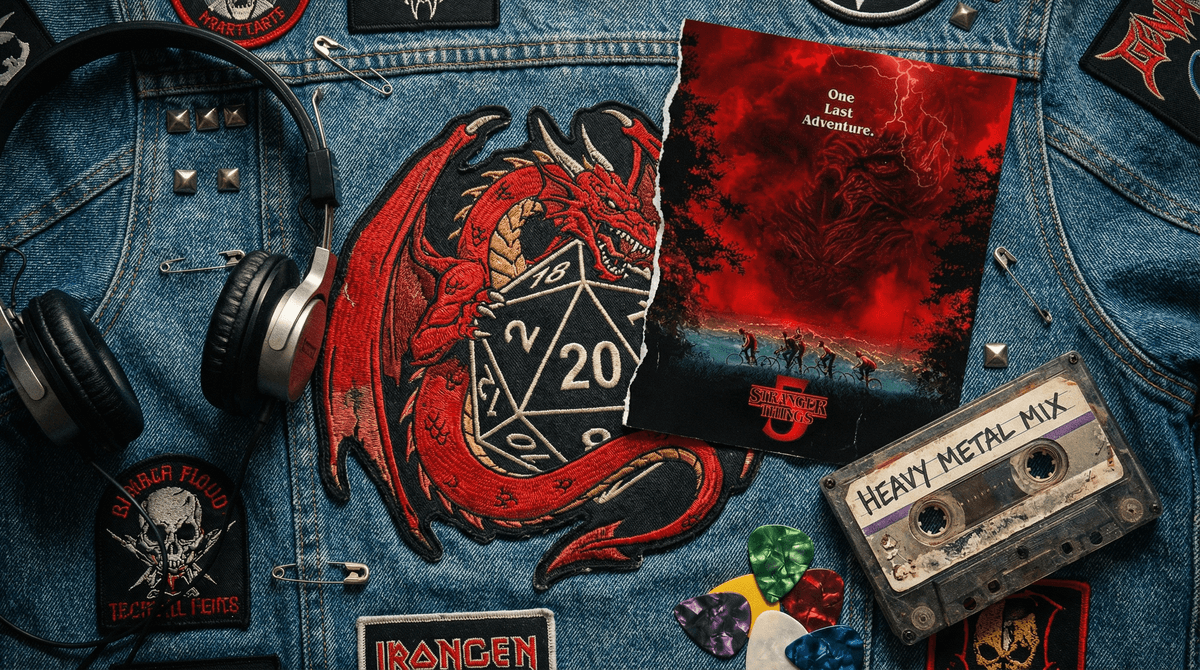
Eddie Munson, the breakout character from Stranger Things Season 4, became an instant fan favorite and a cultural phenomenon among tweens and teens. He's the long-haired metalhead who leads the school's D&D club, gets falsely accused of murder, and ultimately becomes a hero. If your kid is suddenly interested in Metallica, wants to grow their hair out, or is asking for a denim vest covered in patches, Eddie is probably why. He's actually one of the better role models to come out of the show—loyal, protective of outcasts, brave when it counts—even if he looks like he'd get you kicked out of a PTA meeting.
Quick context: Eddie appears only in Season 4 (released in 2022), but his impact has been massive. He's the character kids quote, cosplay, and defend passionately online.
Eddie Munson (played by Joseph Quinn) is a 20-year-old high school senior who's repeating his final year—twice. He's the leader of the Hellfire Club, Hawkins High's Dungeons & Dragons group, and he's treated like a social pariah by most of the school. He's loud, theatrical, unapologetically nerdy, and into heavy metal music. He drives a van, deals weed (yes, really), and is generally considered a "freak" by the popular kids.
When supernatural murders start happening in Hawkins, Eddie becomes the prime suspect because he was present when the first victim died in his trailer. The rest of Season 4 follows him on the run, eventually joining forces with the main characters to fight the actual threat: Vecna, a terrifying villain from the Upside Down.
Why kids love him: Eddie represents the ultimate vindication of the outcast. He's weird, he's loud about his interests, he doesn't try to fit in, and in the end, he's braver than almost anyone. He also has incredible one-liners, plays an epic guitar solo on top of his trailer in the Upside Down (to Metallica's "Master of Puppets"), and sacrifices himself to save his friends. For kids who feel like they don't fit in—or who are into gaming, metal, theater, or any "nerdy" interest—Eddie is basically a patron saint.
He's genuinely kind to younger kids: One of Eddie's defining traits is how he protects and mentors the younger members of Hellfire Club, including Mike and Dustin. He doesn't talk down to them, he takes their interests seriously, and he creates a space where they can be themselves. In a show full of bullying and social hierarchies, Eddie actively fights against that culture.
He challenges stereotypes: The show explicitly addresses the "Satanic Panic" of the 1980s, when D&D and metal music were blamed for corrupting youth. Eddie gives an impassioned speech about how society labels people like him as "freaks" just for being different. It's a surprisingly thoughtful commentary on how we judge people based on appearance and interests rather than character.
His character arc is about courage: Eddie spends much of the season calling himself a coward, running from danger. But when it matters most, he makes the ultimate sacrifice to protect his friends and the town that hated him. It's a genuinely moving arc about finding bravery even when you're terrified.
He's a positive representation of alternative subcultures: For kids into metal, punk, gaming, or theater, Eddie shows that you don't have to sand down your edges to be a good person. You can be loud, weird, dramatic, and still be loyal, kind, and heroic.
The drug dealing thing: Eddie is explicitly shown selling marijuana. The show doesn't glorify it, but it also doesn't make a huge deal out of it—it's just part of his character. He's dealing to make money in a small town with limited opportunities. For younger viewers (under 13), this might need some context. For teens, it's probably worth a conversation about how TV depicts drug use versus real-world consequences.
His death is genuinely traumatic: Eddie dies in the finale, and it's brutal. He's attacked by demobats (think: flying demon bats with teeth) and bleeds out in Dustin's arms. It's emotional, it's graphic, and it devastated fans—especially younger ones who weren't expecting a beloved character to die so horribly. If your kid is sensitive to character deaths or hasn't finished Season 4 yet, prepare them.
The "Satanic Panic" storyline might confuse younger kids: The show depicts townspeople literally forming a mob to hunt Eddie because they think he's in a satanic cult. It's commentary on real 1980s hysteria, but younger viewers might not understand the historical context and could find it genuinely scary or confusing.
He's a 20-year-old still in high school: The show addresses this (he failed twice), but it might raise questions about why he's still there. It's played for laughs, but it's also a reminder that Eddie's life hasn't been easy—implied family issues, lack of support, etc.
For kids under 13: Stranger Things Season 4 is rated TV-14, but honestly, it's more intense than previous seasons. The violence is graphic, the horror elements are genuinely scary, and Eddie's death scene is rough. If your younger kid is watching, consider watching together and be ready for questions about why people blamed Eddie, what drugs are, and why he had to die.
For ages 13-15: This is the sweet spot. Eddie resonates most with middle schoolers who are navigating their own social hierarchies and figuring out where they fit. His message about embracing your weirdness and standing up for your friends is powerful. Just be prepared for them to be really, really upset about his death. The online mourning for Eddie was intense, and your kid might need to process those feelings.
For ages 16+: Teens will pick up on the deeper themes—the critique of mob mentality, the way society scapegoats outsiders, and the tragedy of Eddie dying without ever getting the vindication he deserved (the town still thinks he's a murderer at the end). They'll also appreciate the Metallica references and the D&D elements more fully.
Eddie wasn't in the original marketing for Season 4. He was a surprise character who completely stole the show. Within days of the season's release, he was everywhere: TikTok edits, fan art, cosplay, and endless discourse about whether he deserved better.
The "Eddie effect" on pop culture:
- Metallica streams surged: "Master of Puppets" became a hit again, nearly 40 years after its release, because of Eddie's guitar scene
- D&D got another boost: Eddie's passionate defense of Dungeons & Dragons introduced a new generation to the game
- Alternative fashion trends: Denim vests, band patches, and long hair all saw renewed interest among teens
- The "defend Eddie Munson" movement: Fans created petitions, art campaigns, and endless content arguing that Eddie deserved justice
For kids who already felt like outsiders, Eddie became a symbol. For kids who were just discovering their interests, Eddie made it cool to be passionate about "nerdy" stuff.
Embrace it (within reason): If your kid wants to learn guitar, explore metal music, or get more into D&D because of Eddie, those are all genuinely positive interests. Learning guitar builds discipline, D&D teaches social skills and creativity, and exploring different music genres is part of growing up.
Set boundaries on the aesthetic: If your 12-year-old wants to dress like Eddie, you can compromise. A band t-shirt? Sure. A full denim vest covered in patches? Maybe wait a year or two. Long hair? That's a personal family call, but it's just hair—it grows back.
Talk about why they connect with him: Ask your kid what they like about Eddie. Is it that he stands up for his friends? That he's unapologetically himself? That he's funny? Understanding what resonates can tell you a lot about what your kid is processing in their own social life.
Process the death together: If your kid is genuinely upset about Eddie dying, don't dismiss it. Character deaths can hit hard, especially when kids feel personally connected to a character. Talk about why the writers made that choice, what Eddie's sacrifice meant, and how it's okay to feel sad about fictional losses.
Watch out for toxic fandom behavior: Eddie's popularity spawned some intense online discourse, including shipping wars, gate-keeping about who's a "real fan," and arguments about whether his death was necessary. If your kid is deep in Stranger Things fandom spaces, check in about what they're seeing and whether it's healthy.
Eddie Munson is, genuinely, one of the better things to come out of recent teen TV. He's kind, he's brave, he stands up for people who can't stand up for themselves, and he makes it cool to care deeply about your interests. Yes, he deals weed, and yes, his death is traumatic, but his core message—that being different isn't something to hide—is valuable.
If your kid is suddenly quoting Eddie, blasting Metallica, or asking to start a D&D campaign, lean into it. These are creative, social interests that build real skills. And if they're upset about his death, sit with them in that grief. It means they connected with a character who represented something important to them.
The fact that a character who looks like Eddie—long-haired, loud, unpolished, and unapologetically weird—became a hero to millions of kids? That's actually pretty great. We could use more characters who show kids that you don't have to fit in to matter.
Next steps: If your kid loves Eddie, consider introducing them to other shows and movies with misfit heroes, getting them started with D&D, or exploring age-appropriate metal and rock music. And if they haven't finished Season 4 yet, maybe prepare them for what's coming. You've been warned.