

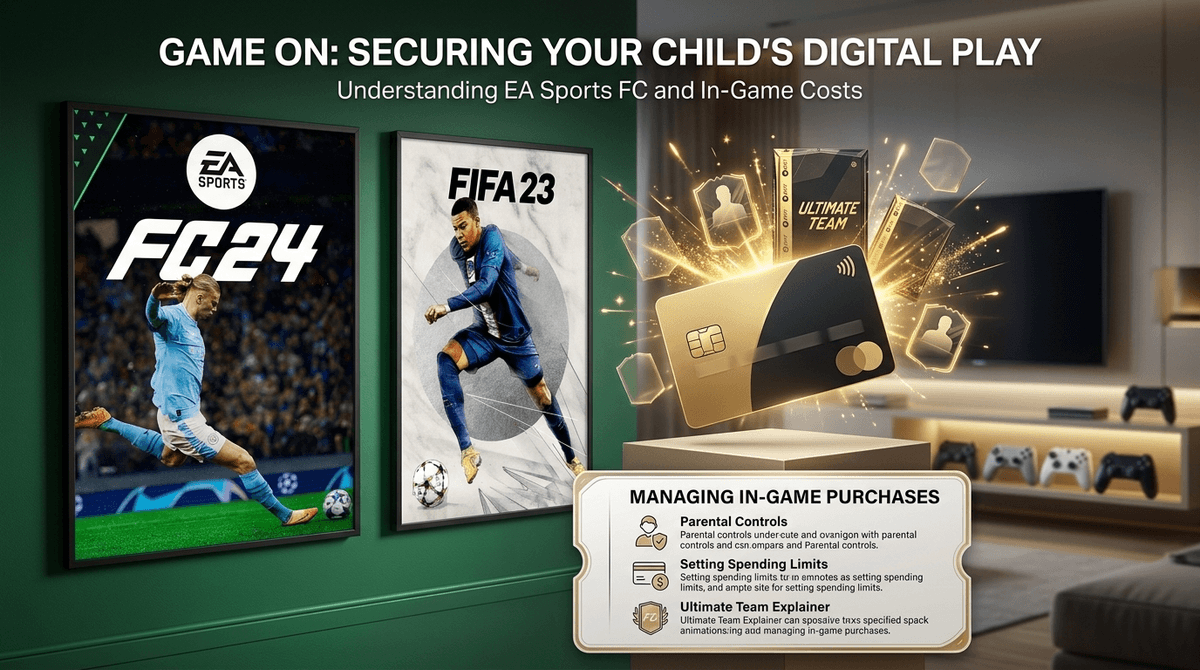
TL;DR: EA Sports FC 24 is the exact same game as the "FIFA" franchise you grew up with, just rebranded after a licensing breakup. It’s a high-quality soccer simulator that kids love, but it’s also a masterclass in "surprise mechanics" (read: gambling-adjacent loot boxes) called Ultimate Team. If your kid is asking for your credit card, it’s likely to buy "Packs" to get a digital version of Mbappé or Haaland.
Quick Links for the Soccer-Obsessed Family:
- The Console Experience: EA Sports FC 24
- The On-the-Go Version: EA Sports FC Mobile
- The Predecessor: FIFA 23
- A Strategy Alternative: Football Manager 2024
If you’ve been confused seeing "FC 24" everywhere instead of "FIFA 24," you aren’t alone. After a 30-year partnership, EA Sports and FIFA (the international soccer governing body) had a very public, very expensive breakup. FIFA wanted more money for the naming rights, and EA decided they didn't need the "FIFA" name to sell millions of copies.
The result? EA Sports FC 24.
For your kid, the gameplay is virtually identical to FIFA 23. It still has the real players, the real teams (Manchester City, Real Madrid, etc.), and the real stadiums. The only thing missing is the four letters "FIFA" on the box.
While kids do play "Kick Off" mode against their friends on the couch, the real draw—and the source of 90% of parent-child tech arguments—is Ultimate Team (UT).
Ultimate Team is essentially a digital trading card game combined with a soccer simulator. Players build their "dream team" by collecting player cards. You get these cards by opening "Packs."
The "Pack" Problem
This is where the credit card comes in. Packs are digital envelopes containing random players. You might get a 65-rated benchwarmer from the English third division, or you might get Lionel Messi.
The game uses every psychological trick in the book to encourage spending:
- Limited-Time Events: "Team of the Year" cards are only available for a week.
- Visual Flare: The animation for opening a pack is flashy, loud, and designed to trigger a dopamine hit.
- Peer Pressure: If all of your kid's friends have a "Special Edition" Jude Bellingham, your kid feels like their team can't compete without spending money to keep up.

It’s important to distinguish between the two versions of the game, as they live in different ecosystems.
This is the "full" experience played on PlayStation, Xbox, Switch, or PC. It’s a $60-$70 purchase upfront. While it has heavy microtransactions in Ultimate Team, there are plenty of offline modes (like Career Mode) where your kid can play as a manager or a single player without ever seeing a "Buy Now" button.
This is the free-to-download app version. Because it’s "free," the monetization is much more aggressive. The gameplay is simplified for touchscreens, but the push to buy "FC Points" is constant. If your child is playing on an iPad, ensure your App Store password is required for every single purchase.
Check out our guide on setting up spending limits on iPhone and Android
Unlike "Skibidi Toilet" or some of the more mindless "Tycoon" games on Roblox, EA Sports FC 24 actually requires a high level of skill, hand-eye coordination, and strategic thinking.
The Good:
- Tactical Thinking: Kids learn about formations (4-3-3 vs. 4-4-2), chemistry, and player roles.
- Global Literacy: Don't be surprised if your 10-year-old suddenly knows the roster of Borussia Dortmund or can point to Croatia on a map because of their favorite players.
- Social Connection: Playing "Pro Clubs" with friends—where each kid controls one player on the same team—is a genuine exercise in teamwork and communication.
The Bad:
- The "Rage" Factor: This game is notoriously frustrating. Between "lag" and the game's physics, "FIFA rage" is a real phenomenon. If you hear screaming and controller-thumping from the basement, it’s probably a 90th-minute goal against them.
- The "Pay to Win" Aspect: It is very difficult to be a top-tier player in Ultimate Team without spending real money. This can lead to a "haves vs. have-nots" dynamic among friend groups.
The ESRB rating is E for Everyone, but Screenwise suggests a bit more nuance based on the community data we see:
- Ages 7-10: Great for offline play. They will love playing as their favorite stars. However, Ultimate Team should probably be "off-limits" or strictly supervised. The complexity of the market and the temptation to spend is too high for this age group.
- Ages 11-14: This is the prime demographic. They will want to play online. This is a great time to have the "gambling" talk. Explain that the odds of getting a top player in a pack are often less than 1%.
- Ages 15+: They likely know the systems better than you do. At this age, it’s about time management and ensuring the "soccer obsession" isn't eclipsing school or sleep.
Inside Ultimate Team, there is a literal Transfer Market. Kids can buy and sell players using "Coins" (earned by playing) or "FC Points" (bought with your money).
Some kids spend hours "working the market"—buying low and selling high. While some parents see this as "entrepreneurship," it’s more akin to day-trading. It can become obsessive, with kids checking their FC 24 Companion App during dinner or under the desk at school to see if their player sold.
- Voice Chat: Like any online game, EA Sports FC 24 allows for voice chat. It can get toxic. We recommend setting the console settings to "Friends Only" for communication.
- Direct Messaging: Opponents will sometimes send "trash talk" messages after a game. Ensure your child knows how to block and report users on their specific console.
- Account Security: Because some Ultimate Team accounts are worth hundreds of real-world dollars, they are targets for "phishing" scams. Remind your kids never to give their login info to anyone promising "free coins."
EA Sports FC 24 is a fantastic sports game buried under a mountain of monetization. It isn't "bad" for your kid, but it is a game that requires active parenting.
If you treat it like a digital version of collecting baseball cards, it can be a fun hobby. If you let it run on autopilot, you might find yourself with a $500 credit card bill and a kid who is frustrated that they still haven't "packed" a legend.
- Check the Settings: Go into the "PlayTime" menu within the game. You can actually set limits on how many packs can be opened and how many hours can be played.
- Play a Game: Ask your kid to play a match against you. Let them beat you 10-0. It’s a great way to see the content firsthand and bond over their interest.
- Set a Budget: If you decide to allow spending, treat it like an allowance. "You have $10 a month for FC Points. When it’s gone, it’s gone."
- Explore Alternatives: If the "pay to win" aspect is too much, look into Rocket League for a different kind of soccer fun, or Super Mario Strikers: Battle League for a more arcade-style experience.