

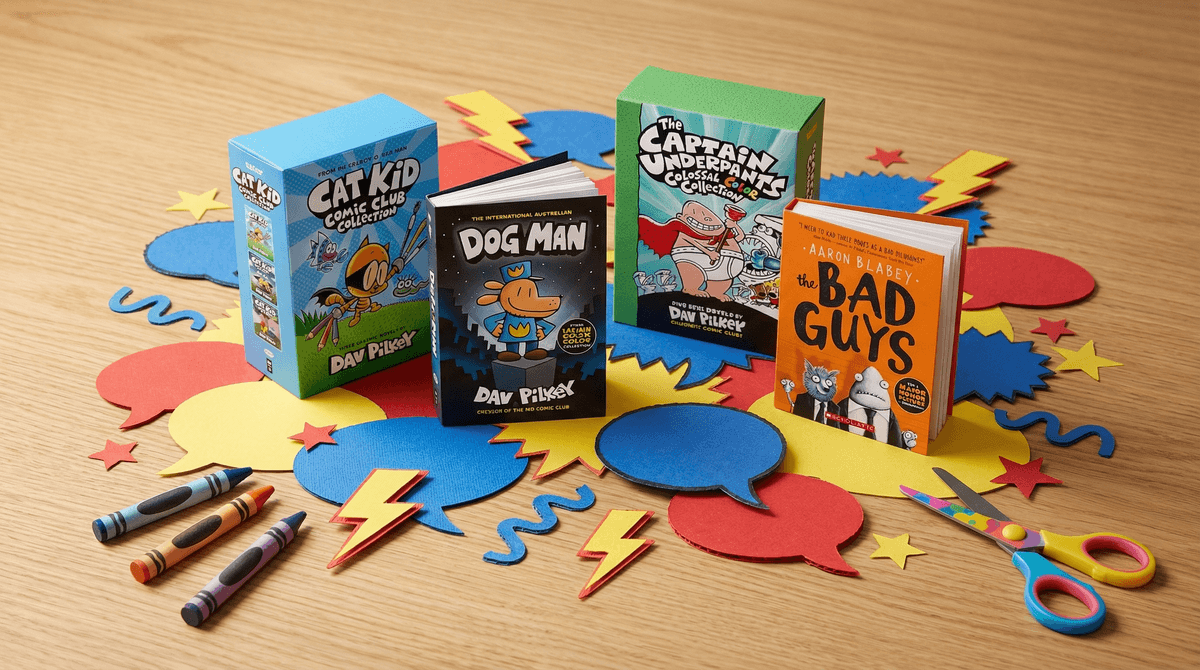
Dog Man is a wildly popular graphic novel series by Dav Pilkey (yes, the same guy who brought us Captain Underpants). The premise is delightfully absurd: a police dog and a cop are both injured in an explosion, and a nurse surgically attaches the dog's head to the cop's body. The result? Dog Man, a crime-fighting hero with a dog's head and a human body.
Since the first book dropped in 2016, there are now 12+ books in the series, with more coming regularly. Each book is around 250 pages of comic-style panels with simple text, action-packed plots, and yes—plenty of bathroom humor. Think fart jokes, poop gags, and characters named "Petey" and "Chief."
The books also feature "Flip-O-Rama" animation sequences where kids flip pages back and forth to create the illusion of movement—a signature Pilkey touch that makes reading feel interactive and fun.
If your elementary schooler is obsessed with Dog Man, they're far from alone. These books are everywhere in grades K-5, and for good reason:
It's genuinely funny to kids. The humor hits right in that sweet spot for 6-10 year olds—silly without being babyish, irreverent without being truly inappropriate. The potty humor that makes parents cringe is exactly what makes kids feel like they're getting away with something.
It looks easy to read. For reluctant readers or kids still building confidence, graphic novels feel less intimidating than chapter books. Large illustrations, short text bubbles, and fast-paced action mean kids can fly through a 250-page book in a sitting and feel accomplished.
The characters have real depth. Beneath the silliness, there's actually solid storytelling. Petey the cat is a villain who becomes a father figure. Dog Man struggles with his impulses (he can't stop chasing squirrels or licking people). There are themes of redemption, friendship, and doing the right thing even when it's hard.
Kids can create their own versions. Many Dog Man books include "How to Draw" sections and encourage kids to make their own comics. Dav Pilkey's whole origin story involves creating comics in elementary school when he had ADHD and struggled in traditional academics—and he explicitly invites kids to do the same.
Let's address the elephant (or should I say dog-headed cop?) in the room: the potty humor.
Yes, there are fart jokes. Yes, there's a character called "Crunky" who's obsessed with poop. Yes, your child will probably giggle uncontrollably at these parts and maybe even repeat them at dinner.
But here's the thing: Dog Man is actually getting kids to read. And not just read—to love reading.
Teachers and librarians consistently report that Dog Man is a gateway book. Kids who won't touch traditional chapter books will devour these. Kids who struggle with reading will build confidence and stamina. Kids who already love reading will appreciate the humor and craft.
The American Library Association has recognized Pilkey's work for its ability to engage reluctant readers. And research consistently shows that any reading is good reading when it comes to building literacy skills—yes, even books with fart jokes.
The Educational Value You Might Miss
Beyond getting kids to read, Dog Man actually teaches:
Visual literacy - Reading graphic novels requires kids to interpret images, sequence, pacing, and the relationship between text and pictures. These are sophisticated skills.
Vocabulary in context - The books use surprisingly complex words (melancholy, conscience, responsibility) but the pictures and context make them accessible.
Meta-humor and storytelling - The books are "written" by characters in the story (two kids named George and Harold). This frame story teaches kids about narrative perspective and authorship.
Social-emotional themes - Forgiveness, impulse control, found family, redemption arcs. The silly exterior wraps around genuinely meaningful content.
Ages 5-7: Many kindergarteners and first graders love Dog Man, especially if they're already comfortable with Captain Underpants or similar humor. The pictures carry the story, so emerging readers can follow along. Some parents read these aloud, though be prepared for requests to re-read the "funny parts" approximately 47 times.
Ages 8-10: This is peak Dog Man age. Third through fifth graders are the core audience. The humor lands perfectly, the reading level is accessible but not babyish, and the books are social currency at school. Don't be surprised if your kid wants to own the whole series.
Ages 11+: Many middle schoolers have aged out of Dog Man, though some still enjoy them as comfort reads or appreciate them on a different level. If your sixth grader is still into them, that's totally fine—let them enjoy what they enjoy.
What About Mature Content?
The potty humor is really the extent of it. There's cartoon violence (characters get bonked, things explode) but nothing graphic or scary. No sexual content, no swearing, no truly inappropriate material. The books have won multiple awards and are standard elementary school library fare.
If you're concerned about the bathroom humor becoming excessive at home, you can set some boundaries around when and where potty talk is okay while still letting your kid enjoy the books.
Instead of dismissing Dog Man as "junk reading" (please don't—kids hear that and internalize that their interests are bad), try engaging with what your kid loves about it:
Ask about the story: "What's happening with Petey in this book? Is he being a villain or trying to be good?" This shows you care about what they're reading.
Appreciate the craft: "How do you think Dav Pilkey comes up with these stories? What would you put in a Dog Man book if you wrote one?"
Connect to other books: If your child loves Dog Man, they might also enjoy Big Nate, Diary of a Wimpy Kid, The Bad Guys, or Nathan Hale's Hazardous Tales (history graphic novels with humor).
Encourage creation: Get your kid some blank paper or a comic-making template and let them make their own Dog Man-style comics. This builds writing skills, creativity, and storytelling ability.
Dog Man isn't going to win literary awards for profound prose. But it's doing something arguably more important: it's making kids want to read.
In an age where we're competing with YouTube, Roblox, and TikTok for our kids' attention, a book series that gets them excited to turn off screens and read for hours is actually kind of miraculous.
The potty humor that makes you roll your eyes? That's the secret sauce that makes kids feel like reading is for them, not just for adults or school assignments. And once kids discover that reading can be fun, they're more likely to explore other books and become lifelong readers.
So yes, your child might say "poop" a lot for a while. But they're also building literacy skills, vocabulary, visual interpretation abilities, and a genuine love of reading. That's a trade-off worth making.
If your child hasn't discovered Dog Man yet: Check out Dog Man from your library and see if it clicks. The first book is a great starting point, though kids can really jump in anywhere.
If your child is obsessed: Lean into it. Get them the books they don't have yet, encourage them to make their own comics, and connect with other Dog Man fans at school. Consider checking out Dav Pilkey's other series like Cat Kid Comic Club which is specifically about kids making their own comics.
If you're looking for what's next: When your child is ready to branch out, graphic novels are a huge genre. Screenwise can help you find age-appropriate options based on your child's interests and reading level.
And remember: any book that gets your kid reading is a good book. Even if it has a lot of fart jokes.