

The Best Teen Movies on Netflix: Romance, Identity & Real Conversations
Netflix has become the de facto teen movie studio, churning out coming-of-age films faster than you can say "parasocial relationship." Here are the standouts worth your teen's time (and yours, if you want to understand what they're watching):
The Actually Good Ones:
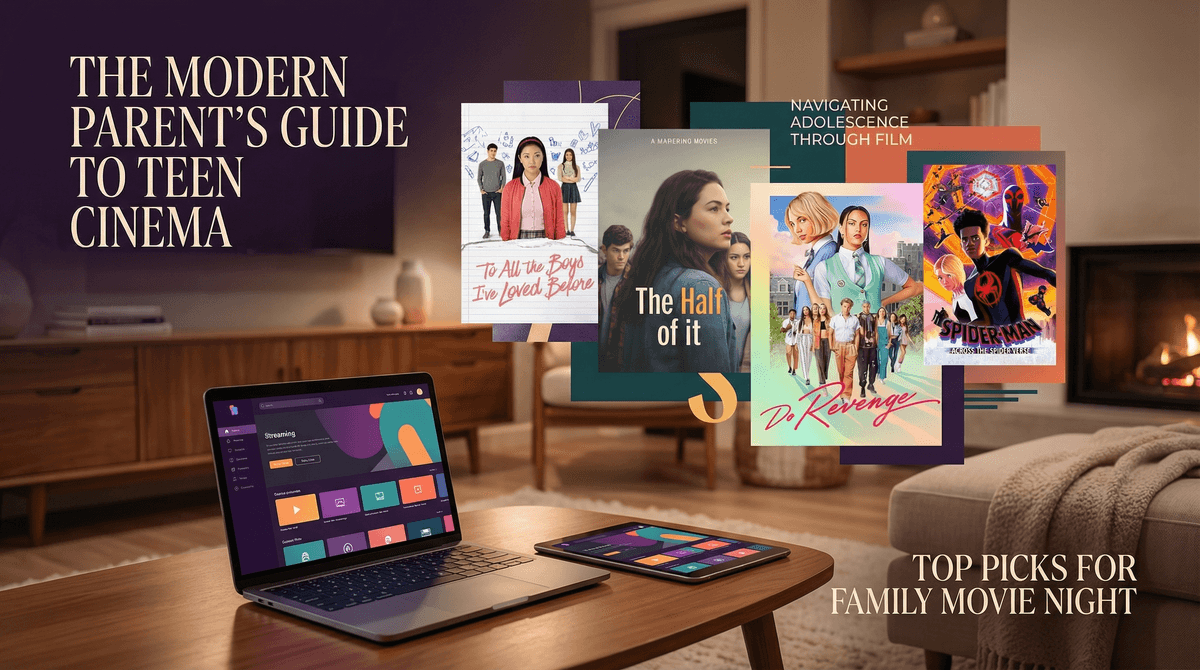
- To All the Boys I've Loved Before (Ages 11+) - Sweet romance that launched a thousand book-to-screen deals
- The Half of It (Ages 13+) - Cyrano de Bergerac meets queer coming-of-age, genuinely smart
- Dumplin' (Ages 12+) - Body positivity without the cringe
- Spider-Man: Across the Spider-Verse (Ages 10+) - Technically a teen movie, absolutely stunning
The Conversation Starters:
- The Kissing Booth (Ages 13+) - Wildly popular, deeply problematic, worth discussing
- Do Revenge (Ages 14+) - Dark comedy about revenge and class
The Sleepers:
- Honor Society (Ages 13+) - Better than it should be
- Mixtape (Ages 10+) - For younger teens, surprisingly heartfelt
Netflix discovered something brilliant around 2018: teens will watch literally anything made specifically for them, but parents want reassurance it's not complete garbage. This created a weird sweet spot where Netflix teen movies are just edgy enough to feel authentic but sanitized enough that most parents won't flip out.
The problem? Quality varies wildly. For every To All the Boys I've Loved Before, there are three forgettable rom-coms with the exact same plot: quirky girl meets popular boy, misunderstanding happens, grand gesture fixes everything, roll credits.
The good news: when Netflix gets it right, these movies actually give you something to talk about with your teen beyond "how was school?"
To All the Boys I've Loved Before (Ages 11+)
This is the gold standard. Lara Jean is a genuinely likable protagonist who makes believable teenage mistakes. The romance with Peter Kavinsky is sweet without being cloying. The family dynamics—especially with her sisters and single dad—feel real.
What parents should know: The whole premise is that Lara Jean's secret love letters get mailed out, but the movie handles the fallout with surprising maturity. There's kissing, some mild language, and discussions about losing virginity (handled tastefully). The sequel gets slightly more mature, but nothing shocking.
Why it works: It respects teenage emotions without melodrama. When Lara Jean is embarrassed, it's genuinely embarrassing, not manufactured drama.
The Half of It (Ages 13+)
This one's smarter than it needs to be. Ellie Chu is a brainy outcast who agrees to write love letters for a jock who likes the same girl she does. It's Cyrano de Bergerac, but make it queer and set it in a small town in Washington.
What parents should know: This deals with sexuality, identity, and religious tension (the girl's family is very Christian, Ellie's questioning her sexuality). There's no sex, but there are frank conversations about attraction and love. Some teens find it slow—it's more thoughtful than action-packed.
Why it works: Writer-director Alice Wu doesn't pander. The movie trusts teens (and parents) to handle complexity. The ending isn't a neat bow, which some kids might find frustrating but is actually refreshing.
Purple Hearts (Ages 14+)
Okay, this one's controversial. A liberal singer-songwriter and a conservative Marine enter a marriage of convenience for military benefits, then—surprise!—actually fall in love.
What parents should know: This movie has a massive teen fanbase despite (or because of?) its political tensions. There's discussion of drug addiction, Type 1 diabetes, deployment, and some mature themes. The politics are... let's say "both-sides-ism" at its finest, which means everyone finds something to hate.
Why it's worth discussing: Your teen probably already watched it. The question isn't whether to allow it, but whether you want to talk about why a marriage of convenience for healthcare access is romantic instead of dystopian, and what it means when the "conservative guy learns to be better" trope does all the heavy lifting.
Dumplin' (Ages 12+)
Willowdean (who goes by "Dumplin'") is a plus-size teen who enters a beauty pageant run by her former beauty queen mom. It's based on Julie Murphy's novel and features a killer Dolly Parton soundtrack.
What parents should know: This tackles body image, self-esteem, and mother-daughter relationships without being after-school-special preachy. There's some language and discussions about sex (Willowdean has a romantic subplot with a coworker), but it's age-appropriate for middle schoolers and up.
Why it works: Willowdean isn't "learning to love herself" in some patronizing arc. She's already pretty confident—the movie is about standing up to other people's expectations, which is different and better.
Wait, wrong one—
You Are So Not Invited to My Bat Mitzvah (Ages 10+)
Adam Sandler produces a movie about his daughter's character planning her bat mitzvah, best friend drama ensues. It's genuinely sweet and captures middle school social dynamics perfectly.
What parents should know: This is solidly PG-13 but on the younger end. There's boy drama, friend betrayal, and typical middle school cruelty, but it's handled with heart. The Jewish cultural elements are specific but accessible—you don't need to be Jewish to relate to the friendship dynamics.
Why it works: It doesn't try to be more than it is. It's a middle school friendship movie that happens to center a bat mitzvah, and it nails the specific torture of being 12-13 years old.
The Kissing Booth (Ages 13+)
Elle falls for her best friend's older brother, breaking their friendship pact. It spawned two sequels and a massive fanbase.
What parents should know: This movie is WILDLY popular and also deeply problematic. Noah (the love interest) is controlling and aggressive. He literally threatens other guys who look at Elle. The movie frames this as romantic instead of concerning.
Why you should watch it anyway: Because your teen already did, and it's worth discussing why Noah's behavior isn't actually swoon-worthy. Use this as a conversation starter about healthy relationships .
.
Do Revenge (Ages 14+)
Two teens team up to take down each other's bullies in this dark comedy that's basically "Strangers on a Train" meets "Cruel Intentions" meets Gen Z.
What parents should know: This one's darker. There's discussion of leaked nudes, sexual assault allegations (false ones, which is handled carefully but is still heavy), drug use at parties, and manipulation. The language is strong. It's rated TV-MA for good reason.
Why it works: It's smart about class, privilege, and the performance of social justice. The twist is actually surprising. But this is definitely for older teens who can handle moral ambiguity.
Honor Society (Ages 13+)
Honor is a ruthless overachiever determined to get into Harvard by taking down her competition. Then she accidentally falls for one of her targets.
What parents should know: This is sharper than expected. Honor is manipulative and ambitious in ways that feel refreshing—she's not apologizing for wanting success. There's some language and teen party scenes, but nothing shocking.
Why it's worth watching: It's funny, the lead character is complex, and it doesn't punish her for being ambitious. The ending actually subverts expectations.
Mixtape (Ages 10+)
A girl who lost her parents as a baby finds a mixtape they made and goes on a quest to find the songs. Set in the 90s, surprisingly emotional.
What parents should know: This deals with grief and loss but in an age-appropriate way for tweens and younger teens. It's genuinely sweet without being saccharine.
Why it works: The 90s nostalgia is strong (parents might enjoy this one), and it handles loss without being traumatizing.
Look, Netflix makes a LOT of teen movies. Some are forgettable (Tall Girl, The Perfect Date), some are actively bad (He's All That—the TikTok remake of She's All That that nobody asked for).
The question isn't whether your teen will watch some mediocre content. They will. The question is whether you want to use these as opportunities to talk about storytelling, tropes, and what makes some movies work while others fall flat.
A teen who can articulate why The Half of It works but The Kissing Booth is problematic is developing critical thinking skills that transfer way beyond movie night.
Ages 10-12: Stick with To All the Boys, Mixtape, You Are So Not Invited to My Bat Mitzvah. These handle tween emotions without getting into territory that requires a lot of context.
Ages 13-15: Most Netflix teen movies land here. Dumplin', The Half of It, Honor Society, even The Kissing Booth (with discussion).
Ages 16+: Do Revenge, Purple Hearts, and anything rated TV-MA. At this age, the conversation matters more than the content restrictions.
Netflix teen movies aren't going to win Oscars (okay, Spider-Verse might), but they're the cultural water your teen is swimming in. The best ones give you genuine conversation starters about relationships, identity, ambition, and values.
The worst ones? Still worth watching together so you can bond over how bad they are.
Next Steps:
- Pick one from the "Actually Good" list and watch together
- For older teens, try Do Revenge and talk about moral ambiguity
- If your teen loved The Kissing Booth, watch it and discuss what healthy relationships actually look like
- Check out more coming-of-age movies beyond Netflix
And remember: the goal isn't to only watch "quality" content. It's to build the critical thinking skills to tell the difference.