

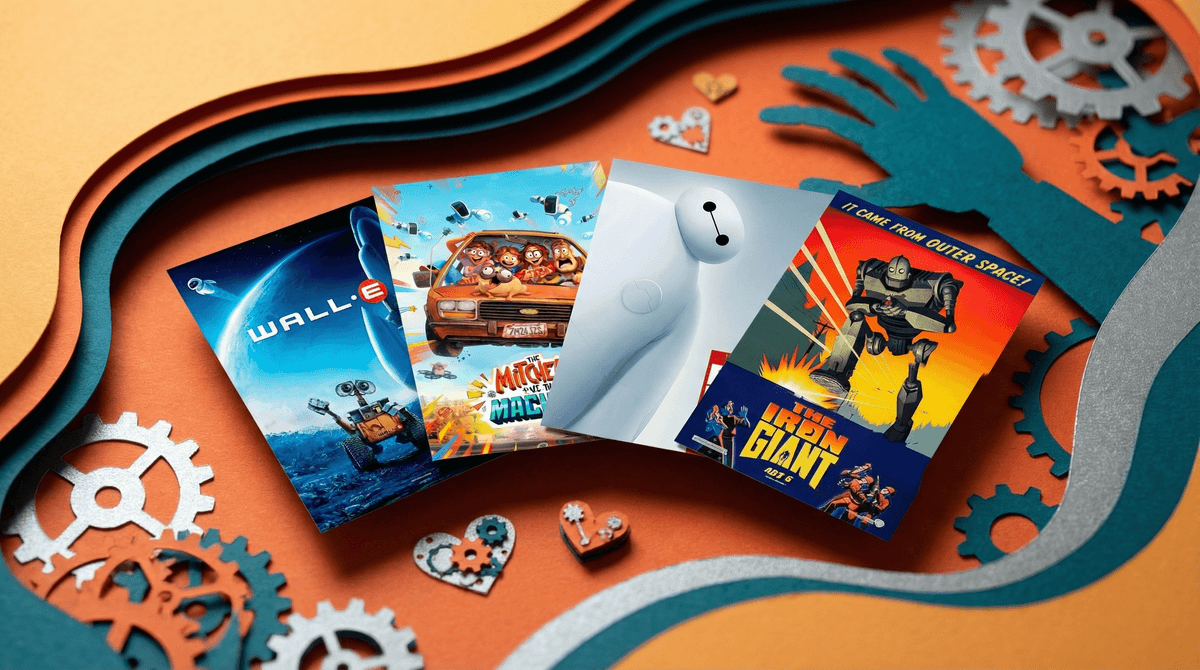
Look, robot movies have been a staple of family viewing since basically forever, but not all of them hold up — and not all of them are created equal when it comes to sparking actual conversations with your kids beyond "that was cool when the robot exploded."
The best robot films for families do something special: they use robots as a mirror to explore what makes us human. They tackle big questions about friendship, identity, consciousness, and care in ways that are accessible to kids but don't talk down to them. Plus, let's be honest, watching a robot learn to love or a kid befriend a mechanical companion just hits different than your standard action flick.
This guide covers the classics, the modern favorites, and a few you might have missed — organized by what they do well and what age range they work best for.
WALL-E (2008) — Ages 5+
This is the one. If you only watch one robot movie with your kids, make it WALL-E. A trash-compacting robot left alone on a ruined Earth who falls in love with a sleek probe robot? It's got virtually no dialogue for the first 40 minutes, yet it's more emotionally resonant than most films with full scripts.
Why it works: WALL-E teaches environmental responsibility, loneliness, connection, and what it means to care for someone (or something) without being preachy. The critique of tech-dependent humanity living on a spaceship is surprisingly sharp for a kids' movie, and it opens up great conversations about screen time, consumption, and taking care of our planet.
Parent note: Some younger kids find the dystopian Earth setting a bit sad, but most are captivated by WALL-E's personality and the adventure.
The Iron Giant (1999) — Ages 7+
The Iron Giant is criminally underrated and absolutely devastating in the best way. A boy befriends a giant robot from space during the Cold War, and the film explores fear, violence, choice, and sacrifice with remarkable emotional depth.
Why it works: "You are who you choose to be" is one of the most powerful messages in any kids' film. It's about overcoming programming, choosing peace over violence, and the cost of friendship. It also doesn't shy away from showing government paranoia and military aggression in ways that feel age-appropriate but real.
Parent note: The ending will wreck you. Have tissues ready. Also, there's some Cold War-era gun violence that might be intense for sensitive kids under 7.
Big Hero 6 (2014) — Ages 6+
Big Hero 6 gives us Baymax, the inflatable healthcare robot who becomes the emotional center of a story about grief, revenge, and healing. It's set in the gorgeous fictional city of San Fransokyo and follows a teen genius dealing with the death of his brother.
Why it works: Baymax is designed to care, and watching him help Hiro process grief is genuinely moving. The film also celebrates STEM, diverse friendships, and using your talents for good rather than revenge. Plus, the action sequences are fantastic.
Parent note: The themes of loss and grief are handled beautifully but might hit hard for kids who've experienced death in their family.
The Mitchells vs. The Machines (2021) — Ages 8+
The Mitchells vs. The Machines is pure chaos in the best way — a family road trip interrupted by a robot apocalypse. It's visually inventive, genuinely funny, and surprisingly touching about family dynamics and our relationship with technology.
Why it works: It's a love letter to weird kids, dysfunctional families, and the tension between tech-obsessed teens and their analog parents. The AI uprising is played for laughs but also raises real questions about our dependence on smart devices. Plus, the family actually talks through their issues instead of just blowing stuff up.
Parent note: The humor is fast-paced and very internet-culture-aware, which might go over younger kids' heads, but 8+ will get it.
Next Gen (2018) — Ages 8+
Next Gen flew under the radar but deserves more attention. A lonely girl befriends a top-secret military robot, and together they uncover a conspiracy. It's got beautiful animation and tackles loneliness, friendship, and what happens when we replace human connection with technology.
Why it works: The relationship between Mai and 7723 is genuinely touching, and the film doesn't pull punches about Mai's anger and isolation. It's also one of the few robot films with an Asian protagonist.
Parent note: There's some surprising violence and emotional intensity — kids dealing with divorce or parental absence might find it heavy.
Ron's Gone Wrong (2021) — Ages 7+
Ron's Gone Wrong is basically "what if everyone had a personal robot companion but yours was defective?" It's a clever satire of social media, data collection, and the tech industry's promises about connection.
Why it works: Ron the malfunctioning robot becomes a better friend precisely because he doesn't work as designed. It's a great conversation starter about real friendship vs. algorithmic "friendship," privacy, and whether technology actually connects us or just surveils us.
Parent note: The tech company villain is clearly modeled on Apple/Facebook, which makes for interesting discussions about the devices your family actually uses.
Transformers movies — Just... no. They're loud, incoherent, and have nothing meaningful to say. The Michael Bay films especially are just explosions and objectification wrapped in a thin veneer of "robots in disguise."
A.I. Artificial Intelligence (2001) — Spielberg's meditation on consciousness and love is fascinating for adults but way too dark and existentially heavy for kids. Save it for when they're teenagers.
Here's the thing: robot films let kids explore heavy concepts through a safe distance. When WALL-E is lonely, kids can feel that without it being about a real person. When the Iron Giant chooses not to be a weapon, kids can think about violence and choice without it feeling like a lecture.
These movies also arrive at a perfect moment when your kids are growing up surrounded by AI assistants, algorithms, and increasingly "smart" technology. Watching characters navigate relationships with robots opens up natural conversations about how we use technology in our own lives.
Ages 5-7: Stick with WALL-E and Big Hero 6. The emotional beats are clear, the visuals are engaging, and the messages are straightforward.
Ages 8-11: Add The Iron Giant, The Mitchells vs. The Machines, and Ron's Gone Wrong. These kids can handle more complex themes and will appreciate the humor and social commentary.
Ages 12+: All of the above, plus you can start exploring more mature sci-fi like Ex Machina (though that's really more 15+) or revisiting these films to discuss the deeper themes they might have missed as younger kids.
After watching any of these, try asking:
- "If you could have a robot friend, what would you want them to be like?"
- "Do you think robots can really be friends, or are they just programmed to act friendly?"
- "What makes someone (or something) a good friend?"
- "If a robot can think and feel, is it alive?"
- "Do you think we rely too much on technology like the humans in WALL-E?"
These aren't questions with right answers — they're springboards for talking about consciousness, friendship, technology, and what it means to be human.
Robot movies are having a moment, and for good reason. They let us explore our relationship with technology through stories that are emotionally resonant and visually spectacular. WALL-E remains the gold standard, but there's genuine depth in The Iron Giant, Big Hero 6, and several others.
The best part? These films don't just entertain — they give you and your kids a shared language for talking about technology, friendship, and humanity at a time when those conversations really matter.
So grab some popcorn, queue up a robot movie, and prepare for both laughs and tears. Just maybe keep the tissues handy for The Iron Giant. You've been warned.
Want more recommendations? Check out our guide to best animated films for families or explore how to talk to kids about AI.