

TL;DR
If you’re looking for a quick win to help your preschooler navigate a "Skibidi-level" emotional meltdown, here are the top picks for 2026:
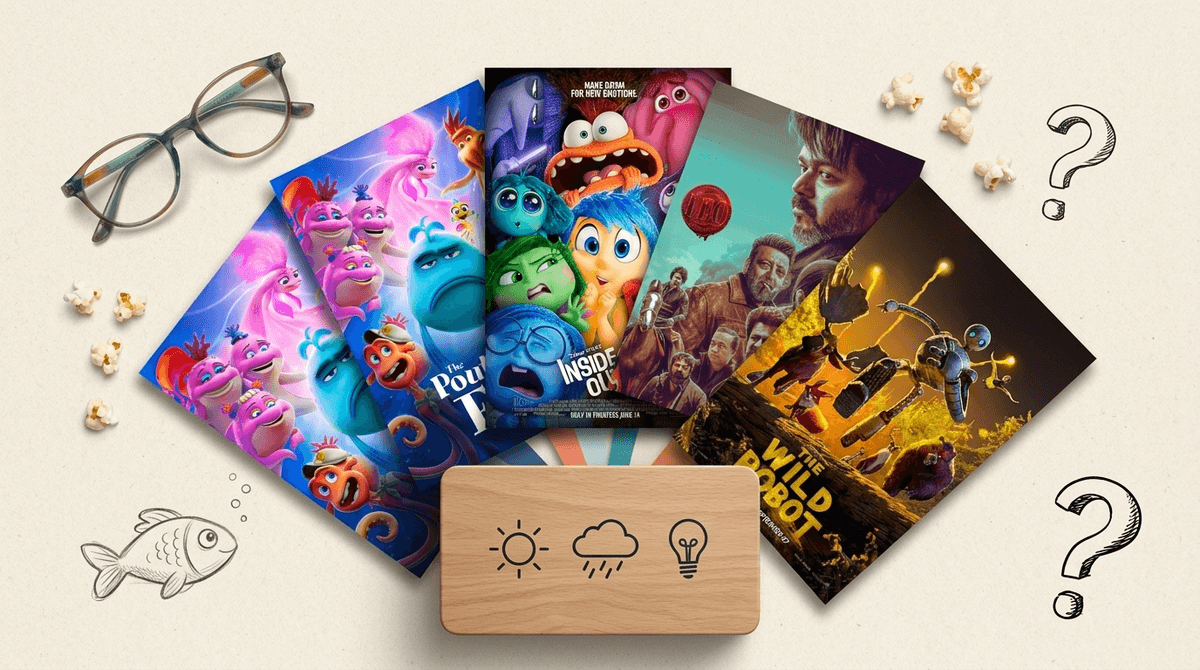
- The Big 2026 Newcomer: The Pout-Pout Fish — Perfect for discussing "the blues" and shifting perspectives.
- The Emotional Gold Standard: Inside Out 2 — Now that it’s on streaming, it’s the best way to talk about Anxiety and Envy.
- The Surprise Empathy Teacher: Leo (Netflix) — Don't let the lizard fool you; it’s a masterclass in listening.
- The "Mini-Movie" MVP: Bluey: The Sign — Technically a special, but it’s movie-length for a 4-year-old and deals with massive life changes.
Ask our chatbot for a personalized movie list based on your child's specific temperament
We’ve all been there. You’re at the grocery store, and your three-year-old is currently vibrating with a level of rage usually reserved for people whose flight just got canceled. You try the "gentle parenting" whisper, you try the "I hear you" script, but sometimes, the words just don't land because preschoolers don't have the vocabulary for the storm inside them.
In 2026, we have more content than ever, but let’s be honest: a lot of it is just "brain rot" designed to keep eyes glued to the screen without actually offering anything of substance. However, when used intentionally, movies are the ultimate "Feelings Toolkit." They give kids a third-party perspective on their own internal chaos. It’s much easier to talk about why Joy and Sadness are fighting than why your kid just threw a shoe at the dog.
Preschoolers are in a massive developmental leap. They are moving from "me-centered" worlds to understanding that other people have feelings, too. According to research on social-emotional learning, children who can name their emotions are significantly better at self-regulation.
Using media as a bridge isn't "lazy parenting"—it's using the tools of 2026 to build emotional intelligence. We’re seeing from Screenwise community data that about 65% of parents in our network are now actively using "co-viewing" (watching together) specifically to address behavioral milestones.
This is the big one for this year. Based on the beloved book series, the movie expands on the "dreary-wearies."
- The Vibe: Whimsical, underwater, and surprisingly deep.
- The Lesson: It’s okay to be sad or "pouty," but our emotions don't have to define our entire identity.
- Why it works: Preschoolers love the repetitive "glub, glub, glub" nature of the character, but the movie does a great job of showing how a "pout-pout fish" can choose to spread "cheery-cheeries" instead. It’s a great entry point for kids who struggle with a negative default setting.
I know, I know—everyone talks about this. But in 2026, it remains the definitive guide to the human psyche for kids. While the first Inside Out focused on the basics (Joy, Sadness, Anger, Fear, Disgust), the sequel introduces the "puberty" emotions like Anxiety and Envy.
- The Lesson: Anxiety isn't a villain; she’s just trying (too hard) to protect us.
- Parent Tip: For a preschooler, Anxiety might be too complex of a word. Call it "The Worries." When your kid is scared of the dark or a new playgroup, ask them, "Is 'The Worries' taking over the control panel right now?"
If you skipped this because you thought it was just another Adam Sandler comedy, go back and watch it. Leo is an aging class pet lizard who starts talking to the kids.
- The Lesson: Everyone has a secret worry, and talking about it makes it smaller.
- Why it works: Each kid in the movie has a different "type" of preschool/elementary stress—being too loud, being too pampered, being afraid of being "babyish." It’s a fantastic way to model listening skills for your child.
Based on the book by Peter Brown, this movie is a visual masterpiece that tackles belonging and kindness.
- The Lesson: Kindness is a survival skill.
- The Vibe: It can be a little intense (nature is "red in tooth and claw," as they say), but for a 4 or 5-year-old, the story of Roz the robot learning to mother a gosling is incredibly moving. It’s perfect for discussing empathy and what it means to care for someone else.
If you have a kid who is "Ohio" (weird/scary) about the dark, this is your movie.
- The Lesson: Facing fears by getting to know them.
- Why it works: It personifies "Dark" as a literal character. It turns something abstract and terrifying into something tangible and even friendly.
Check out our full guide on managing screen time for preschoolers
Sometimes a 90-minute movie is too much for a preschooler's attention span (or your patience). In 2026, we treat the Bluey "specials" as movies.
- The Sign: This 28-minute episode is basically a feature film for a toddler. It deals with the anxiety of moving houses and the idea that we don't always know if a change is "good" or "bad" yet.
- Sleepytime: If you want to talk about independence and the "big kid bed" transition, this is the most beautiful piece of media ever created for families. Full stop.
When you’re picking a movie for a 3-5 year old, "scary" isn't always about monsters. It’s about emotional stakes.
- The "Parent Loss" Trope: Be careful with the classics. Movies like Bambi or The Lion King can trigger massive separation anxiety in preschoolers who aren't ready for that narrative.
- Sensory Overload: Some modern movies (looking at you, Spider-Verse clones) are so fast-paced they can lead to overstimulation and—you guessed it—a meltdown immediately after the credits roll.
- The WISE Score: Always check the Screenwise WISE score for movies. It breaks down not just "bad words," but the emotional intensity and "brain rot" factor.
Don't turn movie night into a school lesson. If you start pausing the movie every five minutes to ask "How is the fish feeling now?", your kid will rightfully stage a coup.
Instead, try these:
- The "I Wonder" Statement: During a quiet scene, just say, "I wonder if he’s feeling lonely right now." Then stop. Let them chime in if they want.
- The Post-Game Wrap: While brushing teeth later, say, "Man, when Joy got lost, I felt a little worried. Did you?"
- Physicalize the Feeling: Use the characters as shorthand. "You look like you have a little bit of Anger on your control panel right now. Do we need to do some big breaths to help him out?"
Learn more about using "Inside Out" characters to help with emotional regulation
In 2026, we aren't just "watching TV." We are curated consumers. Your preschooler is learning how to navigate a world that is loud, digital, and often overwhelming. Movies like The Pout-Pout Fish and Inside Out 2 aren't just entertainment; they are the vocabulary lessons of the modern age.
Pick a movie, grab some popcorn (and maybe some napkins for the inevitable spill), and remember: the goal isn't a perfect kid. It's a kid who knows that whatever they’re feeling—even if it’s "Ohio"—it’s okay to talk about it.
- Take the Survey: If you haven't yet, walk through the Screenwise family survey to see how your kid's media habits compare to other preschoolers in your community.
- Create a Watchlist: Use our custom watchlist tool to queue up these "Feelings Toolkit" movies on your preferred streaming service.
- Ask a Question: Still not sure if a specific movie is right? Ask our chatbot for a "WISE" review before you hit play.