

TL;DR
The era of the "perfectly curated" Instagram feed is officially over. Today’s teens and tweens are obsessed with "authenticity"—or at least the appearance of it. Led by BeReal, a new wave of social apps is forcing users to post unedited, unfiltered photos at random times. While this is a refreshing break from the "influencer" culture of Instagram, it brings its own set of challenges, from notification anxiety to "Discovery" tabs that can expose kids to strangers.
Quick Links:
- BeReal - The "authentic" pioneer.
- Locket Widget - Photos straight to your home screen.
- Lapse - The "disposable camera" social network.
- Snapchat - Still the king of casual communication.
- Check out our guide on social media safety for teens
For a decade, social media was a contest of who could look the most perfect. We saw the rise of the "Instagram Face," heavy filters, and carefully staged brunch photos. But the current generation of digital natives has reached a breaking point. They’re tired of the "fake" and are gravitating toward apps that prioritize the mundane.
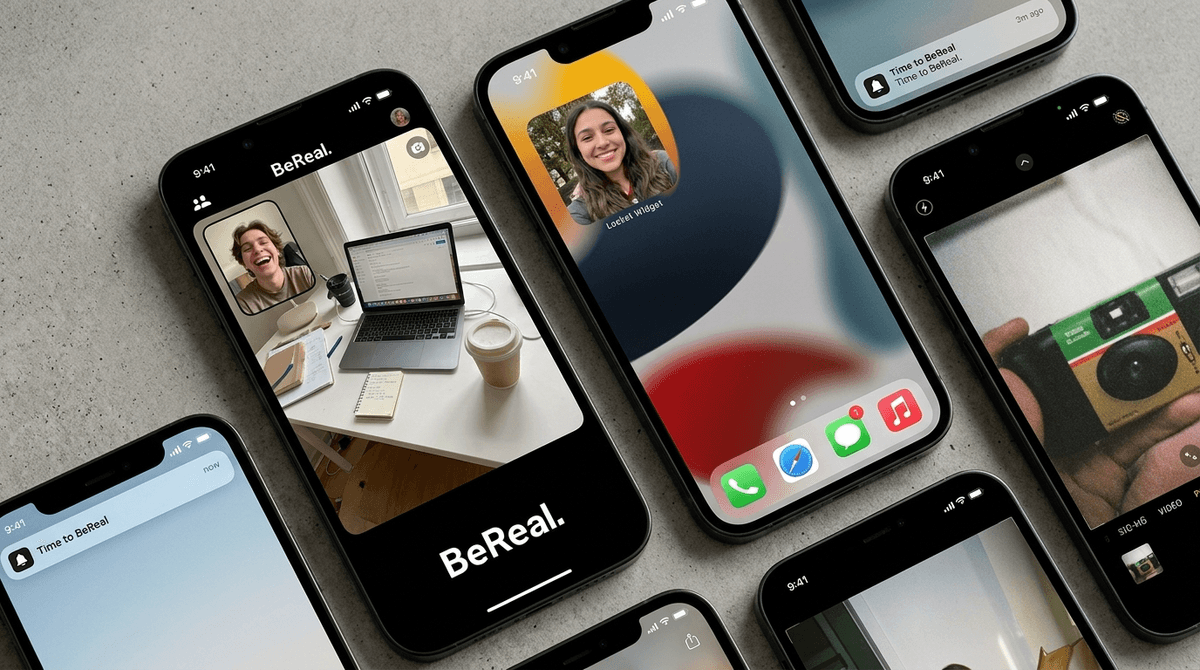
The poster child for this movement is BeReal. Once a day, at a random time, everyone gets a notification: "⚠️ Time to BeReal. ⚠️" You have two minutes to take a photo of whatever you are doing. The app takes a picture with both the front and back cameras simultaneously. No filters. No editing. If you post late, everyone knows. If you retake the photo ten times, everyone knows.
This "right now" reality has spawned a whole genre of apps like Lapse, which mimics a disposable camera where you can’t see your photos until they "develop" later, and Locket Widget, which bypasses the feed entirely and puts your friends' photos directly onto your phone’s home screen.
If you’ve noticed your teen suddenly taking a blurry photo of their homework or a half-eaten bag of chips, they aren't losing their minds—they’re being "authentic."
- Lower Stakes: On Instagram, there’s immense pressure to be "cool." On BeReal, being "boring" is the point. It’s a relief for kids who are exhausted by the performance of social media.
- The "Inner Circle" Vibe: Most of these apps are designed for close friends, not a public following. It feels more like a digital hangout than a stage.
- FOMO and Urgency: That two-minute timer creates a massive hit of dopamine. It’s a collective "event" that happens for their whole friend group at the same time.
- Anti-Aesthetic: In 2026, "ugly" is the new "pretty." Blurry, dark, or mundane photos are a way of signaling that you have a real life outside of your phone.
See why teens are moving away from traditional social media
The app that started it all. It’s simple, but it’s addictive. The main draw is the "RealMoji"—instead of a generic "like" button, you take a tiny selfie of your own face to react to a friend’s post.
- The No-BS Review: It’s better for their mental health than TikTok scrolling, but the "Discovery" tab is a cesspool of random strangers that your kid does not need to see.
This app is actually quite sweet. You add a widget to your home screen, and when a friend sends a photo, it appears right there. No opening an app, no scrolling.
- The No-BS Review: It’s intimate and generally safe because it’s limited to a small number of friends. It turns the phone into a digital picture frame for the people they actually care about.
Lapse turns your smartphone into a disposable camera. You take photos, they go into a "darkroom," and you can't see them for hours. It encourages kids to stay in the moment rather than immediately checking how they look.
- The No-BS Review: It’s a clever gimmick that actually works. However, it’s very pushy about "inviting friends" to unlock features, which is a classic growth-hack tactic that can be annoying for parents.
While not "new," Snapchat remains the ultimate "authentic" app because the messages disappear. It’s where the "real" conversations happen, away from the permanent record of other platforms.
- The No-BS Review: Still the most dangerous of the bunch due to the "Snap Map" (location sharing) and the pressure of "Streaks."
- Read our full guide on Snapchat safety
Ages 11-13 (The "I Just Want to See My Friends" Phase)
At this age, the pull toward BeReal or Locket Widget is mostly about not being left out of the group chat.
- Our Take: If they are going to be on social media, these "authentic" apps are often a "healthier" entry point than the algorithm-heavy feeds of Instagram.
- Action Step: Ensure their profile is private and, for the love of all things holy, turn off the "Discovery" or "Global" feeds. They should only see people they know in real life.
Ages 14-17 (The "Performative Authenticity" Phase)
Teenagers are smart. They’ve already figured out how to "game" the authenticity. They’ll wait until they’re at a party or a concert to post their BeReal, even if the notification went off three hours earlier while they were folding laundry.
- Our Take: This is where "authentic" social media can actually become more stressful. The pressure to always be doing something "cool-authentic" is real.
- Action Step: Talk to them about "Late BeReals." Remind them that they don't have to be doing something interesting to post. A photo of their feet while they watch The Office is perfectly fine.
While these apps feel "safer" because they lack the polished influencers, they have specific risks:
- The "Discovery" Tab: On BeReal, the Discovery tab allows you to see posts from people all over the world. It’s a gateway to talking to strangers. Make sure your child’s settings are set to "Friends Only."
- Location Sharing: Many of these apps default to sharing a precise location when a photo is posted. On a "Time to BeReal" post, that could tell the world exactly which classroom or bedroom your child is in. Turn off location services for these apps.
- Notification Anxiety: The "⚠️ Time to BeReal. ⚠️" notification is designed to be urgent. For some kids, this can cause genuine spikes in anxiety if they are in a situation where they can’t check their phone (like during dinner or a sports practice).
- Screenshotting: Just because a photo is "authentic" doesn't mean it's private. People can (and do) screenshot BeReal posts. The app notifies you if someone does, but the damage is already done.
Learn more about managing notification anxiety in teens
Instead of asking "What is that app?" (which is a one-way ticket to an eye-roll), try these conversation starters:
- "I saw a notification for 'Time to BeReal'—did you catch it today or were you 'late'?" (This shows you know the lingo without being weird about it).
- "Do you feel like people are actually 'real' on there, or do they wait until they’re doing something fun to post?"
- "I heard some of these apps show your location on a map. Can we double-check that yours is turned off so people don't know exactly where our house is?"
- "If someone sends a Locket photo that's inappropriate, does it just stay on your home screen? How do you handle that?"
The shift toward "authentic" social media is generally a positive trend. It moves the focus away from "likes" and "followers" and back toward actual friendship and the reality of daily life. However, "authenticity" is often just another type of performance.
As parents, our job isn't to ban these apps (which usually backfires), but to help our kids navigate the "urgency" they create. Remind them that their value isn't tied to a two-minute window, and that some of the best moments in life are the ones that don't get captured by both the front and back camera.
Next Steps:
- Check the Settings: Sit down with your teen and ensure BeReal is set to "Friends Only" and location sharing is off.
- Set "No-Phone" Zones: Ensure that a "Time to BeReal" notification doesn't interrupt family dinner or sleep.
- Take the Screenwise Survey: Understand your family's digital habits in context with your community to see if your teen's app usage is typical for their age and school.