

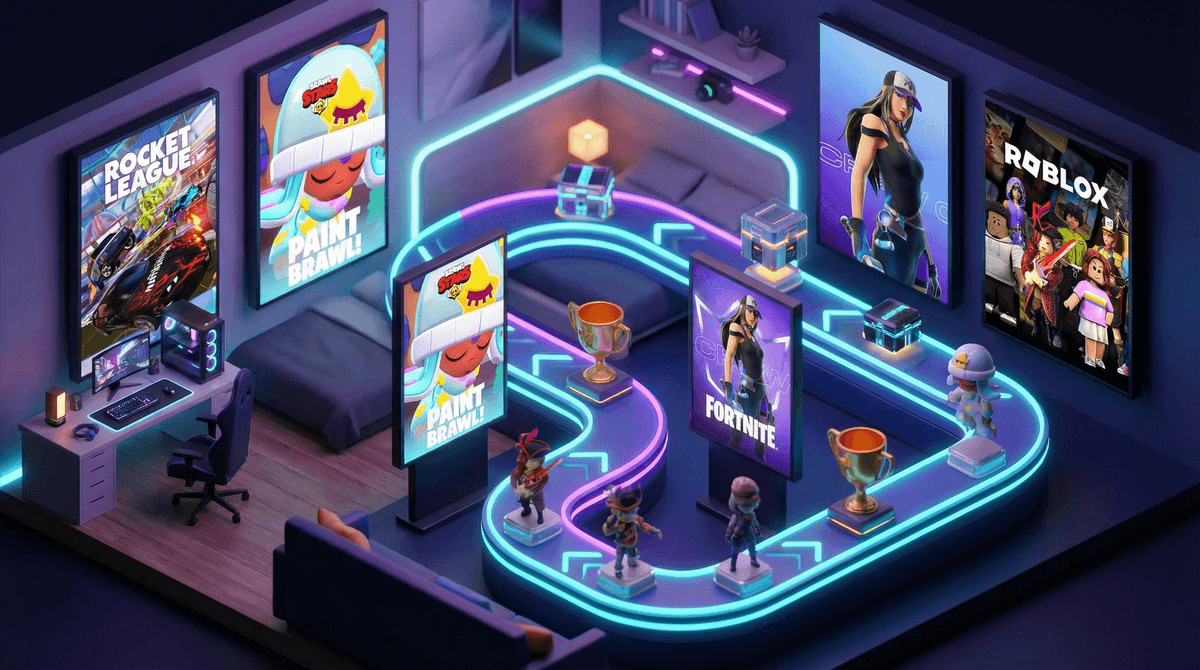
A battle pass is basically a seasonal rewards program inside a video game. Think of it like a digital punch card—play the game, complete challenges, level up your pass, unlock cosmetic items (character skins, emotes, weapon designs) and sometimes in-game currency.
Here's how they work: Most games offer a free tier with basic rewards and a premium tier (usually $10-20) that unlocks way more stuff. The catch? Battle passes expire. Usually after 2-3 months, the season ends, a new pass launches, and all those rewards you didn't unlock? Gone forever.
Fortnite popularized this model back in 2018, and now you'll find battle passes in Roblox experiences, Call of Duty, Rocket League, Brawl Stars—basically any game your kid plays online.
The psychological design here is chef's kiss from a business perspective and kind of brutal from a parenting one.
FOMO is the main driver. That exclusive skin everyone's wearing? Only available this season. Your kid's friends all have the premium pass and are showing off their new emotes. The free tier rewards are intentionally less exciting—you get a taste of what you're missing.
The sunk cost fallacy kicks in hard. Once kids buy the pass, they feel compelled to "get their money's worth" by grinding to unlock everything before the season ends. I've watched 10-year-olds stress about completing daily challenges like it's a second job.
It creates artificial urgency. Limited-time everything. Countdown timers. "Only 12 days left in the season!" This isn't accidental—it's designed to make kids feel like they need to play NOW and buy NOW.
And here's the sneaky part: battle passes often pay for themselves if you grind enough. Fortnite's battle pass costs 950 V-Bucks but rewards you with 1,500 V-Bucks if you complete it. So kids argue (somewhat legitimately) that it's a "one-time investment." Except that only works if they complete every single season, which means playing consistently for months.
According to our community data, about 55% of families have kids who game regularly, with Fortnite being used by 30% of kids (though 70% don't use it at all—you're not alone if your house is Fortnite-free). Of those Fortnite players, 20% play with friends or publicly online.
When your kid buys a battle pass, you're not just paying $10-20. You're potentially signing up for:
Increased screen time pressure. "I HAVE to play today or I'll fall behind on the pass!" suddenly becomes a daily negotiation. Battle passes are designed to require consistent engagement—usually 1-2 hours of play most days to complete without paying extra to skip tiers.
The tier-skip temptation. Didn't finish the pass? Games let you buy your way through remaining tiers, usually $1-2 per level. A kid who's 20 tiers away from that must-have skin at tier 100? That's another $20-40 on top of the original pass cost.
Seasonal repetition. Every. Single. Season. That $10 battle pass becomes $40-60 per year, per game. And if your kid plays multiple games with battle passes? Do the math.
Social dynamics. In games like Roblox (where 75% of kids in our community use it, with 60% playing on public servers), cosmetics signal status. Not having the battle pass items can genuinely affect how kids perceive themselves in their friend groups.
Ages 7-10: I'd seriously question whether battle passes make sense here. The pressure to complete them is real, and younger kids don't have the time management skills to balance "I need to finish my battle pass" with homework, sleep, and other activities. If you do allow it, make it clear that you're buying ONE pass as an experiment, and incomplete passes don't get replaced.
Ages 11-14: This is peak battle pass territory. Kids are old enough to understand the value proposition but still developing impulse control. Consider making battle pass purchases contingent on them completing the previous season's pass. See whether this makes sense for your specific situation
Ages 15+: Teens can probably manage this with their own money (allowance, birthday gifts, etc.). The real conversation shifts to budgeting and opportunity cost—that $10/month could be savings, or other purchases they value more.
Set a seasonal budget. "You get one battle pass per season, in one game. Choose wisely." This forces prioritization and prevents the multi-game spiral.
Make completion the requirement for renewal. If they didn't finish last season's pass, they don't get this season's. Natural consequences teach the lesson better than lectures about commitment.
Watch for the grind taking over. If your kid is stressed about daily challenges, playing when they clearly don't want to just to "keep up," or if battle pass deadlines are causing family conflict—that's your sign the system is working exactly as designed, and not in your kid's best interest.
Talk about the business model. Kids should understand they're not "earning" rewards—they're being incentivized to play more so they'll see more ads, buy more cosmetics, and stay engaged with the game. This isn't inherently evil, but it's worth understanding.
Consider the free-to-play alternative. Some kids genuinely don't care about cosmetics. If your kid isn't begging for the battle pass, don't suggest it. The free tier exists for a reason.
Battle passes aren't inherently bad, but they're designed to create spending habits and play patterns that benefit game companies, not your family. The "good deal" math only works if your kid completes the pass without it taking over their life or causing stress.
Some families make battle passes work great—they become a predictable, contained gaming expense that kids manage responsibly. Other families find they're a gateway to constant negotiation and increased screen time pressure.
You know your kid and your family's bandwidth. If battle passes are causing more stress than joy, or if the "limited time" pressure is driving unhealthy play patterns, it's completely reasonable to say no.
The cosmetic items aren't actually rare or valuable—they're artificially scarce digital goods. Your kid will survive without them, even if it doesn't feel that way in the moment.
If you're considering allowing battle passes: Start with one season in one game. Set clear expectations about completion requirements and time limits. Check in weekly about whether it's adding fun or stress.
If you're already in the battle pass cycle: Review how the last few seasons went. Did your kid complete them? Was the grind worth it? What did it cost in time and family harmony? Use that data to decide whether to continue.
If you want to dig deeper: Explore how Fortnite's business model works or understand Roblox's economy to see how battle passes fit into the bigger picture of how these games make money.
You've got this. And remember—saying no to a battle pass doesn't make you the mean parent. It might just make you the one who's actually paying attention.