

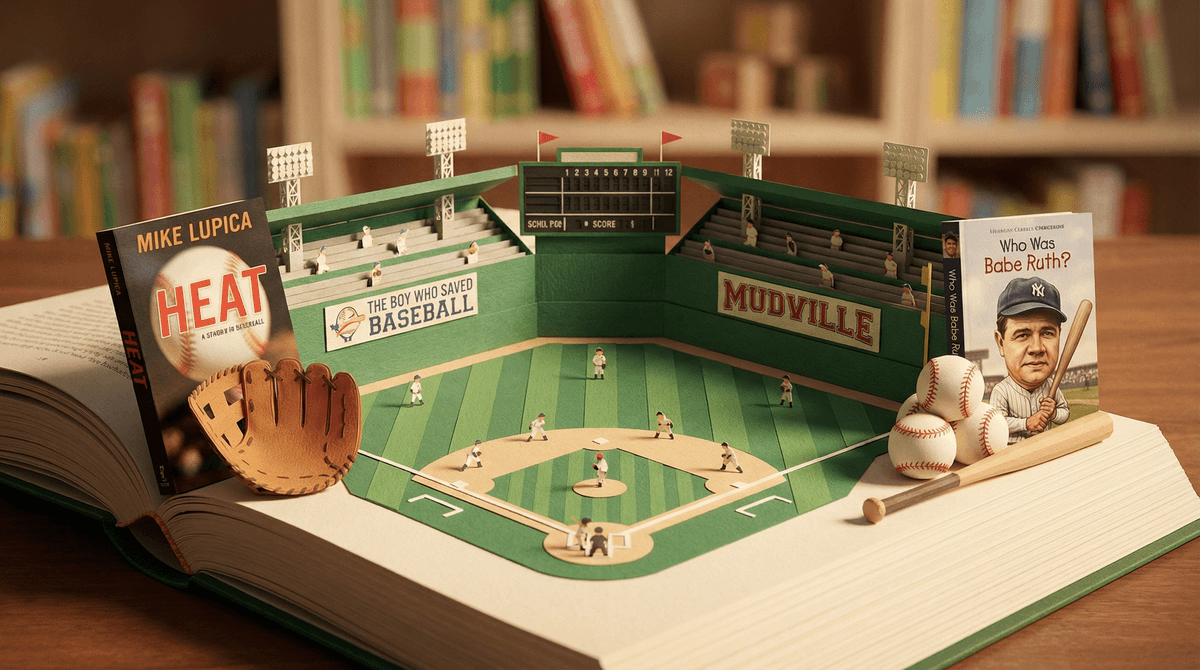
Here's something that might surprise you: sports books are secret weapons for getting reluctant readers hooked on actual books. And baseball books? They're basically the gateway drug of the genre.
Baseball books for kids range from picture books about legendary players to middle-grade novels where the real drama happens off the field, to non-fiction that teaches history through the lens of America's pastime. We're talking everything from Matt Christopher classics that have been passing through elementary school libraries since the '80s to newer graphic novels that make stats and strategy actually exciting.
The best part? These books aren't just for the kids who live and breathe baseball. They're for any kid who needs a hook—a reason to care about the characters before they'll invest in the reading.
Let's be real: getting some kids to read feels harder than getting them to willingly eat vegetables. But sports books, and baseball books specifically, have a few things going for them:
Built-in stakes. Every game has a winner and loser. Every season has an arc. Kids understand this structure instinctively, which makes the narrative easier to follow than, say, a coming-of-age story about feelings.
Accessible entry point. Even kids who've never played baseball have probably watched a game, played Backyard Baseball, or at least understand the basic concept. The familiarity lowers the barrier to entry.
Short chapters, fast pace. Most baseball books for kids are structured around games or practices, which means natural chapter breaks and built-in cliffhangers. Perfect for kids who need that "just one more chapter" momentum.
Real-life connection. Unlike fantasy worlds or historical settings, baseball is happening right now. Kids can watch games, collect cards, play the sport themselves, or dive into MLB The Show. The books feel connected to their actual world.
Ages 4-7: Picture Books
Start here if you're building early literacy or just want to share the love of the game:
- The Boy Who Saved Baseball by John H. Ritter (technically for older kids, but the title works for younger audiences as a read-aloud)
- H is for Home Run: A Baseball Alphabet by Brad Herzog — great for teaching letters through baseball terms
- Anything about Jackie Robinson — his story is powerful, age-appropriate, and teaches way more than just baseball
Ages 7-10: Early Chapter Books
This is the sweet spot for the Matt Christopher era:
- Matt Christopher's Baseball series — These books are formulaic in the best way. Kid faces challenge (sports-related or personal), kid works hard, kid learns lesson, team probably wins. They're not going to win literary awards, but they've hooked generations of readers.
- Who Was Babe Ruth? and other "Who Was?" biographies — These are fantastic for kids who prefer non-fiction or are obsessed with stats and real players.
Ages 9-13: Middle Grade Novels
Now we're getting into books where baseball is the backdrop for bigger themes:
- Heat by Mike Lupica — This one tackles immigration, family separation, and identity through the story of a Cuban kid with a killer pitching arm. It's genuinely good literature that happens to involve baseball.
- The Parker Inheritance by Varian Johnson — Okay, this isn't strictly a baseball book, but baseball history (specifically the Negro Leagues) plays a crucial role in the mystery. Great for kids ready for more complex narratives.
- Mudville by Kurtis Scaletta — Fantasy baseball where a game literally never ends. Weird, creative, and perfect for kids who like their sports with a side of magical realism.
These books teach more than baseball. The best sports books use the game as a framework to explore friendship, failure, perseverance, teamwork, and dealing with pressure. Your kid will learn about handling disappointment when their team loses, supporting teammates even when they're struggling, and showing up even when they don't feel like it.
History comes alive. Baseball's history is American history—segregation, immigration, women's rights, labor movements. Books about Jackie Robinson, the Negro Leagues, or the All-American Girls Professional Baseball League aren't just sports stories; they're windows into crucial moments in our past.
Stats and strategy = math practice. Don't sleep on this. Kids who get into baseball books often get into baseball stats, which means they're suddenly doing math voluntarily. Batting averages, ERAs, calculating win percentages—it's all sneaky learning.
Not just for boys. This should be obvious, but it's worth saying: baseball books aren't gendered. Girls play baseball (and softball), girls watch baseball, and girls read baseball books. If you're only handing these to your sons, you're missing an opportunity.
If you've got a kid who groans every time you suggest reading, or who flies through graphic novels but won't touch anything else, baseball books might be your answer. They're not going to turn every kid into a bookworm overnight, but they're a legitimate on-ramp to reading for pleasure.
The goal isn't to keep them reading baseball books forever—it's to show them that books can be about things they actually care about, that reading doesn't have to feel like homework, and that stories (even ones about sports) can make them feel something.
Start with one book. See what happens. Worst case scenario, they read one book about baseball. Best case? You've just unlocked a whole new category of media that doesn't require a screen.
Find what your kid cares about beyond baseball. Once they've read a few baseball books, branch out to other sports, or to books that share similar themes (teamwork, competition, overcoming obstacles). The goal is building a reading habit, not creating a baseball book completist.
Connect books to real life. Watch a game together. Go to a local Little League game. Play catch. When kids see the connection between what they're reading and what they're experiencing, both become more meaningful.
Don't force it. If your kid tries a baseball book and hates it, that's fine. Not every hook works for every kid. The important thing is that you're trying different entry points and paying attention to what resonates. Learn more about finding the right books for reluctant readers if baseball doesn't land.
And hey, if baseball books lead to your kid spending less time on YouTube Shorts and more time actually reading? That's a win in my book.