

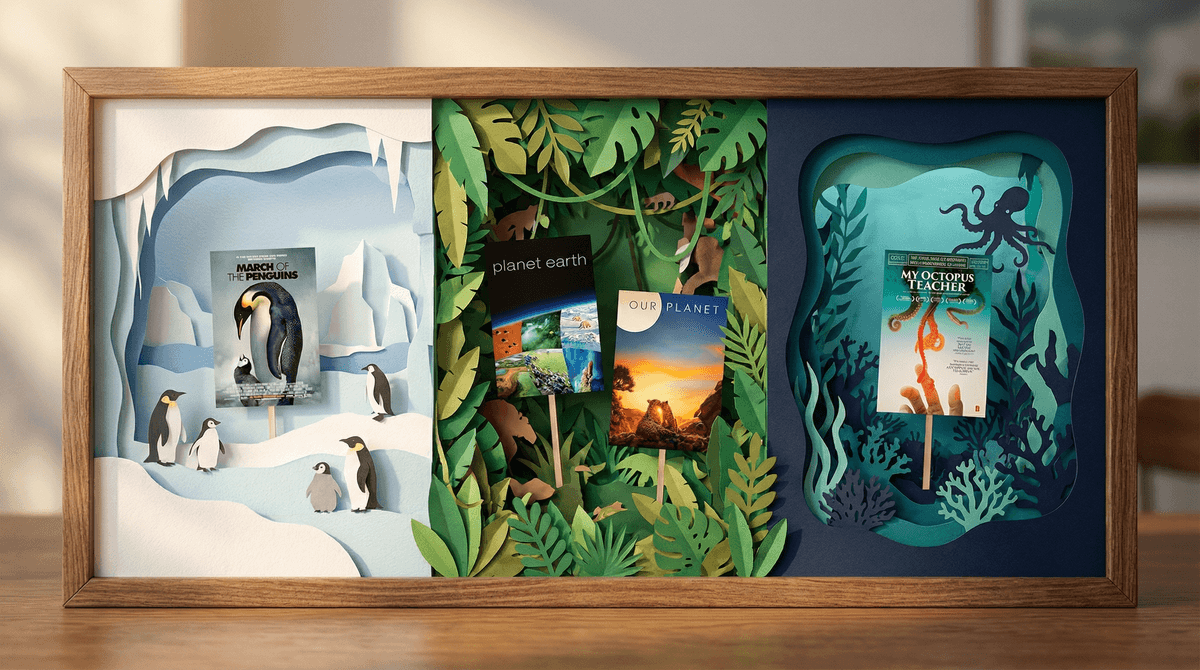
Animal documentaries are non-fiction films and series that showcase wildlife, nature, and animal behavior—from the intimate lives of meerkats to the epic migrations of whales. They're everywhere: Netflix, Disney+, PBS, YouTube, and pretty much every streaming service has a nature section that could keep your kids watching for weeks.
The quality spectrum is wild (pun intended). On one end, you've got BBC's Planet Earth with David Attenborough's soothing narration and cinematography that makes you wonder how they even got that shot. On the other, there's... well, let's just say not every nature documentary is created equal, and some are basically just YouTube compilations with dramatic music.
Animal documentaries hit differently than other educational content. There's something primal about watching a cheetah chase down a gazelle or baby sea turtles scramble to the ocean. Kids are naturally drawn to animals, and these shows deliver:
Real stakes and drama - Unlike scripted shows, you genuinely don't know if that penguin chick is going to make it. The tension is real.
Cool factor - Watching a mantis shrimp punch through glass or an octopus change colors in real-time is objectively awesome. Kids love sharing these facts at dinner.
Comfort viewing - Many animal docs (especially the lighter ones) are genuinely calming. There's a reason Bluey isn't the only thing parents put on for wind-down time.
Educational street cred - Kids know these count as "learning," which makes screen time negotiations easier. And honestly? They're not wrong.
Here's what catches parents off guard: not all animal documentaries are created equal in terms of intensity.
The nature documentary world has a dirty little secret—the same stunning cinematography that captures a lion pride bonding also captures that lion pride taking down a wildebeest in graphic detail. And streaming services aren't always great about flagging this.
What "Intense" Actually Means:
Predator/prey sequences - Some shows linger on the hunt. You'll see the chase, the takedown, sometimes the aftermath. Planet Earth is breathtaking but doesn't shy away from showing the food chain in action.
Animal death and suffering - Documentaries about survival often show animals dying from starvation, disease, or environmental conditions. That baby elephant that can't keep up with the herd? Yeah, that scene exists.
Climate change reality - Recent nature docs don't pull punches about habitat loss and extinction. Our Planet famously showed walruses falling off cliffs due to melting ice. It's important content, but it can be genuinely distressing for kids.
Mating and birth - Nature is messy. Some documentaries show mating rituals and births in detail that might prompt questions you weren't planning to answer during Saturday morning screen time.
Ages 3-6: Stick to the gentle stuff
- Octonauts (animated but educational)
- Disneynature films (Earth, Oceans, Monkey Kingdom) - these are edited specifically for families
- PBS Nature episodes labeled "family-friendly"
- National Geographic Kids YouTube channel
These typically avoid predator/prey violence or edit around it carefully.
Ages 7-10: Introduce with context
- Planet Earth II (with co-viewing for intense moments)
- My Octopus Teacher (beautiful, emotional, some sad moments)
- Life series from BBC
- March of the Penguins
Watch together the first time. Have a conversation about the food chain before you start. Use the "this is nature" framing.
Ages 11+: They can handle the real deal
- Full Planet Earth series
- Our Planet (but discuss climate anxiety—it's heavy)
- Blue Planet
- Night on Earth
These kids can process that nature is beautiful AND brutal. They're ready for conversations about conservation, extinction, and environmental responsibility.
Preview or check ratings - Common Sense Media reviews are your friend here. A documentary rated TV-G can still have intense moments that freak out a sensitive 6-year-old.
Co-viewing is your superpower - Watch together, especially the first time. You can gauge reactions, fast-forward through parts that are too much, and answer questions in real-time.
The food chain conversation - If your kid hasn't learned about predator/prey relationships yet, have that talk BEFORE you start a serious nature doc. Frame it as "this is how nature works" rather than "isn't this violent?"
Climate anxiety is real - Older kids watching docs about coral bleaching, deforestation, or species extinction can feel genuinely helpless and scared. Balance these with conversations about what your family can do and stories of conservation success.
Quality varies wildly - Netflix has some amazing nature content and some... less amazing content. The algorithm doesn't distinguish between BBC-level cinematography and low-budget filler. Check reviews.
Anthropomorphizing is everywhere - Many documentaries assign emotions and narratives to animals ("Mama bear is worried about her cubs"). This makes for compelling TV but isn't always scientifically accurate. Older kids can understand this distinction.
Animal documentaries can be incredible educational content—they inspire curiosity, teach empathy, and showcase the natural world in ways that books simply can't. But they're not all created equal, and "educational" doesn't automatically mean "appropriate for all ages."
The good news? With a little preview work and some co-viewing, you can find amazing content that fits your kid's age and sensitivity level. Start gentle, work your way up, and don't feel bad about skipping the intense parts. David Attenborough will forgive you.
Start here: Check out Disneynature films for younger kids or Planet Earth II for older ones.
Go deeper: Browse educational shows for kids to find more great learning content beyond nature docs.
Still have questions? Check specific documentaries you're considering and get personalized recommendations based on your kid's age and sensitivity.