

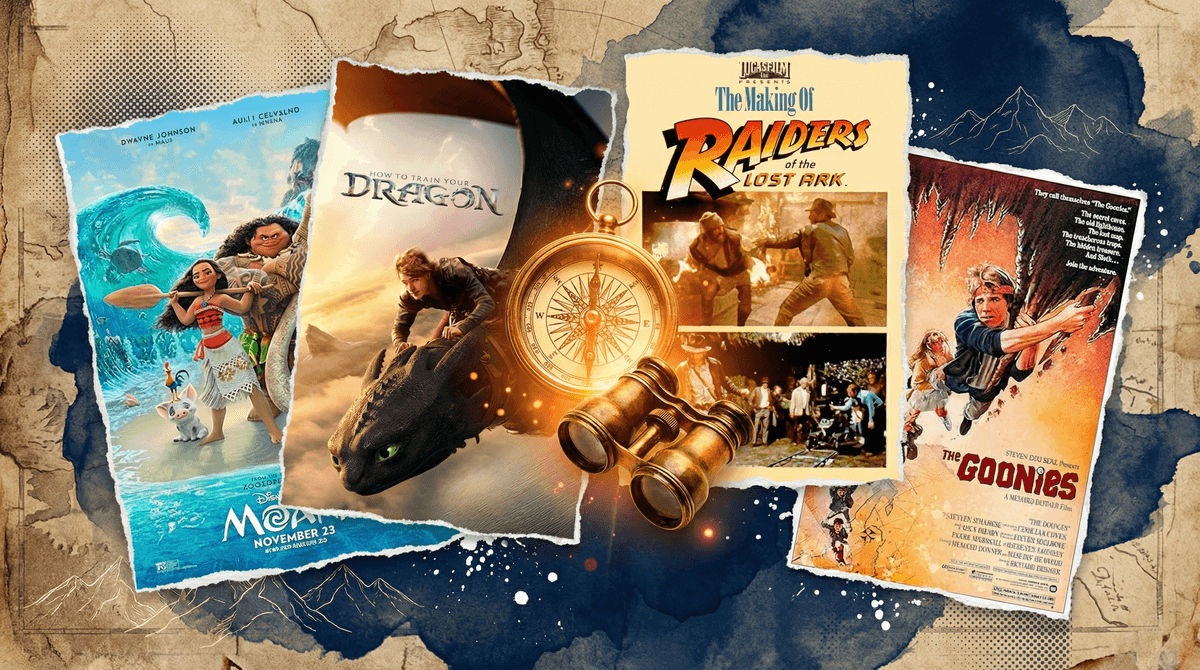
Family adventure movies are those films where characters set out on a quest, face real danger, solve impossible problems, and come out the other side changed. We're talking about movies like The Goonies, Moana, Indiana Jones, The Incredibles, and How to Train Your Dragon.
These aren't just "kid-friendly action movies" — they're stories built around characters who have to be brave when they're scared, who mess up and keep going, and who discover they're capable of more than they thought possible.
And here's the thing: watching these movies together as a family isn't just entertainment. It's actually one of the most underrated parenting tools we have.
Look, I get it. You're trying to limit screen time, you're worried about passive consumption, and you're wondering if another movie night is really the best use of family time. Fair questions.
But adventure movies occupy a unique space. They're shared emotional experiences that give families a common language for talking about hard things. When your 8-year-old is scared about starting a new school, you can reference how Marlin had to cross the entire ocean to find Nemo. When your tween is struggling with self-doubt, you can talk about how Hiccup was the weakest Viking who became the hero.
Research on narrative transportation shows that when we're absorbed in stories, we're actually rehearsing emotional responses and problem-solving strategies. Kids watching adventure movies aren't just passively consuming — they're mentally running through "what would I do?" scenarios. They're building their courage muscle in a safe space.
Plus, unlike a lot of modern content kids consume (looking at you, YouTube shorts and TikTok), adventure movies have actual story arcs. Beginning, middle, end. Setup, conflict, resolution. This narrative structure is increasingly rare in kids' media diet, and it matters for how they understand cause and effect, delayed gratification, and perseverance.
Not all adventure movies are created equal. Here's what to look for:
Real stakes that feel age-appropriate. The best family adventure movies have danger that feels real without being traumatizing. Paddington 2 nails this — there's genuine peril and a villain you actually worry about, but it never crosses into nightmare territory.
Characters who solve problems through creativity, not just violence. Yes, there might be action sequences, but watch for movies where the hero wins through ingenuity, teamwork, or emotional growth. Encanto is technically a family drama, but it's structured like an adventure movie where Mirabel has to solve the mystery of why the magic is fading — and she does it through understanding and empathy, not fighting.
Humor that works for multiple ages. The movies that become family favorites are the ones where parents aren't checking their phones. The Princess Bride, Kubo and the Two Strings, and Spider-Man: Into the Spider-Verse work because they're legitimately good films that respect the audience's intelligence.
Emotional complexity. The movies kids remember aren't the simple good-vs-evil stories. They're the ones where characters have to make hard choices, where the "villain" has understandable motivations, where heroes are scared and flawed. Coco deals with death, family conflict, and forgiveness. Raya and the Last Dragon is about learning to trust again after betrayal.
Ages 4-7: Start with adventures that have clear heroes, manageable tension, and quick resolutions. Finding Nemo, Moana, The Incredibles, and Toy Story work beautifully. The scary parts are brief, and safety/reunion is always restored.
Ages 8-11: This is the sweet spot for classic adventure. The Goonies, Jumanji (the original or the new ones), How to Train Your Dragon, Spider-Man: Into the Spider-Verse. Kids this age can handle more sustained tension and more complex moral questions.
Ages 12+: Now you can introduce adventure movies with real emotional weight and moral ambiguity. The Lord of the Rings trilogy (extended editions for committed families), Indiana Jones, The Hunger Games, Mad Max: Fury Road (if your teen can handle intense action).
Here's where most families miss the opportunity: they watch the movie, say "that was good," and move on.
Ask one good question. Not a quiz, not a lesson — just genuine curiosity. "Which character would you want to be on an adventure with?" or "What was the scariest part for you?" or "Do you think the hero made the right choice when they...?"
Reference it later. When your kid faces something hard, bring up the movie. "Remember when Moana had to go past the reef even though she was scared? You're doing the same thing right now."
Watch it again. Kids love rewatching favorites, and there's real value in it. They catch things they missed, they feel the comfort of knowing how it ends, and they get to experience the story from a slightly older, wiser perspective.
Let them process it their way. Some kids want to talk immediately. Some need to draw or play out the scenes. Some just want to sit quietly. All of it is processing.
Adventure movies won't solve all your parenting challenges, but they're one of the few types of screen time that can actually bring your family closer together while teaching resilience, courage, and problem-solving.
In a digital landscape full of algorithmically-generated content designed to keep kids scrolling, a well-crafted adventure movie with a beginning, middle, and end is almost radical. It asks kids to pay attention for 90+ minutes, to care about characters, to feel genuine emotions, and to think about what they would do in impossible situations.
That's not "just" entertainment. That's building the emotional and cognitive tools kids need to face their own adventures.
Looking for specific recommendations? Check out our guide to the best adventure movies by age for a curated list with content warnings and conversation starters.
Want to balance movie nights with other activities? Read about creating a balanced media diet for your family.
Wondering if a specific movie is right for your kid? Search for it in Screenwise to see our WISE score, parent reviews, and age recommendations. Or Get answers about specific content concerns .
.