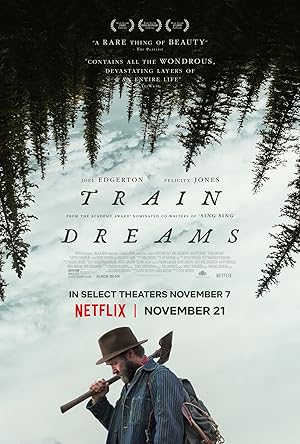
The vibes-to-plot ratio
If you look at that 97% critic score on Rotten Tomatoes, you might expect a cinematic firework show. It isn't that. Train Dreams is a textbook example of "slow cinema," where the texture of the world matters more than the speed of the story. It is a movie about a man named Robert Grainier, but it is also a movie about the sound of wind in the trees, the physical weight of a crosscut saw, and the way a landscape changes over fifty years.
For a generation used to the rapid-fire editing of YouTube or the constant dopamine hits of a Marvel movie, this will feel like a test. There are no jump scares, no massive plot twists, and very little dialogue compared to your average drama. The filmmakers are betting that you will find the quiet details of a logger's life in the early 1900s as interesting as they do. For the right viewer, it works. For everyone else, it’s a very high-quality nap.
Why the "literary" tag matters
This is an adaptation of a Denis Johnson novella, and it keeps that bookish DNA. In literature, we call this a "character study." In a movie, that usually means the camera lingers on a face for ten seconds longer than you think it should.
The 80% audience score is actually quite high for a film this meditative. It suggests that while it’s slow, it isn't pretentious. There is a groundedness to the work. It deals with the "Great American West" not through shootouts, but through the grueling, repetitive labor of building railroads. If your teen is into history or is the type to get lost in a world-building game like Red Dead Redemption 2 just to look at the scenery, they might actually vibe with this. If they need a hook in the first ten minutes, they are going to bail.
The "English Class" crossover
There is a specific type of student who will love this: the one who actually enjoys the books on the summer reading list. Because Train Dreams is so focused on themes of isolation and the "rapidly-changing America" mentioned in the synopsis, it’s a goldmine for the kind of analysis teachers love.
It’s a rare 2025 release that feels like it could have been made forty years ago. It doesn't use modern snark or meta-humor to wink at the audience. It takes its subject seriously. If you’re trying to help a teen build a "film palate" beyond blockbusters, this is a perfect entryway. It’s short, it’s beautiful, and even if they find it boring, they’ll recognize that it’s well-made boring.
How to watch it without a mutiny
Don't put this on for a Friday night family movie night when everyone is tired and wants to laugh. This is a "Sunday afternoon when it's raining" movie.
- Turn off the phones. This movie lives or dies on its atmosphere. If you're checking texts, you'll miss the subtle shifts in the protagonist's life that make the ending land.
- Watch it on the biggest screen possible. The 4.1 Letterboxd score comes from people who appreciate the visual craft. On a phone, it just looks like a guy in the woods. On a 4K TV, it’s a painting.
- Skip the "Standard with Ads" tier if you can. Nothing kills a meditative moment about the tragedy of human existence like a 30-second spot for insurance. If you're watching this on Netflix, try to watch it uninterrupted.
This isn't a movie you watch to see what happens next. You watch it to see what it feels like to live a whole life in a world that no longer exists. For a mature 15-year-old, that might be a more profound experience than any action flick they'll see this year.