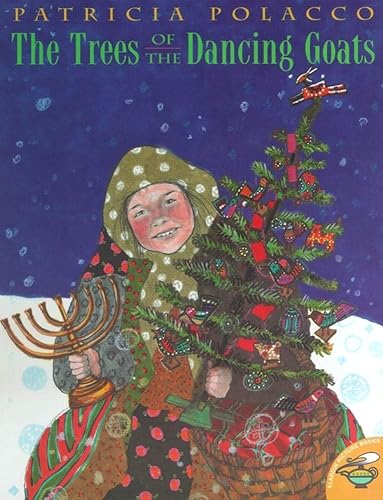
The Trees of the Dancing Goats

The Trees of the Dancing Goats

book

2000, Children's Books, Growing Up & Facts of Life

WISE
86%

WISE Score

4.8

Amazon

A Jewish family secretly delivers Christmas trees to sick neighbors, proving the best holiday gift is showing up when it matters.

Amazon4.8
Common Sense Media

Where to Read

Our reviews and ratings are 100% unbiased, but as an Amazon Associate, Screenwise earns an affiliate fee if you buy a book or game by clicking one of our links. We don't get any credit if you just Google it instead :)

Screenwise Verdict

This is Patricia Polacco at her best—a true story from her childhood turned into a picture book that teaches empathy without being preachy. The interfaith angle is genuinely lovely: a Jewish family doesn't just tolerate their Christian neighbors' holiday, they actively make it happen when illness threatens to ruin it.

The sacrifice element is what makes this story sing. Grampa's carved animals were meant to be Hanukkah gifts for Trisha and her brother, but they become Christmas ornaments instead. That's the kind of generosity that sticks with kids—not just giving away extra stuff, but giving away something precious.

The book does feel a bit dated in pacing and illustration style compared to modern picture books, and the scarlet fever epidemic setup is very 'old-timey.' But the emotional core is timeless, and the 4.8 Amazon rating (plus 4.34 on Goodreads) suggests it still resonates with families. A solid holiday read that builds cultural literacy and models the kind of friendship we all want our kids to have.
Age Fit

Perfect for ages 4-9, especially during the holiday season. Young enough for preschoolers to grasp the generosity theme, sophisticated enough for early elementary kids to appreciate the interfaith friendship and cultural learning. Older kids might find it a bit simple unless they're reading it to younger siblings.

WISE Breakdown
Wholesome
95

A heartwarming story of interfaith friendship and generosity during the holidays. Models profound kindness—a Jewish family sacrifices their own Hanukkah decorations to bring Christmas joy to sick Christian neighbors. The emotional tone is warm and age-appropriate, celebrating compassion without being preachy.

Imaginative
72

Patricia Polacco's distinctive illustration style brings warmth and personality to the story. The concept of carved wooden animals becoming Christmas ornaments is charming, and the story invites discussion about different holiday traditions. However, it's a fairly straightforward narrative without fantastical elements or open-ended creative prompts.

Safe
98

Extremely safe content. The only potentially sensitive element is scarlet fever keeping neighbors bedridden, but it's handled gently without graphic descriptions. No violence, scary imagery, or inappropriate content. The illness context is mild and resolved positively.

Enriching
88

Rich educational value: introduces Hanukkah traditions (latkes, menorah, eight days), demonstrates interfaith respect and understanding, and models sacrifice and empathy in action. Based on Polacco's real childhood memory, giving it authenticity. Builds cultural literacy and emotional intelligence around helping others even when it costs you something.

Parent Info

Why It Might Be Great

  • One of the best interfaith holiday books out there—shows kids that respecting other traditions doesn't diminish your own
  • Models real sacrifice: Grampa's hand-carved animals (the family's Hanukkah gifts) become ornaments for neighbors' trees
  • Patricia Polacco's warm, distinctive illustrations and storytelling style—she's a master at emotional, memoir-based children's books
  • Great conversation starter about what it means to help others during hard times, even when you're celebrating yourself
  • Introduces Hanukkah traditions (latkes, wooden toys, eight nights) in an organic, story-driven way

What to Watch For

  • The scarlet fever epidemic is the story's catalyst—neighbors are bedridden and can't celebrate Christmas. It's handled gently, but sensitive kids might worry about illness
  • The family gives away their own gifts, which could spark questions about fairness or 'why can't they keep some?'—good teaching moment about true generosity
  • Published in 1996 (not 2000 as listed), so the illustrations and pacing feel a bit old-school compared to modern picture books

Conversation Starters

  • "Why do you think Trisha's family wanted to help their neighbors celebrate Christmas even though they celebrate Hanukkah?"
  • "Grampa gave away the animals he carved as gifts. Would that be hard for you to do? When have you given up something you wanted to help someone else?"
  • "What are some ways your family's traditions might be different from your friends' families? How can we learn about and respect other people's holidays?"
  • "The story says this was the 'first miracle of many'—what do you think the other miracles were?"

Ask Anything

Get a personalized guide on any topic