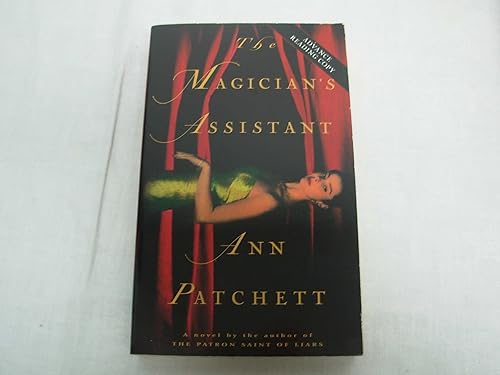
The trick behind the curtain
The book starts with a death, but the real hook is the deception. Sabine has spent twenty years as the literal and figurative support system for Parsifal, a man who built a career on illusion and a personal life on even bigger lies. When he dies, she discovers that the tragic backstory he fed her—the one where his entire family died in a fire—was a total fabrication.
This isn't a thriller where Sabine goes on a vengeful hunt for the truth. Instead, it’s a quiet, almost meditative look at what happens when you realize the person you were closest to was a stranger. Patchett treats the discovery of Parsifal’s living family in Nebraska not as a "gotcha" moment, but as a slow-motion collision between two completely different worlds.
From Los Angeles glitz to Nebraska ice
The atmospheric shift in the middle of the novel is what makes it stick. We move from the sun-drenched, performative world of Los Angeles magic shows into the brutal, frozen reality of a Nebraska winter. If you’ve ever felt like an outsider at a family gathering, these chapters will feel visceral.
Sabine is grieving a man the family hasn't seen in decades, while they are grieving a version of a son they never truly knew. The friction here isn't loud or violent; it’s found in the small things—the way a mother looks at her son's widow, or the way a sister tries to claim a piece of a brother she lost long ago. It’s a masterclass in how environment dictates mood. The cold isn't just a weather report; it’s a reflection of how isolated Sabine feels now that her "magician" has vanished for good.
Why it still hits
While this was published in 1997, it doesn't feel like a period piece, even though it deals heavily with the fallout of the AIDS crisis. Patchett focuses on the collateral damage of secrets. It’s a story about the people left behind to clean up the mess when a loved one dies with their secrets intact.
If you’re a fan of "found family" stories, this is a top-tier pick. It explores a very specific type of love—the kind between a woman and her gay best friend/husband—that is rarely given this much weight or dignity in fiction. It’s not romantic in the traditional sense, but the bond is clearly the most important thing in Sabine’s life.
How to approach the slow burn
If you’re looking for a plot that moves like a freight train, you’ll be disappointed. This is a book meant for a rainy weekend when you have the mental bandwidth to sit with someone else's grief.
- Don't rush the first fifty pages. The setup in LA feels a bit like a dream sequence, which is intentional.
- Pay attention to the "magic" metaphors. Patchett isn't subtle with them, but they work. She’s constantly asking if a well-told lie is better than a harsh truth.
- Expect a quiet ending. There are no massive explosions or tidy resolutions. It ends on a note that feels honest to the characters rather than satisfying for the reader, which is why it stays with you.
If you enjoyed Bel Canto or other stories where a group of strangers is forced into a small space to work through a crisis, this is the blueprint for that specific Patchett vibe. It’s smart, it’s sad, and it’s deeply empathetic toward everyone involved, even the man who lied to everyone he loved.