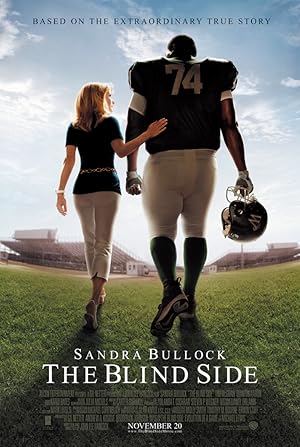

The Blind Side

The Blind Side

movie

PG-13, 2009, Biography, Drama

WISE
48%

WISE Score

66

Avg. Tomatometer

Sandra Bullock plays white savior in a syrupy sports drama that real-life Michael Oher wishes didn't exist.

IMDb7.6
RT Critics66%
MC53
Common Sense Media
Where to Watch
Loading streaming options...
Screenwise Verdict

Here's the thing: The Blind Side was a massive hit in 2009, Sandra Bullock won an Oscar, and your mom probably cried during it. But we need to talk about why this one hasn't aged well.

The film tells the story of Michael Oher with all the nuance of a Hallmark card. It centers the wealthy white family as heroes while portraying Michael as essentially helpless until they swoop in—which, awkwardly, Michael Oher himself has publicly pushed back against. The real guy was already a capable student and athlete; the movie makes him look clueless for dramatic effect.

The filmmaking is aggressively mediocre—predictable beats, syrupy music cues, zero visual creativity. It's the kind of movie that wants you to feel good without actually thinking hard about systemic poverty, educational inequality, or racial dynamics. Everything gets wrapped up in a neat bow.

That said, if you're looking for a family movie night option that sparks conversation about privilege and helping others, you could use this—but only if you're prepared to critique it alongside your kids. "Why does this movie focus so much on the white family?" is a better conversation than just absorbing the narrative uncritically.

Bottom line: Skip it unless you're specifically studying white-savior tropes in Hollywood or your kid is doing a report on problematic biopics. There are better sports movies (Remember the Titans, McFarland USA) and better conversations to be had.


Age Fit

Best for ages 11-16 who can handle themes of poverty and family trauma, though the dated white-savior narrative makes it a tough recommend in 2025. Adults may find it cringeworthy and oversimplified. Not compelling enough for older teens unless they're football fans or studying problematic Hollywood tropes.

WISE Breakdown
Wholesome
72

Models generosity and family support, with Sandra Bullock's character showing fierce advocacy for a vulnerable teen. The core story of helping someone in need is genuinely heartwarming. However, the film has a white-savior narrative that feels dated and simplistic, glossing over systemic issues and centering the wealthy family's perspective over Michael Oher's agency. The emotional beats work, but the execution is syrupy and patronizing.

Imaginative
38

This is a straightforward, by-the-numbers sports biopic with zero creative risks. The direction is paint-by-numbers Hallmark-style filmmaking with predictable story beats and no visual flair. It doesn't invite viewers to think differently or explore complex ideas—it spoon-feeds a feel-good narrative without nuance. The only 'imagination' is in how the film creatively avoids dealing with any real complexity.

Safe
78

PG-13 rating is appropriate. Common Sense Media recommends age 11+. There's some mild language, brief references to drug use in Michael's past, and themes of poverty and family trauma, but nothing graphic or surprising. No violence, sex, or gore. The main safety concern is the oversimplified racial dynamics that might require parent conversation, but content-wise it's predictable and safe for tweens and up.

Enriching
52

The film raises important topics—homelessness, educational inequality, foster care—but handles them with the depth of a greeting card. It could spark conversations about privilege and helping others, but the white-savior framing undermines genuine learning. Michael Oher himself has criticized how the film portrayed him as clueless rather than capable. There's some value in seeing generosity modeled, but the lack of nuance and the false narrative (Oher has disputed key elements) limit its enrichment potential significantly.

Parent Info

Why It Might Be Great

  • Sandra Bullock delivers a committed performance that won her an Oscar (even if the material is problematic)
  • The core message about helping others and opening your home to someone in need resonates emotionally
  • Can spark important conversations about privilege, race, and the foster care system—if you're willing to critique the film's approach
  • Football sequences are competently done for sports fans

What to Watch For

  • Heavy white-savior narrative that portrays Michael Oher as helpless rather than capable—he's criticized the film publicly
  • Oversimplifies complex issues of race, poverty, and systemic inequality into a feel-good fairy tale
  • Some references to drug use, gangs, and family trauma (not graphic but present)
  • The 'based on a true story' label is generous—key elements have been disputed
  • Dated and syrupy tone that hasn't aged well since 2009

Conversation Starters

  • "Why do you think the movie focuses so much on Leigh Anne's perspective instead of Michael's inner thoughts and feelings?"
  • "What do you think Michael already knew about football before the Tuohys helped him? Does the movie show him as smart?"
  • "How does the movie show the differences between Michael's old neighborhood and the Tuohys' world? What caused those differences?"
  • "If you were making a movie about someone's life, how would you make sure to tell their story fairly?"

Ask Anything

Get a personalized guide on any topic