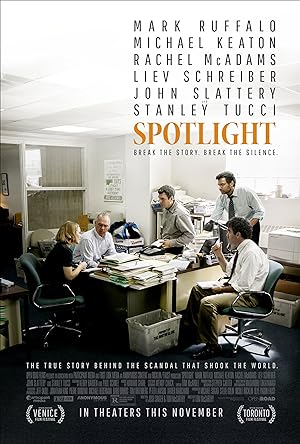

Spotlight

Spotlight

movie

R, 2015, Biography, Crime

WISE
72%

WISE Score

97

Avg. Tomatometer

Oscar-winning journalism drama about exposing the Catholic Church abuse scandal—heavy, powerful, and essential viewing for older teens.

IMDb8.1
RT Critics97%
MC93
Common Sense Media
Where to Watch
Loading streaming options...
Screenwise Verdict

Spotlight is exceptional filmmaking about a horrific subject. It's the rare movie that treats journalism as heroic work—unglamorous, painstaking, and essential. The Boston Globe's Spotlight team exposed a massive scandal that shook the Catholic Church worldwide, and this film shows exactly how they did it: phone calls, archives, interviews, persistence.

It's not easy viewing. Even though director Tom McCarthy avoids graphic depictions, the subject matter—priests abusing children and the Church systematically covering it up—is deeply upsetting. The film earned its R rating through dialogue and theme, not violence or sex. Common Sense Media's 15+ recommendation is spot-on.

But for mature teens and adults, this is genuinely enriching. It's a masterclass in investigative reporting, institutional accountability, and moral courage. The performances are understated and powerful, the screenplay is tight, and the whole thing feels urgent and important. It won Best Picture, and it deserved it.

Not for family movie night unless your kids are older teens ready for serious, heavy content. But if they are? This is the kind of film that sticks with you and teaches something real about how change happens.
Age Fit

This is for mature teens (15+) and adults only. The subject matter—child sexual abuse and institutional cover-up—is inherently disturbing, even though the film handles it responsibly. Younger teens aren't ready for this, and it could be triggering even for older viewers.

WISE Breakdown
Wholesome
68

This is a serious, mature journalism drama that handles deeply disturbing subject matter—child sexual abuse by Catholic priests—with restraint and respect. The film focuses on the investigative process rather than graphic depictions, but the topic itself is inherently dark. It models integrity, persistence, and moral courage, showing journalists doing difficult work to expose truth. The tone is measured and professional, not exploitative, but this isn't emotionally 'healthy' viewing for younger audiences—it's heavy, sobering material about institutional betrayal.

Imaginative
62

This is a procedural journalism drama—methodical, grounded, and realistic. It doesn't aim for visual flair or creative storytelling techniques; it's about reporters making phone calls, combing through archives, and conducting interviews. The 'imagination' here is in understanding investigative journalism as detective work, piecing together a massive puzzle. It won't spark creative play or fantastical thinking, but it does model intellectual curiosity and the power of asking hard questions. Solid craftsmanship, but not what you'd call inventive.

Safe
45

Rated R, and Common Sense Media recommends 15+. The subject matter—widespread child sexual abuse and institutional cover-up—is deeply disturbing, even though the film handles it without graphic depictions. There's moderate profanity and sexual references in dialogue as survivors describe what happened to them. Kids-in-Mind rates it 4.4.5 (sex/nudity, violence/gore, profanity). This isn't 'unsafe' in terms of exploitation or gratuitous content, but it's absolutely inappropriate for younger viewers and could be triggering even for teens. Parents need to know exactly what they're getting into.

Enriching
88

This is exceptional journalism brought to life—a masterclass in investigative reporting, institutional accountability, and moral courage. It teaches critical thinking, persistence, and the importance of speaking truth to power. The film won Best Picture and has a 97% on Rotten Tomatoes and 93 on Metacritic for good reason: it's impeccably crafted, deeply humanistic, and raises profound questions about complicity, silence, and justice. For mature teens and adults, it's genuinely educational about how journalism works and why it matters. Heavy, but valuable.

Parent Info

Why It Might Be Great

  • Shows investigative journalism as real detective work—how reporters ask hard questions, follow leads, and hold powerful institutions accountable
  • Won Best Picture for a reason: restrained, respectful storytelling that never exploits its subject matter
  • Models moral courage and persistence—the journalists face pressure, doubt, and institutional resistance but keep going
  • Educational about how the free press functions and why it matters in a democracy
  • Strong ensemble cast and tight screenplay make a procedural story genuinely gripping

What to Watch For

  • Subject matter is child sexual abuse by Catholic priests and systemic cover-up—handled with restraint but still deeply disturbing
  • R-rated for language including sexual references; survivors describe abuse in dialogue (not shown graphically)
  • This is heavy, serious viewing that will likely upset viewers—not appropriate for kids under 15
  • Some teens may find it slow-paced or 'boring'—it's a talky procedural, not an action thriller

Conversation Starters

  • "What do you think made it so hard for people to believe the victims for so many years?"
  • "The reporters talk about how 'everyone knew but no one did anything'—why do you think that happens?"
  • "How do you think investigative journalism like this compares to what you see in the news today?"
  • "What would you do if you were a reporter and discovered something this big?"

Ask Anything

Get a personalized guide on any topic