Our reviews and ratings are 100% unbiased. Screenwise is a Bookshop.org affiliate and an Amazon Associate, so if you buy a book through one of our links, we may earn a commission. Bookshop.org purchases also support independent bookstores.
Screenwise Verdict
This is one of those rare picture books that actually delivers on its promise. It's not just 'girl power' window dressing—Rosie is a genuine character who struggles with fear and shame, then learns to push through with help from a mentor who gets it.
The STEM angle feels organic, not forced. Kids come away wanting to build stuff, not just feeling lectured about perseverance. The Rosie the Riveter connection is a nice touch that adds historical weight without being heavy-handed.
A decade after publication, it still feels fresh and relevant. The illustrations are charming without being saccharine, and the rhyming text actually scans well (not always a given in picture books). If you've got a budding maker, a kid afraid of failure, or just someone who loves a good story, this belongs on your shelf.
Age Fit
Perfect for ages 4-8, especially kids starting to feel self-conscious about making mistakes or showing their creative work. The rhyming text works great for younger listeners, while the growth mindset message resonates with early elementary kids navigating school challenges.
WISE Breakdown
Wholesome
95
Celebrates a warm multigenerational relationship between Rosie and her great-great-aunt Rose (Rosie the Riveter). Models perseverance, courage to try despite fear of failure, and emotional growth from hiding inventions to sharing them proudly. The tone is encouraging without being preachy, and the emotional arc—from shame about failure to celebrating it—is deeply healthy for young readers.
Imaginative
98
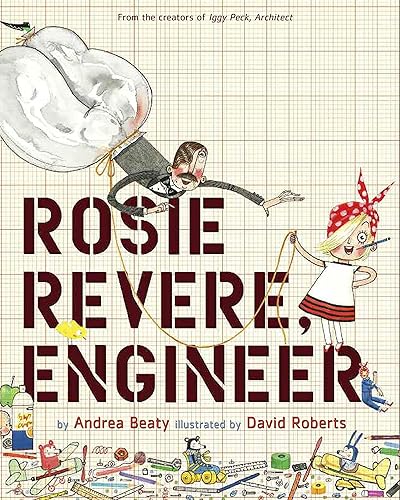
Bursting with creativity. Rosie invents hot dog dispensers, helium pants, and python-repelling cheese hats from odds and ends. David Roberts' illustrations show her workshop filled with scattered parts and tools, inviting kids to see engineering as playful tinkering. The core message—that failure is part of invention—actively encourages experimentation and creative risk-taking. This is a book that makes kids want to build stuff.
Safe
100
Zero safety concerns. No scary content, no inappropriate themes, no sudden trauma. It's a gentle picture book about a girl who builds things and learns from her mistakes. The 'conflict' is internal (Rosie's fear of being laughed at), resolved with kindness and wisdom from a loving aunt. Completely appropriate for any child to encounter unexpectedly.
Enriching
92
Directly tackles growth mindset and resilience—'the first flop isn't something to fear; it's something to celebrate.' Encourages STEM interest, especially for girls, with a strong female engineer protagonist. The Rosie the Riveter connection adds historical depth. Rhyming text makes it fun to read aloud. It's both entertaining and delivers meaningful lessons about persistence, creativity, and overcoming self-doubt without feeling didactic.
Parent Info
✓
Why It Might Be Great
Teaches growth mindset and resilience in a way that actually sticks—kids remember 'the first flop is something to celebrate'
Makes engineering look fun and accessible, especially for girls who might not see themselves in STEM
The rhyming text and spirited illustrations keep kids engaged through multiple readings
Multigenerational mentorship between Rosie and Aunt Rose feels warm and authentic
Part of a beloved series (The Questioneers) so if your kid loves it, there's a whole universe to explore
⚠
What to Watch For
Rosie experiences embarrassment when someone laughs at her invention—handled gently, but sensitive kids might need reassurance
The book celebrates making messes and building from 'odds and ends,' which might inspire your living room to become a workshop (fair warning)
Conversation Starters
"What would you invent if you could build anything? What stuff around the house would you use?"
"Have you ever been scared to show someone something you made? What happened?"
"Aunt Rose says the only failure is when you quit—what do you think about that?"
"If your first try at something didn't work, what would you do next?"