Rival Stars Horse Racing

Rival Stars Horse Racing

game

2019, Racing, Simulator

WISE
78%

WISE Score

Live out your Kentucky Derby dreams without the fancy hats or the actual horse poop.

Screenwise Verdict

Rival Stars is easily the best horse sim on the market right now. It avoids the 'pink and glittery' tropes of older horse games and actually treats the sport with some respect.

It’s a slow burn. Your kid isn't going to win the Triple Crown in twenty minutes. They’ll have to manage resources and decide which horses to keep and which to sell.

The simulated betting odds are a bit of a 'teachable moment'—you might want to explain that real racing involves real money and real risks, unlike the game. But overall, it’s a high-quality, safe pick for any kid who spends their weekends asking for a pony.

Age Fit

Perfect for the 7-12 age range. It requires enough reading and strategy to keep older kids engaged, but it's simple enough that a horse-obsessed second grader can navigate the menus.

WISE Breakdown
Wholesome
85

The core of the game is about restoring a family legacy and caring for animals. It’s emotionally steady, focusing on the bond between rider and horse rather than high-stakes drama.

Imaginative
72

The breeding system allows for some creativity in trying to produce specific coat patterns and stats, though the racing itself follows a pretty set simulation path.

Safe
88

No open chat or social toxicity to worry about. While it features 'race odds,' it's simulated and doesn't involve real-world gambling or aggressive loot box mechanics based on the provided data.

Enriching
70

Teaches basic management skills, resource allocation, and a simplified version of genetics through the breeding mechanics. It rewards patience over instant gratification.

Parent Info

Why It Might Be Great

  • The breeding mechanics are surprisingly deep, letting kids nerd out over coat patterns and pedigrees.
  • It looks and sounds beautiful—the sound of the hooves and the crowd actually feels immersive rather than cheap.
  • It’s a 'long game' experience that rewards sticking with a single horse and training them up over time.
  • No toxic global chat means you don't have to worry about who they're talking to while they're in the stables.

What to Watch For

  • The game shows 'race odds' which introduces the concept of betting, even if they aren't using real money.
  • It can get very repetitive; if your kid isn't a horse fanatic, the 'race-train-breed' loop might get old fast.
  • Progress can feel slow, which might tempt kids to look for shortcuts or spend a lot of time grinding.

Conversation Starters

  • "If you were a horse, what would your racing name be? I'm thinking 'Caffeine Machine'."
  • "Why do you think the 'odds' change for different horses before a race starts?"
  • "Is it better to have one super-fast horse or a whole stable of decent ones?"
  • "What’s the hardest part about managing the stable's money?"

Deep Dive

Most horse games for kids are, frankly, shovelware. They tend to be poorly made "pink-and-sparkly" titles that think horse care begins and ends with clicking a brush icon three times. Rival Stars Horse Racing is the rare exception that treats the subject matter like a legitimate simulation. It is effectively the Gran Turismo of the equestrian world, focusing on the grit of the track rather than the glitter of the stable.

The genetics rabbit hole

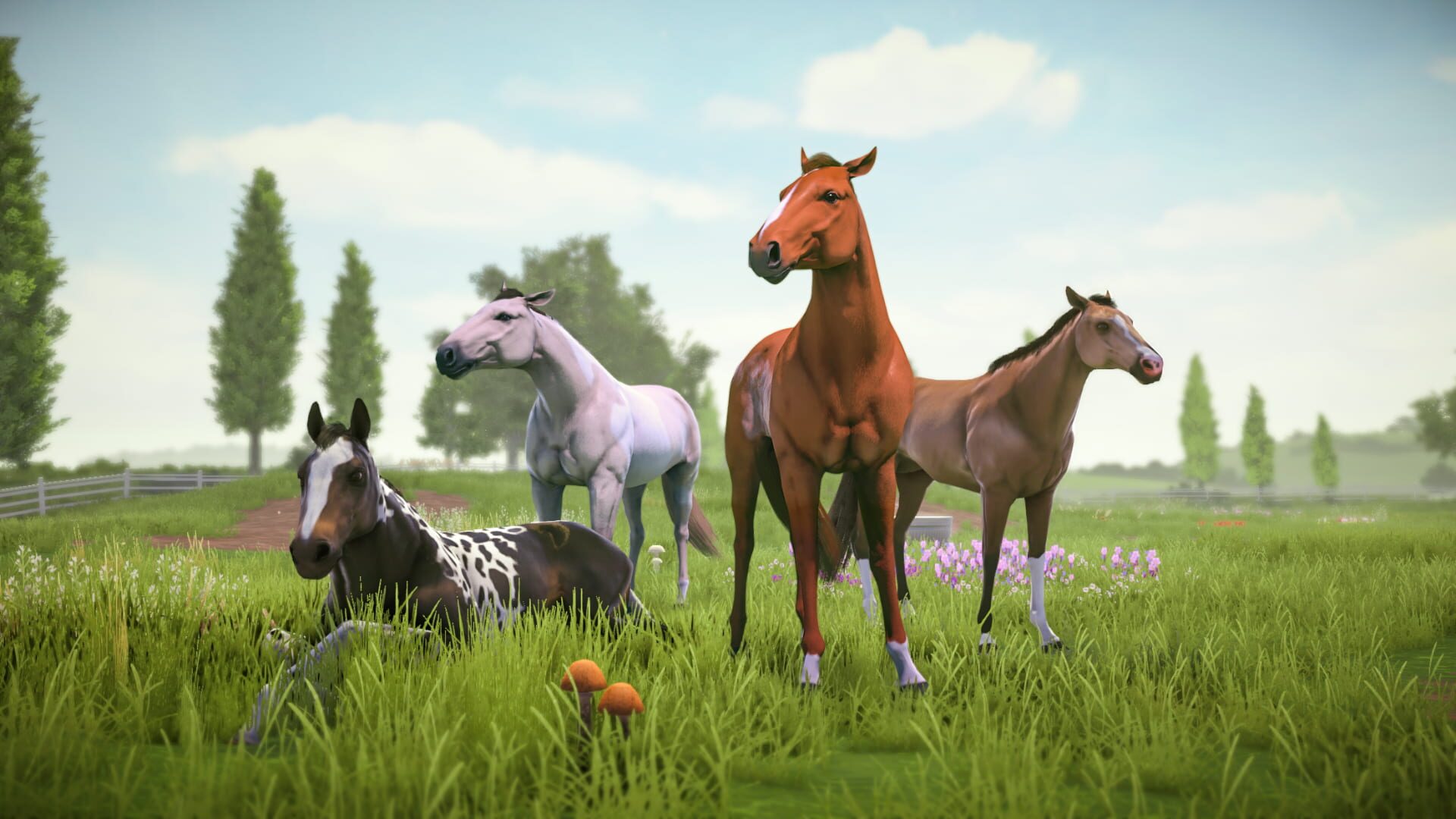
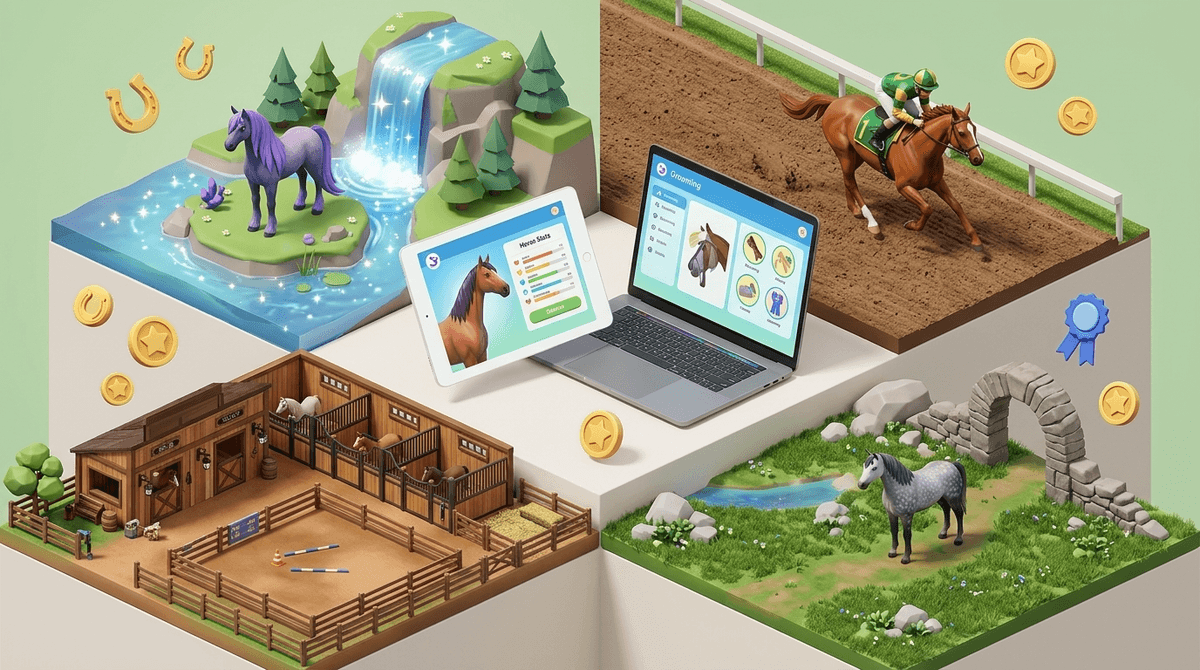
The real depth here isn't actually in the racing—it’s in the breeding. The game uses a genetics system that determines coat patterns, hidden traits, and performance stats, which turns the stable into a long-term science project. You’ll see kids obsessing over whether to breed a specific mare with a certain stallion to chase a "Grade 2" speed stat or a rare white coat.

If your house is currently a revolving door of equestrian content, you've likely realized that navigating your kid’s horse game obsession is a full-time job. This game offers a much-needed break from the more social, high-pressure environments of other sims. It’s a solitary, focused experience where the reward is the horse itself, not social clout.

Handling the "Betting" vibe

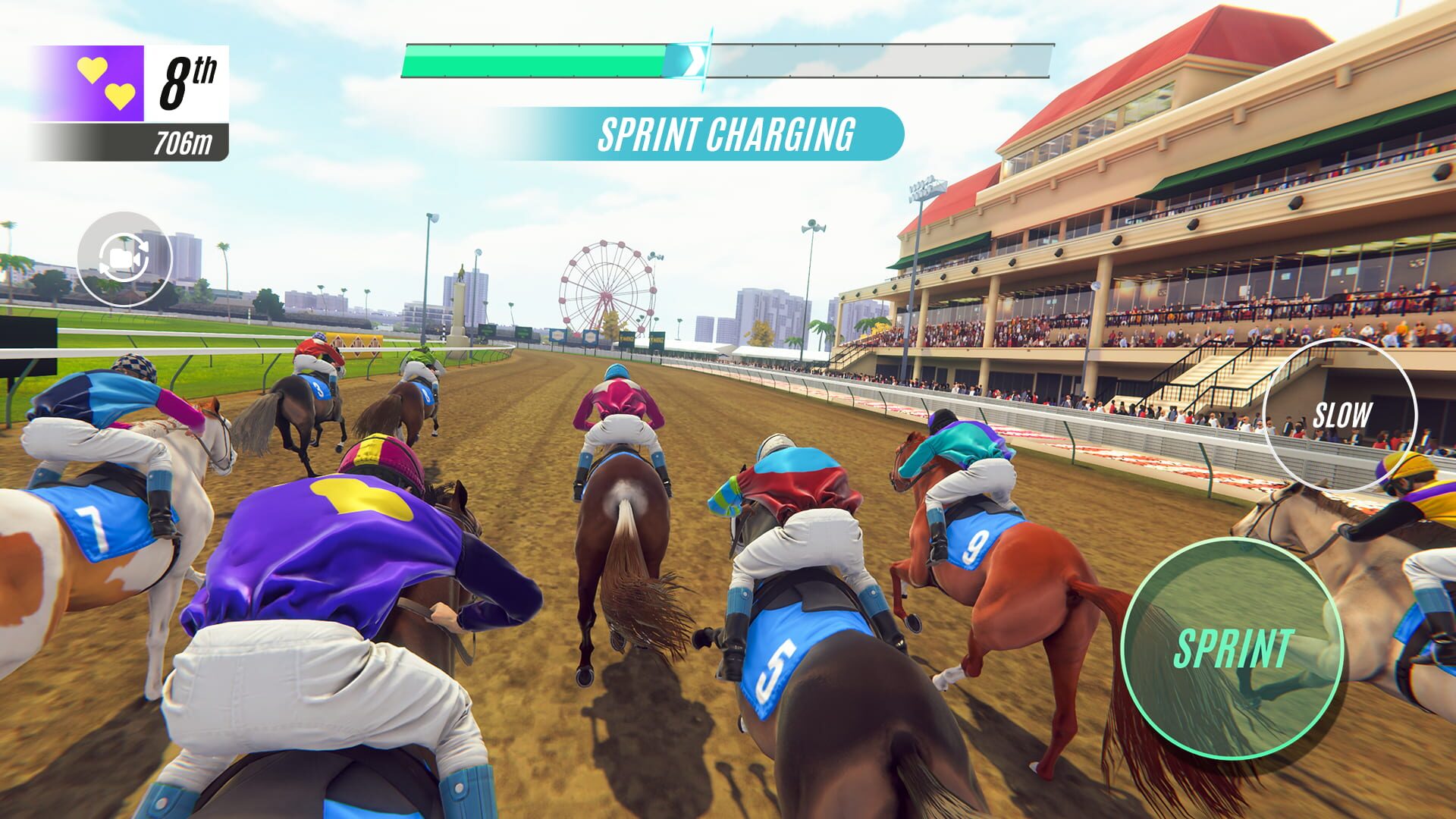
The race presentation is where the game gets its most realistic—and its most polarizing. Before every race, the screen displays a list of horses with their corresponding odds (e.g., 2-1 or 15-1). It looks exactly like a sports betting app. While the data shows there aren't traditional loot boxes or a way to lose real money on these races, the visual language of gambling is everywhere.

It’s worth a quick chat to clarify that these numbers are just "math-based predictions" of how the computer thinks the race will go, rather than an invitation to start a career in bookmaking. For most kids, these numbers just become another stat to beat, but for parents sensitive to gambling imagery, it’s the one part of the UI that feels a bit grown-up.

The pace and the payoff

This is a slow-burn game. Progress is measured in days and weeks, not minutes. For a kid used to the instant dopamine hits of fast-paced arcade games, the "train-race-rest" loop might feel like a slog. There is a significant amount of waiting involved while horses "rest" or "train," which is the game’s way of pacing the experience.

However, that friction is exactly what makes the wins feel earned. When a horse they’ve spent a week training finally pulls ahead in the final stretch of a major derby, the payoff is genuine. It rewards patience and resource management over quick reflexes. If your kid is the type to get bored if they aren't "winning" every five seconds, they might bounce off this. But for the kid who wants to build a legacy stable, it’s the most rewarding option on mobile.

Ask Anything

Get a personalized guide on any topic