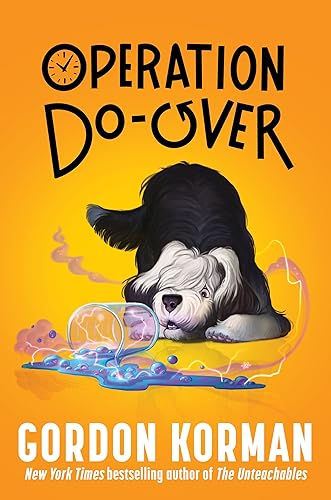
The King of the Middle School Cringe
Gordon Korman has spent decades perfecting a very specific brand of "middle school catastrophe." He’s the guy who understands that for a twelve-year-old, a friendship breakup isn't just a bummer—it’s an apocalypse. In Operation Do-Over, he leans into that high-stakes drama by giving his protagonist, Mason, the one thing every regretful kid (and adult) wants: a second chance.
If your kid has already cycled through Korman’s other heavy hitters like Restart or The Unteachables, they know the drill. The prose is snappy, the dialogue sounds like actual humans, and the "lesson" is usually buried under enough humor that it doesn't feel like a lecture.
More "Sliding Doors" Than Sci-Fi
While the book uses a "freak accident" to trigger the time travel, don't expect a hard science fiction novel. The time travel is a vehicle for the emotional stakes. Mason wakes up back in seventh grade with his "future" knowledge intact. This isn't about saving the world; it's about saving his sheepdog, keeping his parents’ marriage from imploding, and—most importantly—not letting a girl named Ava Petrakis come between him and his best friend, Ty.
The tension comes from Mason trying to "outrun" his previous life. He joins the football team and forces himself into new social circles, trying to butterfly-effect his way into a better version of himself. It’s a great setup for a kid to realize that even if you change the circumstances, you still have to deal with who you are.
The Dual-Timeline Gamble
One of the more sophisticated moves Korman makes is the alternating narration. We get Mason at age 12 and Mason at age 17. For some younger readers, this is where the "slow" feedback comes from. The 17-year-old perspective is naturally more cynical and heavy with the weight of five years of regret.
However, this is exactly why the book works for the older end of the 9-13 range. It provides a rare look at how the tiny, seemingly stupid decisions made in a middle school hallway can echo into high school. It’s the literary equivalent of showing your kid a "Before and After" photo of a friendship.
The "Ava" Factor
The book centers on the idea that Ava is the "villain" who ruined everything. Part of the payoff is Mason—and the reader—realizing that blaming a single person for a "life implosion" is usually a cop-out. If you’re reading this with your kid, that’s the thread to pull on. Mason’s attempt to "avoid Ava at all costs" is a classic middle-grade trope that Korman subverts by showing that you can't just delete people from your life to fix your own insecurities.
If Your Kid Liked...
- Back to the Future: This is the obvious comparison, though with more focus on social survival than flux capacitors.
- Restart: If they liked the "bad kid gets a clean slate" vibe, they’ll dig the "nerdy kid gets a do-over" angle here.
- The Wonder Years: It has that same nostalgic, slightly painful look back at how awkward being twelve really is.
This is a safe bet for a kid who wants a story with a hook but isn't ready for (or interested in) high-fantasy world-building. It’s grounded, funny, and just "grown-up" enough to make a sixth-grader feel like they're reading something substantial.