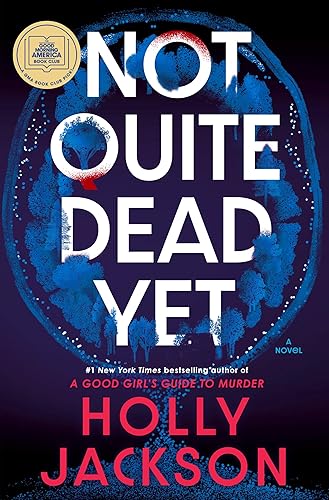
The "adult" label is a bit of a curveball
Holly Jackson built a massive following with A Good Girl's Guide to Murder by writing Pip—a protagonist so hyper-competent and organized she made most adults look like slackers. Jet Mason is the inverse. Even though she’s 27, she’s defined by her "I’ll do it later" energy.
This has caused some friction in early reviews. While The Washington Post calls the book "irresistible," a vocal slice of the internet is annoyed by Jet’s immaturity. If you’re handing this to a teen, that "petulant" vibe might actually be a feature, not a bug. It captures that specific post-college stasis where you feel like an adult but haven't actually started being one yet. Just don't expect a seasoned, professional investigator; expect a messy woman having a very bad week.
A different kind of tension
Most thrillers rely on the "will they get caught?" or "will they strike again?" tension. This book swaps that for a literal medical deadline. Because Jet is solving her own murder before a brain aneurysm takes her out, the pacing is frantic. It’s less about the slow burn of a cold case and more about the high-stakes desperation of a woman who has finally found a reason to stop procrastinating.
If your kid is particularly sensitive to medical themes or "ticking clock" anxiety, this hits harder than a standard slasher. It’s not just about the violence of the initial attack; it’s about the looming, inevitable fatality of her injury. It’s heavy stuff that moves the book out of "fun beach read" territory and into something much more somber. For a deeper look at whether the themes are appropriate for your household, check out our guide on whether Holly Jackson’s first adult novel is too dark for your teen.
The "ugly cry" factor
Holly Jackson is leaning into the emotional wreckage here. While her YA books had their sad moments, the consensus on Not Quite Dead Yet is that the ending is a total gut-punch. Reviewers are citing "ugly crying" as a standard reaction.
This isn't just a gimmick to sell books; it’s a shift in Jackson’s writing style. She’s moving away from the procedural, evidence-board style of her earlier work and focusing more on the tragedy of lost time. If your teen liked the twisty nature of her previous books but wished they had more "feels," this is the upgrade they’re looking for. It’s a bridge between the plot-heavy world of YA mysteries and the character-driven world of adult suspense.
How to think about the transition
If your kid is 14 or 15 and obsessed with the AGGGTM Netflix series, they’re going to ask for this book. The "Adult" sticker on the cover is mostly there because the protagonist is 27 and the themes of mortality are more existential. There’s no need to gatekeep it if they’ve already handled the darker corners of her YA trilogy, but it’s worth a conversation about the shift in tone. It’s a story about regret as much as it is about a mystery, which is a very different vibe than catching a killer for a school project.