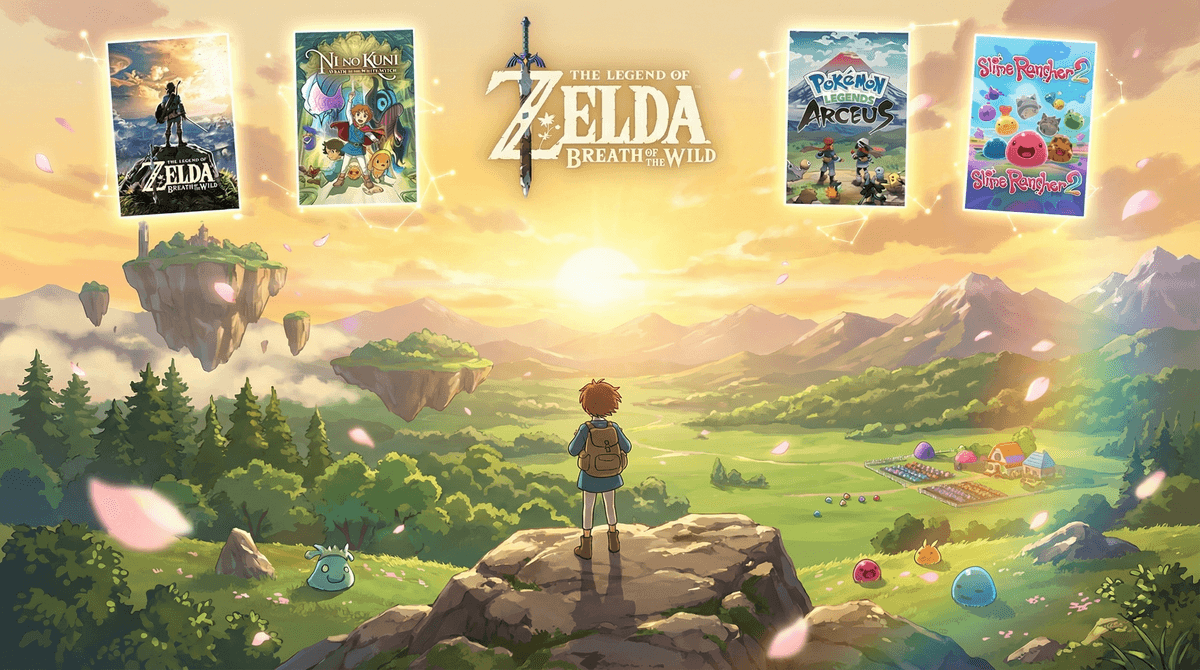
This is legitimately one of the most beautiful games ever made—Studio Ghibli's art is breathtaking, and the story has real emotional depth. But let's be honest: it's a 2011 JRPG, which means it's slower than molasses and requires an attention span that's increasingly rare in the age of TikTok.
The good news? Zero predatory monetization, no online toxicity, and a genuinely enriching story about grief, empathy, and courage. The creature-raising system is Pokémon-adjacent but less addictive. Kids who can handle reading lots of dialogue and turn-based battles will find a deeply rewarding experience.
The challenge? The mother's death is front and center, so this isn't for kids anxious about losing parents. And you need a kid who's willing to commit 40+ hours to a single game—not the Roblox-hopping crowd. If your child loved Spirited Away and can sit through a Harry Potter book, this could be magical. If they need constant stimulation, they'll bail in the first hour.
Age Fit
Best for patient, reading-capable kids 9-14 who can handle emotional themes and slower gameplay. Younger Ghibli fans might enjoy watching, but the reading load and strategic depth require maturity. Teens may find it too childish or slow unless they're already JRPG fans.
WISE Breakdown
Wholesome
82
Heart-warming story about a boy trying to save his mother, emphasizing friendship, loyalty, and courage. Studio Ghibli's involvement suggests emotionally healthy storytelling with themes of kindness and cooperation. The creature-raising mechanic encourages care and responsibility. Some emotional heaviness around death/loss of mother, but handled with sensitivity typical of Ghibli productions.
Imaginative
92
Exceptional creativity with Studio Ghibli animation bringing a parallel fantasy world to life. Rich world-building with creature collection and raising mechanics that invite exploration and experimentation. The JRPG format encourages strategic thinking and problem-solving. The collaboration between LEVEL-5 and Studio Ghibli creates a uniquely imaginative aesthetic that stands out in gaming.
Safe
78
No in-game purchases, loot boxes, or online chat—excellent for a game from this era. Users can interact (likely local multiplayer or trading), but minimal exploitation concerns. The story involves death of mother as central plot point, which may be emotionally difficult for some children. Turn-based combat is mild and fantasy-themed. No ESRB/PEGI rating provided, but IGDB rating of 86 suggests quality content without major red flags.
Enriching
80
Classic JRPG structure encourages strategic thinking, resource management, and long-term planning. Story explores grief, determination, and helping others (fixing people's 'broken hearts'). Reading-heavy with substantial dialogue and world lore. The creature-raising system teaches responsibility and consequences of choices. Sweeping orchestral score and artistic presentation expose players to high-quality storytelling craft. However, can be grindy with typical JRPG pacing that may test patience.
Parent Info
✓
Why It Might Be Great
Stunning Studio Ghibli animation and art direction—like playing through a Miyazaki film
Teaches strategic thinking, resource management, and persistence through classic JRPG mechanics
Emotionally intelligent story about grief, courage, and helping others heal their broken hearts
Zero monetization garbage—a complete, single-player experience from a bygone era
Creature-raising system encourages experimentation and responsibility without being exploitative
⚠
What to Watch For
Mother's death is the inciting incident—this will hit hard for kids who've experienced loss or have anxiety about losing parents
VERY text-heavy with slow pacing typical of JRPGs—modern kids used to Fortnite may bounce off hard
Combat can get repetitive and grindy; requires real commitment (40+ hours)
Some boss battles and darker story moments may frighten younger players
Conversation Starters
"Oliver is trying to bring his mom back—what would you do if you could travel to another world to help someone you love?"
"The game is about fixing people's 'broken hearts'—what do you think that means? How do people get broken hearts?"
"You raise creatures to fight for you—is that different from Pokémon? How do you decide which ones to use?"
"The art looks like a Ghibli movie—what makes it different from other games you play?"