The "Gallows Humor" Secret Sauce
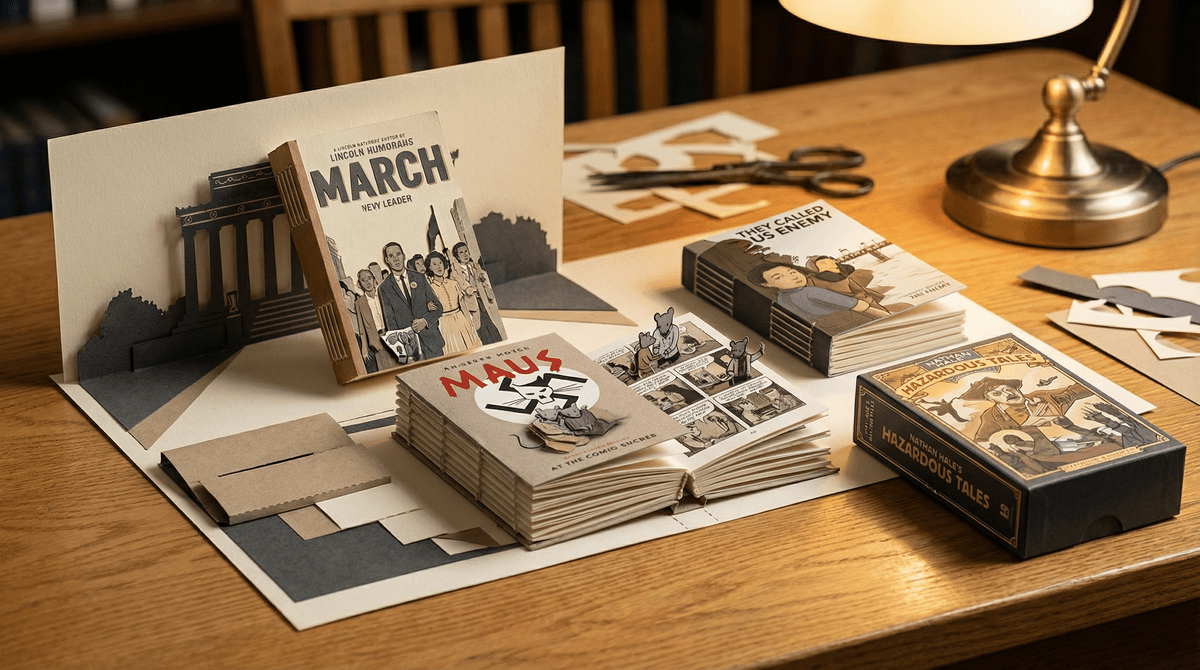
If you grew up with the Who Was? series, you know the formula: a bobblehead-style cover, simple prose, and a very safe, very sanitized version of events. Nathan Hale’s series is the corrective to that. It doesn't just present history; it frames it through a meta-narrative where the author’s namesake—the Revolutionary War spy Nathan Hale—is literally standing at the gallows, telling these stories to a British hangman and a provost to delay his execution.
This framing device is why kids who usually find history "boring" actually finish these books. It creates a built-in commentary track. The hangman acts as the audience surrogate, asking the "dumb" questions or reacting with the same "ew, gross" energy your ten-year-old likely has. It turns a history lesson into a survival tactic.
Why this specific trio works
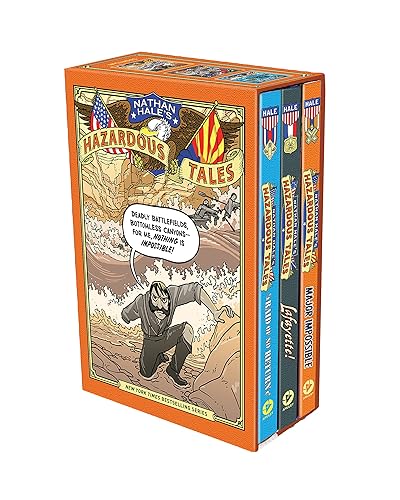
This third box set (collecting books 7, 8, and 9) hits a sweet spot because it moves beyond the standard "Greatest Hits" of the American Revolution or Civil War.
- Major Impossible: This is the standout for kids who love survival stories like the I Survived series. John Wesley Powell’s expedition through the Grand Canyon is a masterclass in tension. The fact that he did it with one arm is the kind of "wait, actually?" detail that sticks.
- Raid of No Return: This covers the Doolittle Raid of WWII. It’s a heavy dose of military strategy and engineering, but Hale keeps the focus on the absurdity of launching massive bombers off short carrier decks. It’s high-stakes and visually kinetic.
- Lafayette!: This is the "fanboy" entry. It portrays the Marquis de Lafayette not as a stiff oil painting, but as a wealthy, obsessed teenager who basically forced his way into the American Revolution. It’s a great way to humanize historical figures who usually feel like statues.
The "Reluctant Reader" bridge
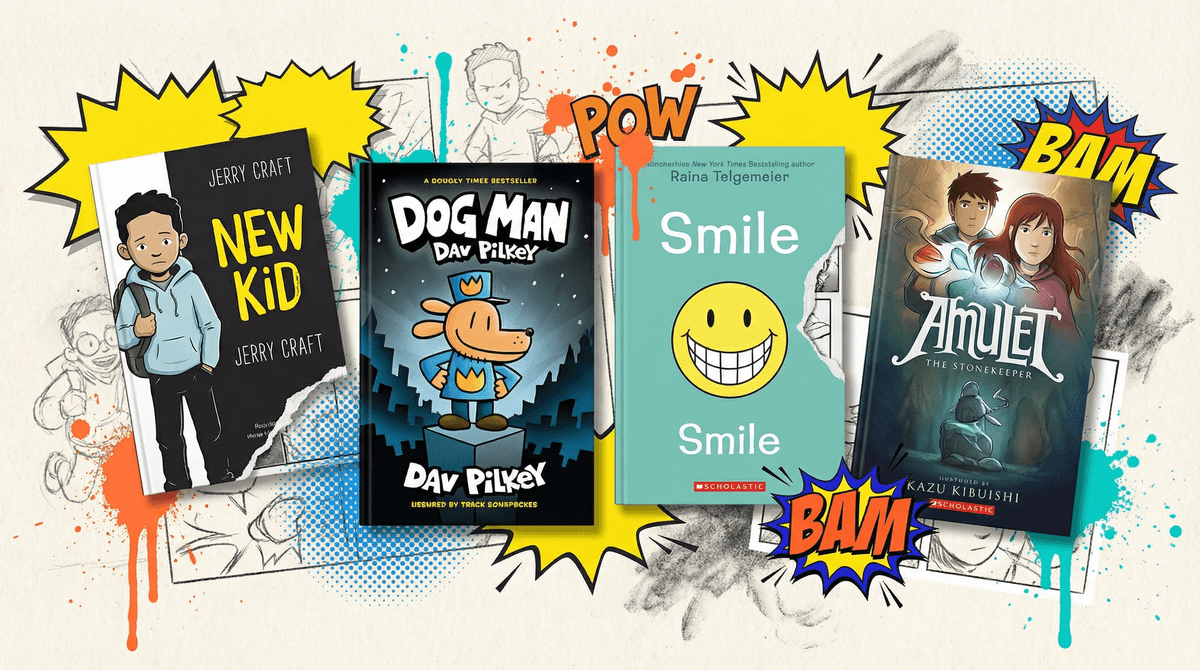
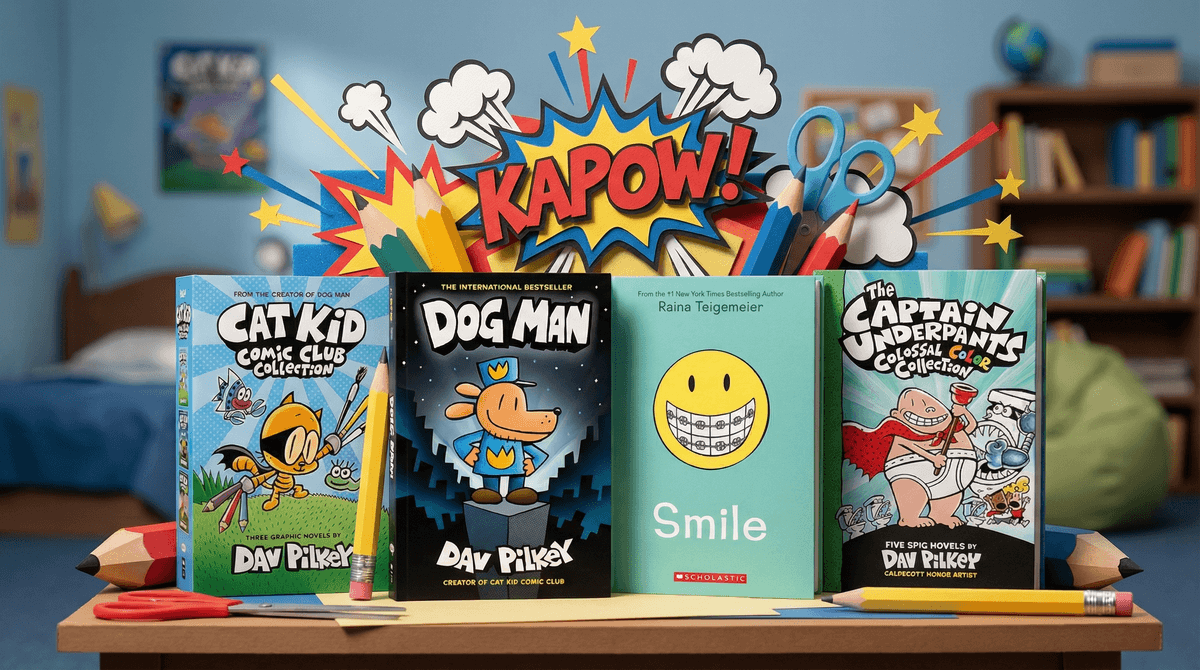
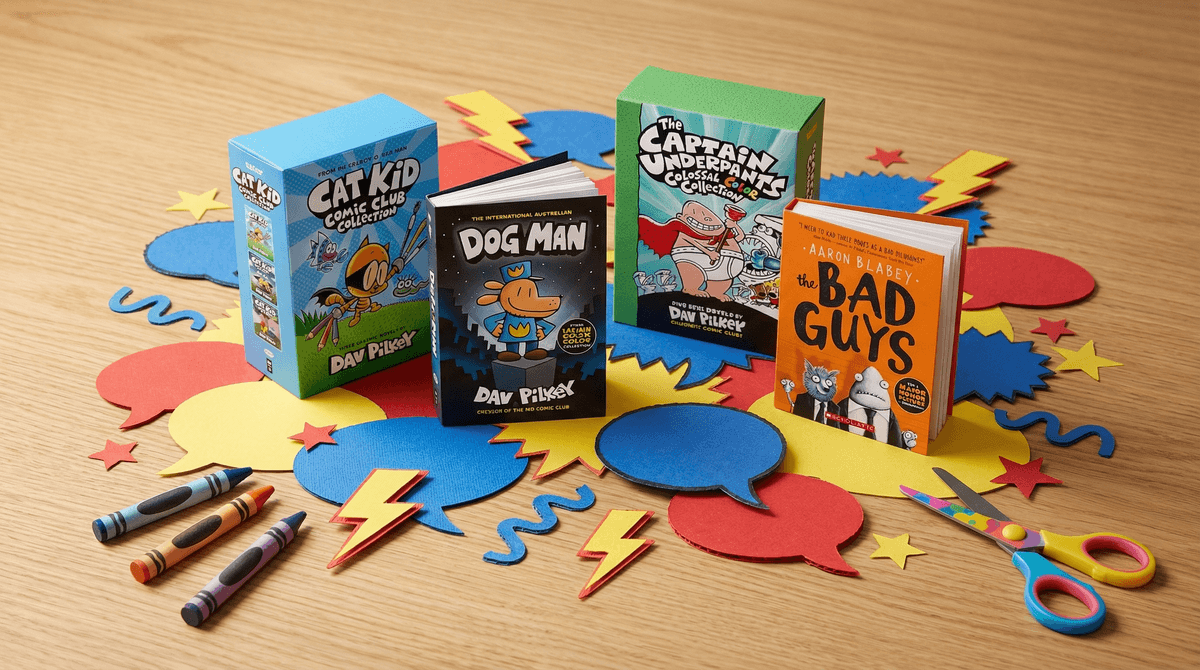
We often see parents trying to transition kids from the pure visual chaos of Dog Man or Captain Underpants to something with more substance. This is your bridge. The art is clean but detailed, and Hale uses color palettes strategically—usually a three-color limit per book—to keep the pages from feeling cluttered.
If your kid is a visual learner, they’ll pick up more about the geography of the Grand Canyon or the logistics of 18th-century naval warfare from these panels than they would from three weeks of social studies lectures. Hale doesn't talk down to them. He assumes they can handle complex timelines and moral shades of gray, provided there’s a well-timed joke about a bayonet or a donkey to break the tension.
For more information on the series and its creator, you can check out Nathan Hale’s official site, which often features behind-the-scenes looks at his research process. It’s worth showing your kid how much work goes into being this historically accurate while still being this funny.