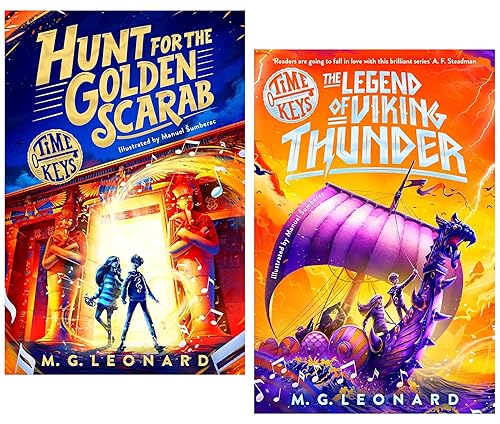
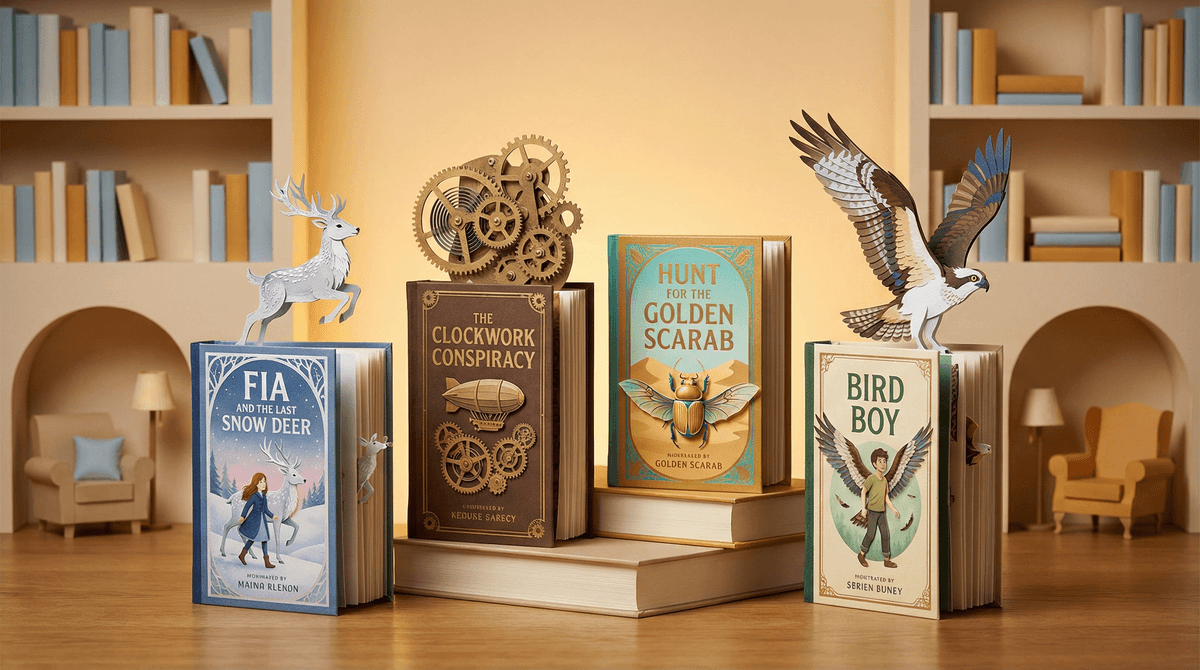
The Leonard seal of quality
If you’ve followed M.G. Leonard’s career, you know she has a knack for taking niche interests and turning them into high-stakes thrillers. She did it with beetles; she did it with birdwatching. With Hunt for the Golden Scarab, she’s applying that same energy to archaeology and chronometers. It’s a relief to see a middle-grade book that doesn't treat history like a dusty museum exhibit.
Instead of the usual "chosen one" trope where a kid stumbles into a magical world alone, we get a story that feels more like a high-tech heist. The inclusion of Manuel Sumberac’s stark black-and-white illustrations is a clutch move. They give the book a graphic, modern edge that keeps it from feeling like a standard school library assignment. If your kid is visual or usually gravitates toward hybrid novels, these illustrations provide the necessary "eye breaks" without sacrificing the complexity of the prose.
The "Doctor Who" rhythm
The comparison to Doctor Who isn't just marketing fluff. The book moves with a specific kind of kinetic energy—lots of running, narrow escapes, and a "ticking clock" mechanic that is literally built into the plot. This makes it a fantastic choice for kids who have a low tolerance for slow-burn world-building.
Because it’s the start of the Time Keys series, Leonard spends just enough time establishing the rules of time travel before throwing Sim into the deep end. It’s an effective "hook" book. If you’re looking for the single best book of 2025 for 9–10 year olds, this is a frontrunner specifically because it bridges the gap between simple chapter books and more intimidating, 500-page YA doorstoppers.
Where the friction lies
The only real "parental homework" here is managing the cliffhanger energy. This is unabashedly a series starter. Leonard is building a larger mystery involving a sinister council, so don’t expect every thread to be tied up by the final page.
The historical elements involving Nefertiti are grounded in real research, but the time-travel logic can get knotty. If your kid is the type to pause a movie to ask about the grandfather paradox, you might find yourself in some long bedtime conversations about how Sim’s actions in the past affect the present. It’s great for cognitive development, but maybe less great if you’re trying to turn the lights out in five minutes.
The "If/Then"
- If your kid loved the Rick Riordan books but needs something a bit more grounded in "real" history rather than pure mythology, this is the play.
- If they are obsessed with gadgets and puzzles, the mechanics of the "Time Keys" will hit the spot.
- If they prefer "lone wolf" protagonists, the heavy emphasis on the mother-son partnership might feel different, but it’s a refreshing change from the typical "parents are useless" narrative that dominates this genre.