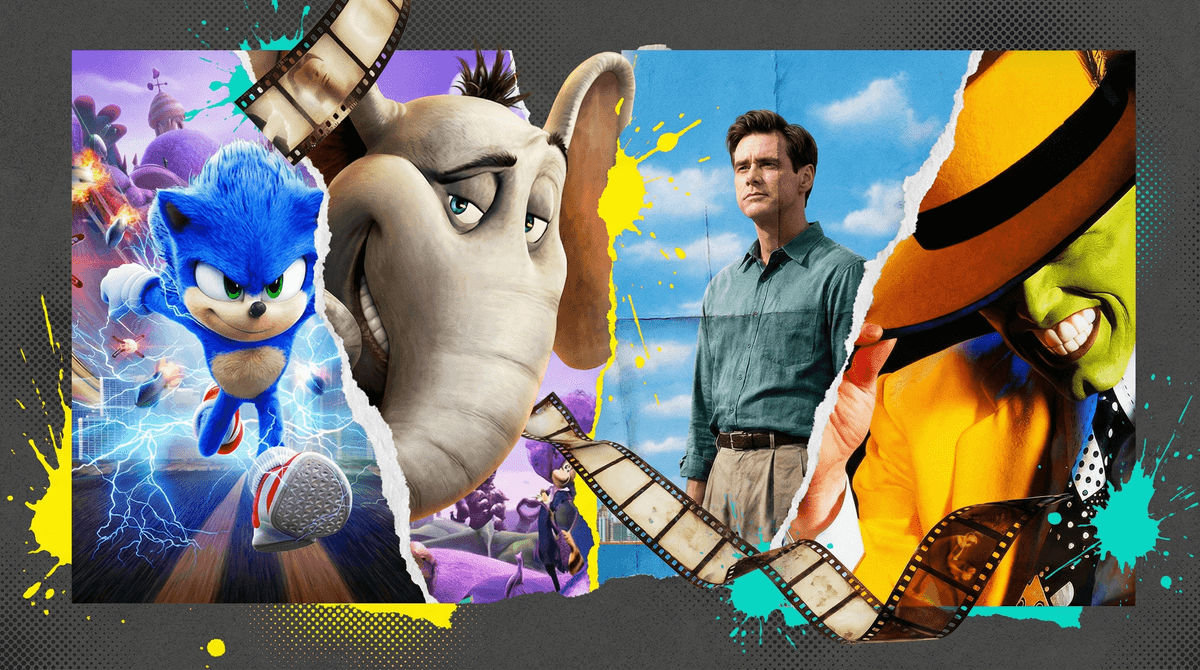
Most Dr. Seuss adaptations suffer from a "padding" problem—directors trying to stretch ten minutes of rhyming verse into ninety minutes of cinema. Usually, that means adding cringey pop-culture references or unnecessary subplots that feel like they belong in a different movie. Horton Hears a Who! is the outlier. It manages to expand the world of Whoville without losing the soul of the source material, making it one of the few Seuss films that actually justifies its runtime.
The Carrey and Carell dynamic
The real draw here is the vocal chemistry between the two leads. Jim Carrey brings a sincerity to Horton that’s a far cry from his more manic, face-contorting roles. If your kids only know him as the villain from the Sonic franchise, this is a great way to introduce them to his top PG-rated movies.
Opposite him, Steve Carell plays the Mayor of Whoville with the same high-anxiety charm that has kept him relevant through his various "best boss" roles. Their characters never actually meet, but their parallel struggles—one trying to protect a speck, the other trying to convince his people they’re on one—create a genuine sense of partnership.
The "scary" factor is real
While the 79% critic score on Rotten Tomatoes suggests a crowd-pleaser, don't ignore the warnings about the antagonists. This isn't a "soft" movie. Vlad the Vulture is a legitimately unsettling villain, and the Sour Kangaroo’s obsession with "order" feels more like a commentary on social conformity than your standard cartoon meanness.
The most intense moments aren't just about physical peril; they’re about the psychological weight of an entire community turning against someone. When the jungle animals decide to "rope and cage" Horton, it can be a lot for sensitive kids under five. However, for older elementary students, this friction is exactly what makes the payoff work.
Why it’s more relevant in 2026
The movie’s core message—"a person's a person, no matter how small"—has aged remarkably well. It’s a perfect jumping-off point for talking about digital empathy and standing up for others in online spaces. In an era where "dogpiling" is common, Horton’s refusal to back down because he knows the truth is a lesson that actually sticks. It’s one of the few animated films from the late 2000s that feels more important now than it did at release.