The art of the intentional mess
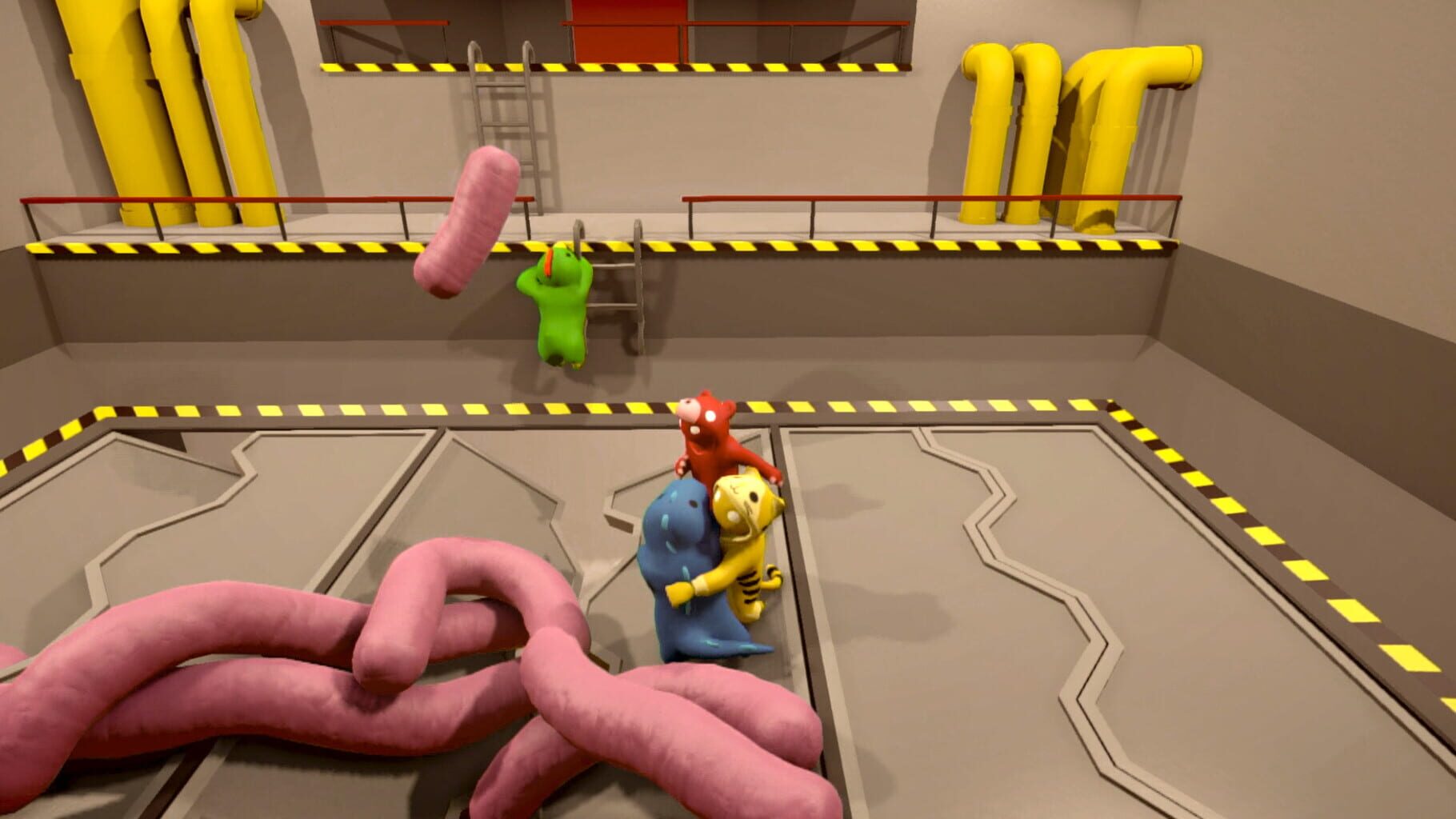
Most games reward you for being precise. Gang Beasts rewards you for being a disaster. The entire hook relies on "procedural animation," which is just a fancy way of saying your character moves like a drunk toddler made of Jell-O. You aren't mastering combos here; you're struggling to even walk in a straight line or grab a ledge.
This jankiness is the "secret sauce" that levels the playing field. When a game is this inherently clunky, the skill gap between a seasoned gamer and a total novice disappears. It’s one of the few titles where a younger sibling can actually hold their own against a teenager simply because everyone is equally incompetent at controlling these gelatinous blobs. If your living room thrives on high-energy, low-stakes competition, this is a staple for the Best Couch Co-Op Games rotation.
Slapstick with a side of "Wait, what?"
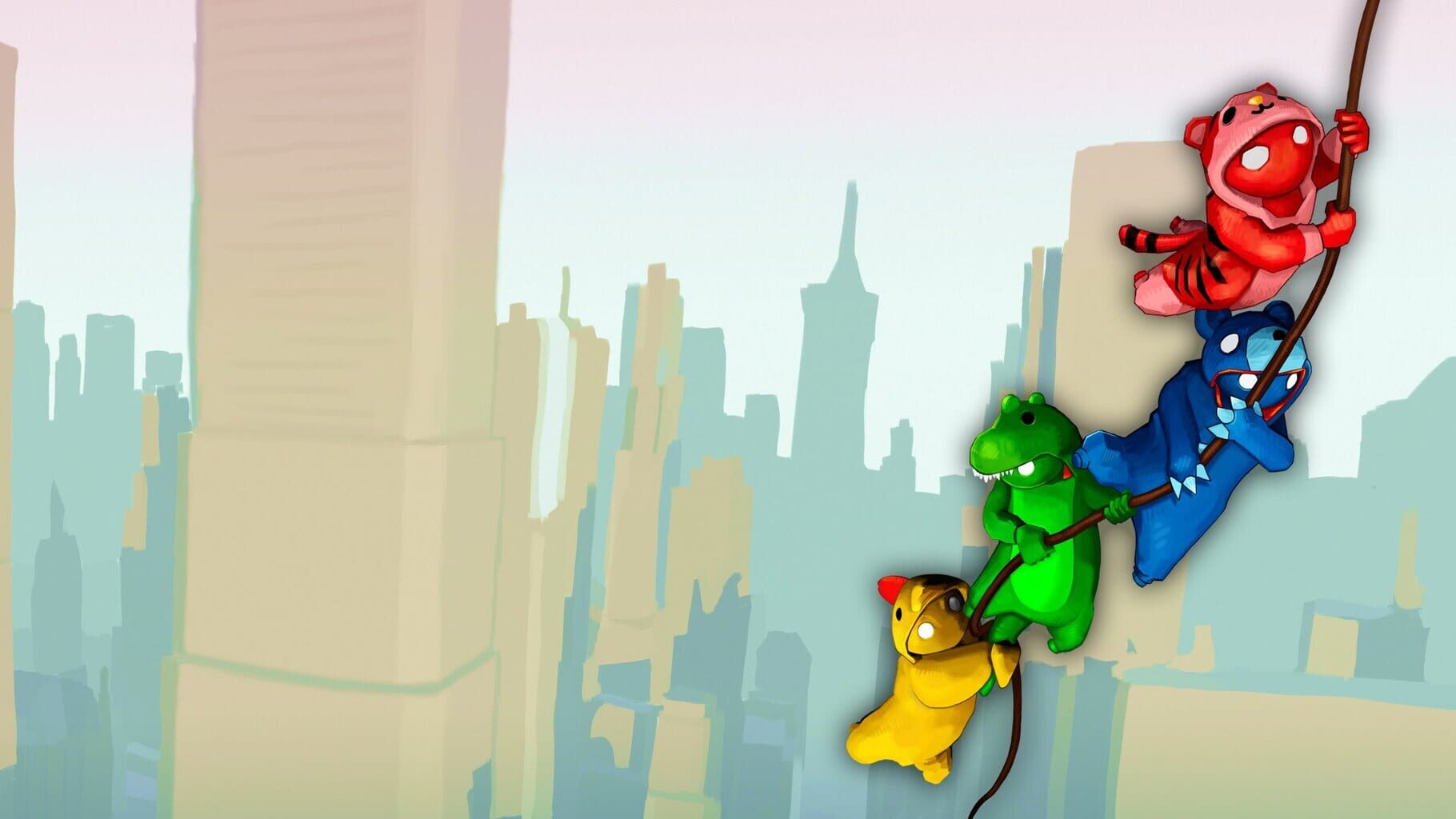
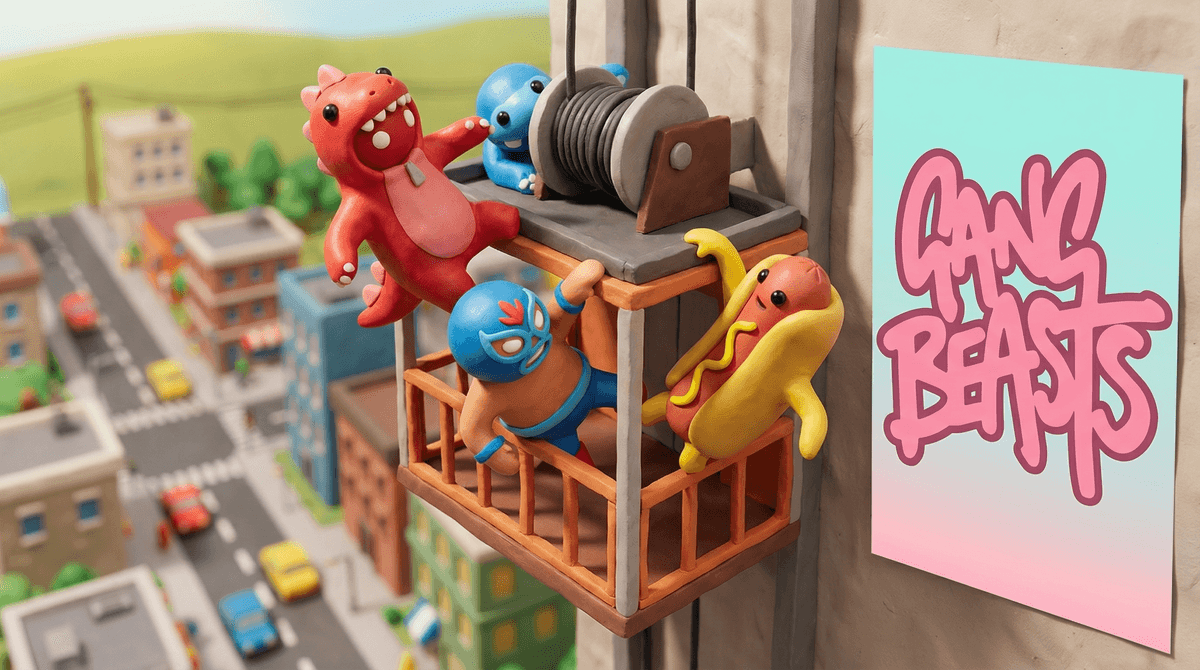
There is a specific brand of humor in Gang Beasts that sits somewhere between Looney Tunes and a workplace safety video. The environments in Beef City are the real stars—and the real villains. You’ll fight on top of moving trucks, dangling from window-washing elevators, or hovering over industrial meat grinders.
The "violence" is technically bloodless, but the context is what makes some parents blink. Knocking a friend unconscious is one thing; watching their floppy body get dragged toward a furnace while they desperately try to grab your leg is another. It’s hilarious because it’s absurd, but the "brutality" of the hazards is the main reason to give the Gang Beasts Age Rating guide a look before letting a sensitive seven-year-old jump in. It’s not "scary," but it is arguably meaner than your average E-rated game.
Know the shelf life
Don’t buy Gang Beasts expecting a deep hobby your kid will obsess over for months. It’s a "party" game in the truest sense. There is no story mode, no character progression, and no complex unlockable system. It’s a toy box.
The IGDB score reflects this—it’s a solid, mid-70s experience that does one thing very well and then stops. It’s the perfect "waiting for the pizza to arrive" game. It creates immediate, loud, screaming-at-the-TV fun that usually burns out after 45 minutes. Once the kids have seen all the maps and figured out how to throw each other off the blimp, the novelty peaks. Keep it in the digital cabinet for playdates and family nights, but don't expect it to replace their primary "main" game. It’s a snack, not a meal.