Most vampire stories focus on the thirst for blood, but Marker Snyder is more interested in the thirst for belonging. By the time kids hit middle school, their bodies are essentially betraying them in real time. Teeth fall out, voices crack, and suddenly everyone has an opinion on how you should act. Ivan, our protagonist, just happens to be going through this while navigating a family of "traditional" vampires who expect him to be way more menacing than he actually is.
The puberty metaphor that actually works
We see a lot of coming-of-age stories that try to use magic as a stand-in for growing up, but they often feel forced. First Kiss with Fangs succeeds because it leans into the physicality of the change. Losing "baby fangs" is a genius move. It’s a literal loss of power and identity that mirrors how clumsy and toothless—sometimes literally—the 11-to-13-year-old window feels.
The conflict isn't about world-ending stakes or ancient prophecies. It’s about the friction between Ivan’s "human-loving" nature and the rigid expectations of his family. That’s a universal tension for any kid who feels like they’re the "weird" one in the house.
A visual style that pops
The art here isn't trying to be a dark, moody DC comic. It’s wholesome and funky, using a color palette that makes the "vampire" elements feel like a style choice rather than a threat. Critics have pointed out how the dark tones make the red spots—like fruit and, yes, a little blood—stand out on the page. It’s a smart way to keep the book feeling modern without losing that gothic flair.
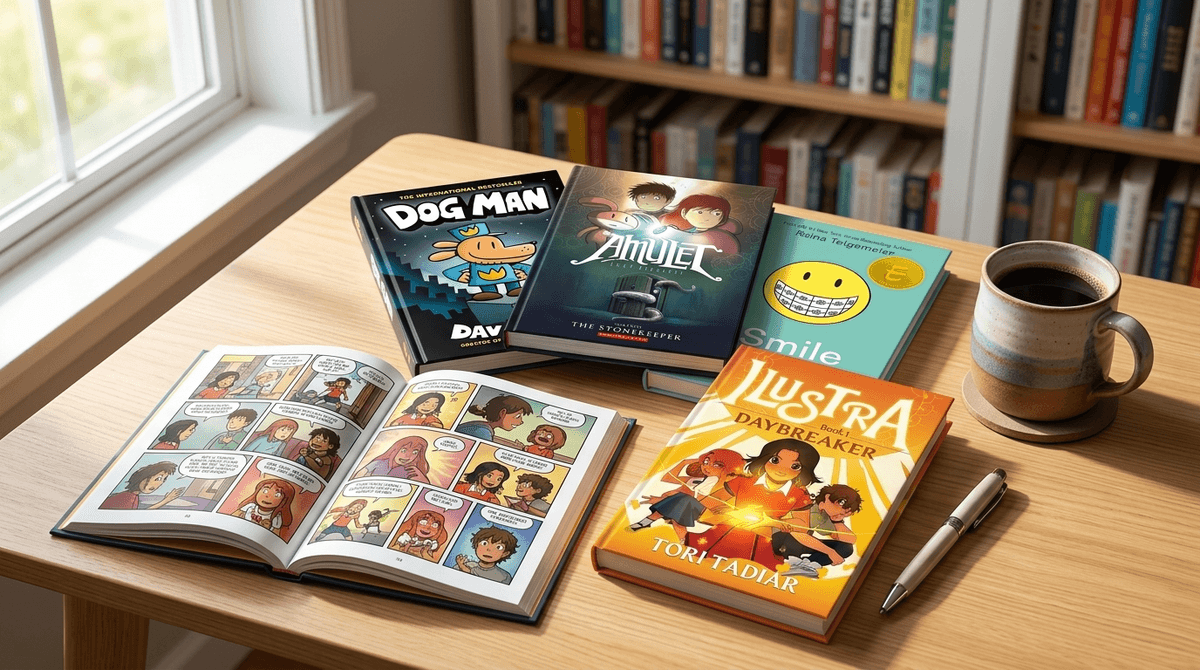
If your kid is already deep into the middle grade graphic novel explosion, they’ll recognize this vibe immediately. It sits comfortably next to titles like Fake Blood or the Raina Telgemeier books, offering a gateway for readers who want something a little edgier than a school-bus drama but aren't ready for full-blown horror.
Why the 4.9 rating matters
An Amazon score of 4.9 is rare for a graphic novel in this genre. Usually, you see parents or critics dinging these books for being too "simple" or having "rude" humor. The high marks here suggest that Snyder found the sweet spot. It’s a story that respects the reader's intelligence. It handles the "first crush" angle with actual sincerity instead of making it a punchline.
It’s also a great pick for "reluctant readers." The panels are clean and the pacing is fast, which is exactly what you want when you’re trying to compete with a phone for a 12-year-old’s attention. It’s a quick win that actually leaves them with something to think about regarding identity and self-acceptance.