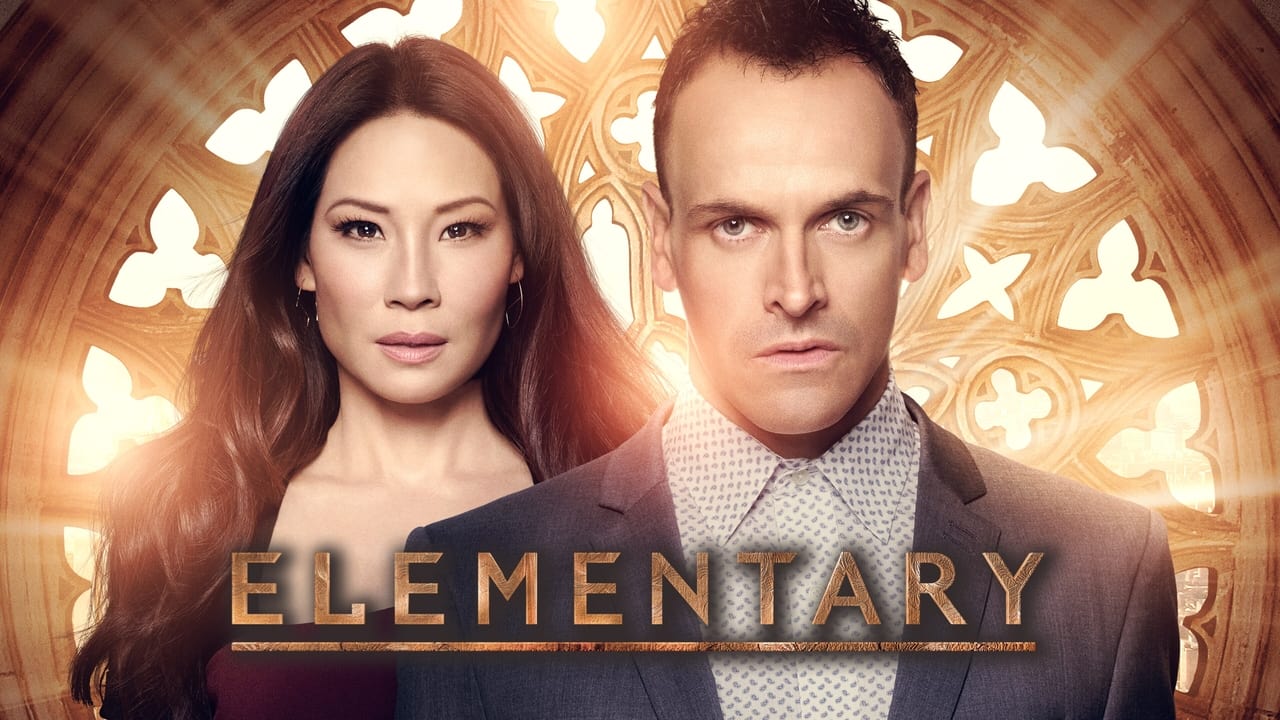
Elementary

Elementary

show

TV-14, 2012

WISE
82%

WISE Score

96

Avg. Tomatometer

A brilliant, tattooed Sherlock Holmes tackles NYC crimes with a Dr. Watson who actually keeps him grounded. It's the thinking-person’s procedural.

IMDb7.9
RT Critics96%
MC74
Common Sense Media
Where to Watch
Loading streaming options...
Screenwise Verdict

Elementary is one of the few long-running procedurals that actually gets better as it goes. It manages to be a 'crime of the week' show while maintaining a deeply moving long-term story about two lonely people finding a family in each other.

It’s smart, it’s stylish, and it doesn't treat its audience like they're stupid. If your kid is into puzzles or wants to see a version of Sherlock that feels like a real human being instead of a superhero, this is the one.

Age Fit

Best for 13 and up. It’s perfect for teens who have outgrown basic detective stories and want something with more emotional weight and complex logic. Adults will find it just as engaging.

WISE Breakdown
Wholesome
78

The central relationship between Sherlock and Joan is a masterclass in platonic respect and professional partnership. It avoids the 'lazy romance' trope and focuses on mutual growth and support during addiction recovery.

Imaginative
84

It’s a clever, modern reimagining of the Holmes canon. Sherlock’s 'Mind Palace' and his eccentric investigative methods encourage viewers to look at the world with more curiosity and attention to detail.

Safe
62

It's a murder procedural, so expect a dead body every episode. While not gratuitously gory, it deals heavily with heroin addiction, relapse, and the darker side of NYC crime. Definitely for the 13+ crowd.

Enriching
86

It rewards logic and deductive reasoning. Beyond the puzzles, its depiction of the hard work of sobriety and the importance of a support system offers genuine emotional intelligence.

Parent Info

Why It Might Be Great

  • The partnership between Sherlock and Joan is strictly platonic and built on genuine respect, which is a breath of fresh air for TV.
  • It treats addiction recovery with a realism rarely seen in network dramas—it's not a 'quick fix' plot point.
  • Sherlock's hobbies (beekeeping, lock-picking, weird science) make him a fascinating, multi-dimensional character rather than a logic robot.
  • The mysteries are actually solvable if you pay attention, making it a fun 'play along' experience.

What to Watch For

  • The 'victim of the week' can occasionally be found in pretty grim or creative states of death.
  • The show doesn't shy away from the gritty details of Sherlock's history with heroin use.
  • Sherlock’s personality can be abrasive; he’s often blunt to the point of being a jerk to those around him.

Conversation Starters

  • "Why do you think Sherlock finds it so hard to connect with people if he’s so smart?"
  • "Joan gave up a career in surgery to help people in a different way—does that make her more or less successful?"
  • "How does the show portray the difference between 'noticing' and 'seeing'?"

Deep Dive

If you’re coming to this after watching the BBC’s Sherlock, prepare for a vibe shift. While the British version feels like a high-octane superhero movie, Elementary is a marathon. It’s a procedural that actually respects your intelligence, trading flashy "mind palace" graphics for a gritty, lived-in Manhattan and a version of Sherlock Holmes who is deeply, humanly flawed.

The Watson evolution

The biggest risk the show took wasn't moving the setting to New York; it was casting Lucy Liu as Joan Watson and making her Sherlock’s "sober companion." In most adaptations, Watson is a sidekick who exists to say, "Amazing, Holmes!" Here, Joan is his equal.

She starts as a medical professional hired to keep him off drugs and eventually becomes a detective in her own right. Their relationship is the heart of the show, and it stays strictly platonic. For a teen viewer, seeing a male-female partnership built on mutual professional respect and shared trauma—without a "will-they-won't-they" subplot—is incredibly rare and refreshing.

Recovery as a process, not a plot point

Most shows treat addiction as a "very special episode" or a dark secret that gets cured in forty minutes. Elementary treats it as a job. Sherlock’s struggle with heroin is woven into the fabric of his daily life. We see him go to meetings, struggle with his sponsor, and deal with the ego-crushing reality that being the smartest person in the room doesn't make you immune to relapse.

It’s a sophisticated look at sobriety that doesn't feel like a lecture. Critics on Rotten Tomatoes have consistently praised this groundedness, which helped the show maintain its high scores over seven seasons. It’s a great entry point for talking to teens about the reality of addiction beyond the "just say no" clichés.

The specific friction

If you’re bingeing this on Hulu or Amazon, be warned: the audio can be a bit of a mess. Fans on Reddit have long complained that the show’s sound mixing is uneven, with whispers followed by deafeningly loud transition music. You might find yourself riding the volume button.

Also, it is a network procedural. This means that while the overarching character arcs are elite, you’re still going to hit some "filler" episodes where the crime of the week feels a bit formulaic. If your kid is used to the breakneck pace of 8-episode prestige streaming shows, the 24-episode-per-season grind might feel slow at first.

If they liked Knives Out or Poker Face

If your kid is currently obsessed with the "gentle mystery" revival, Elementary is the natural next step. It’s more serious than Poker Face, but it shares that same obsession with logic.

The show rewards you for paying attention to the background. It’s not magic; it’s observation. It’s the kind of show that makes you want to go out and learn a weird new hobby, whether it’s urban beekeeping or single-stick fighting, just because Sherlock makes being a polymath look cool.

Ultimately, you’re watching for the chemistry between Jonny Lee Miller and Lucy Liu. They take two of the most famous characters in literature and make them feel like people you’d actually want to grab a coffee with—even if Sherlock would probably spend the whole time explaining why your choice of bean is statistically inferior.

Stills
Elementary — still 1
Elementary — still 2
Elementary — still 3
Elementary — still 4
Elementary — still 5
Elementary — still 6
Elementary — still 7
Elementary — still 8

Ask Anything

Get a personalized guide on any topic