Our reviews and ratings are 100% unbiased. Screenwise is a Bookshop.org affiliate and an Amazon Associate, so if you buy a book through one of our links, we may earn a commission. Bookshop.org purchases also support independent bookstores.
Screenwise Verdict
This is what middle-grade mystery should be: smart, engaging, and genuinely interactive. The Book Scavenger game concept is brilliant—hiding books around cities with puzzle clues—and Bertman doesn't just describe it, she lets readers solve actual ciphers throughout the story.
The mystery itself is well-crafted with enough twists to keep kids guessing, and Emily is a relatable protagonist dealing with the very real challenge of moving (again) and making friends. The friendship with James develops naturally, and the family dynamics feel authentic.
The one caveat: the opening attack and subsequent peril give this more edge than your typical cozy mystery. It's not scary, but it's got thriller DNA. Some sensitive 8-year-olds might find it intense, while puzzle-obsessed 12-year-olds will eat it up. If your kid loved The Westing Game or is always asking for brain teasers, this is a no-brainer. If they prefer gentler stories, maybe wait a year or two.
Age Fit
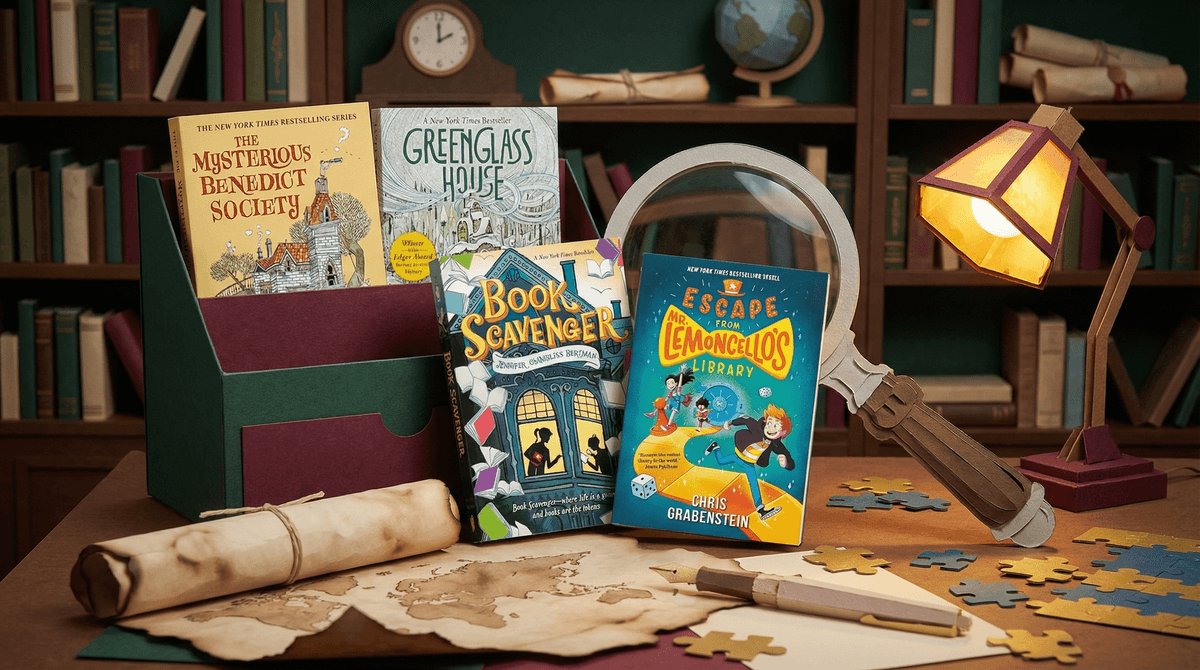
Ideal for ages 8-13, especially puzzle-loving, book-obsessed kids who devoured Escape from Mr. Lemoncello's Library. The reading level and content hit that sweet spot for confident middle-grade readers, though the puzzles and mystery will keep even older kids engaged.
WISE Breakdown
Wholesome
88
Strong themes of friendship, family, and cooperation. Emily navigates moving to a new city with realistic emotions while building genuine connections. The sibling relationship is authentic. Some mild violence (the attack on Griswold) but handled age-appropriately without graphic detail. Positive role models who use intelligence and teamwork to solve problems.
Imaginative
92
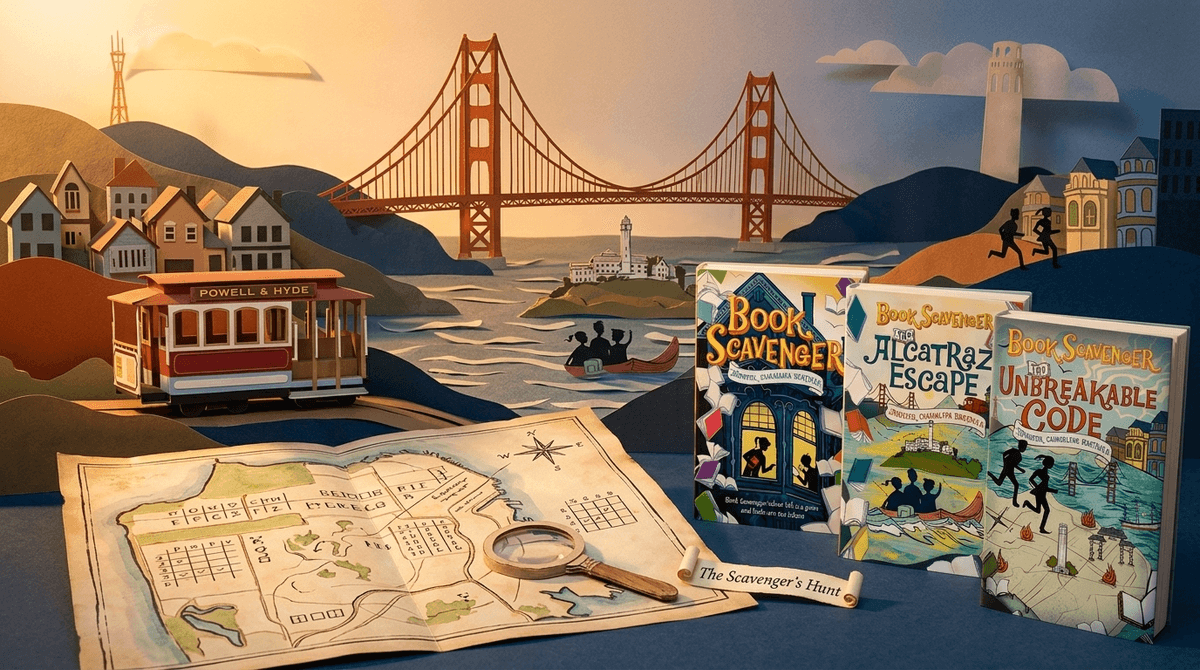
Exceptional creativity with the Book Scavenger game concept—a real-world scavenger hunt mixed with literary puzzles and ciphers. The book actively invites readers to solve puzzles alongside the characters. Literary allusions throughout encourage curiosity about other books. The San Francisco setting is vividly rendered with landmarks like Alcatraz woven into the mystery. Comparable to The Westing Game for puzzle complexity.
Safe
82
Generally very safe for middle-grade readers. The inciting incident involves an attack that puts a character in a coma, and there's mild peril as the protagonists are pursued, but nothing graphic or traumatic. Common Sense Media reviews note some kids found the violence surprising but not inappropriate. No inappropriate content, language, or themes. The tension is mystery-thriller level, not horror.
Enriching
90
Highly enriching—encourages problem-solving through actual ciphers and puzzles readers can decode. Celebrates reading, libraries, and literary culture. Teaches critical thinking and pattern recognition. Explores themes of finding home, adapting to change, and building friendships. The book references real literary works, potentially sparking broader reading interests. Educational without being didactic.
Parent Info
✓
Why It Might Be Great
Actually includes real ciphers and puzzles kids can solve alongside the characters—it's interactive reading
Celebrates books, reading, and libraries without being preachy about it (the game concept is genuinely cool)
Strong friendship story with a realistic portrayal of being the new kid and finding your people
San Francisco setting with real landmarks makes it feel like a field trip through the city
Launched a successful series, so if your kid loves it, there's more to read
⚠
What to Watch For
The book opens with a man being attacked and left in a coma—not graphic, but some younger readers found it unexpectedly intense
There's mild peril throughout as the kids are pursued by the attackers, creating thriller-level tension
Best for kids who actually enjoy puzzles and wordplay—if they hate brain teasers, they'll bounce off this hard
Conversation Starters
"Would you want to play Book Scavenger in real life? Where would you hide books in our neighborhood?"
"Emily's family moves constantly—how do you think that would feel? What would be hardest about always being new?"
"Let's try to solve one of the ciphers together. What patterns do you notice?"
"The book talks about how Griswold wanted to make reading an adventure. What other ways could we make reading more fun?"