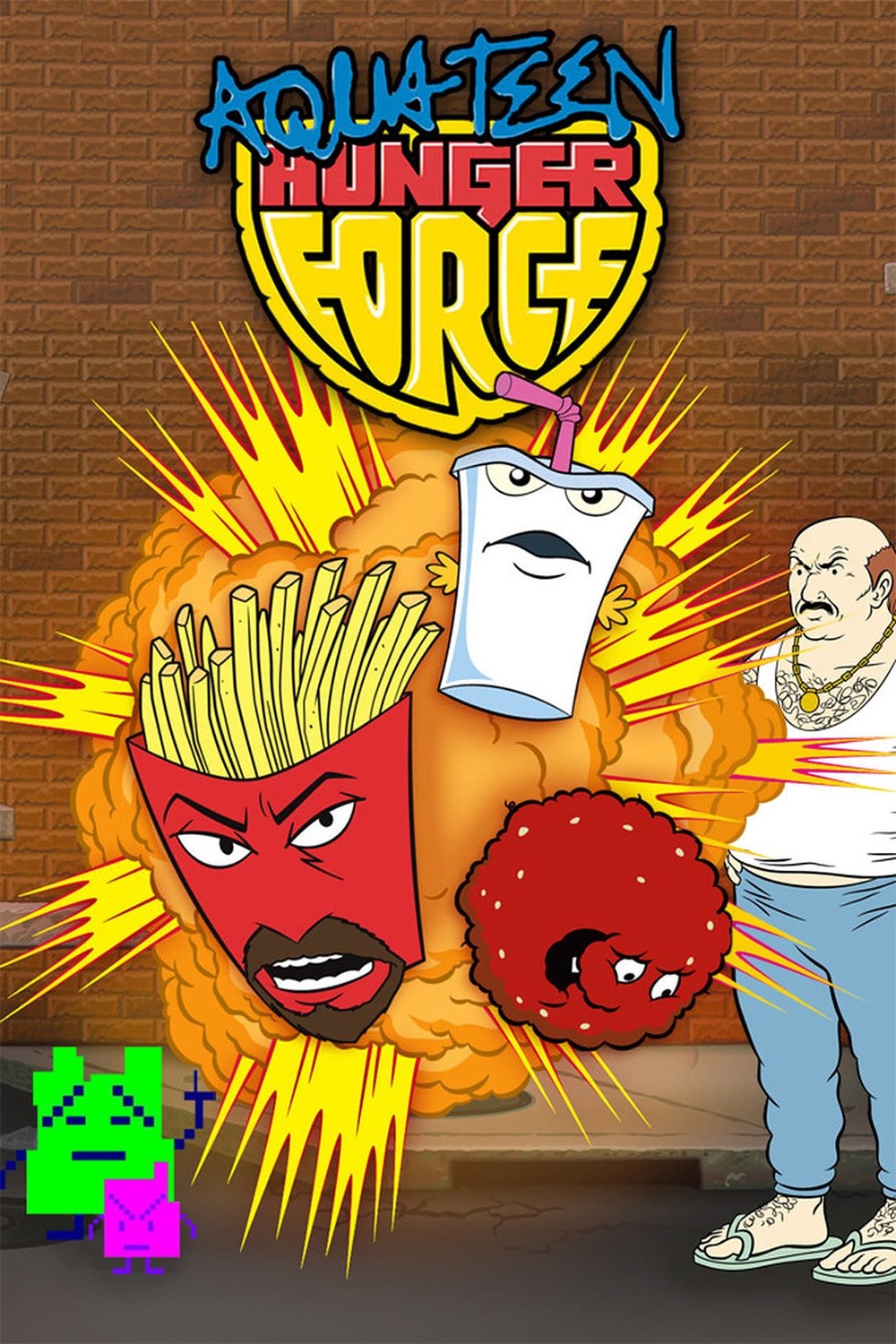
The aesthetic of the anti-sitcom
If you grew up on the polished wit of The Simpsons or the rapid-fire references of Family Guy, Aqua Teen Hunger Force will feel like a fever dream recorded on a broken VCR. It’s the cornerstone of the early-2000s Adult Swim "anti-comedy" movement. The show doesn't just ignore the rules of television; it seems offended by them. There are no lessons learned, no heartwarming endings, and the continuity is non-existent. If a character dies in a horrific explosion in the first five minutes, they’ll be back on the couch in the next scene without a word of explanation.
This lack of structure is exactly why it maintains a 94% audience score on Rotten Tomatoes. It’s designed for a very specific type of viewing: the late-night, half-asleep, "what am I even looking at" experience. The episodes are short, usually clocking in around 11 minutes, which is about as long as anyone can reasonably endure this level of nonsense before needing a break.
Why the "14+" rating is a trap
While Common Sense Media suggests a 14+ age rating, that assumes a level of maturity that the show itself actively mocks. The friction for parents isn't just the "crude humor"—it’s the relentless meanness of the characters. Master Shake isn't just a jerk; he is a sociopathic narcissist who spends most of his time trying to find new ways to torture Meatwad, the show's naive, shape-shifting ball of raw meat.
If your teen is asking to watch this, they’ve likely encountered clips of Carl Brutananadilewski on social media. Carl is the quintessential "angry neighbor" archetype—balding, wearing a stained tank top, and constantly dealing with the fallout of the Aqua Teens' bizarre experiments. He’s the most relatable person in the show, which tells you everything you need to know about the world these characters inhabit.
If they liked X, they might (or might not) like this
If your household is already deep into Rick and Morty, Aqua Teen Hunger Force is the messy, low-budget ancestor that made that show possible. However, where Rick and Morty leans into complex sci-fi concepts and emotional arcs, ATHF leans into stupidity. It is aggressively low-stakes.
- For the surrealist fan: If your kid enjoys the "weird side of YouTube" or internet memes that make zero sense, they will probably find this hilarious.
- For the plot-driven viewer: If they prefer stories with a beginning, middle, and end, they will find this exhausting.
The show thrives on being "so bad it’s good." The animation is intentionally stiff, the backgrounds are often static, and the dialogue is frequently improvised or rambling. It’s a masterclass in how to build a cult following by refusing to pander to a mainstream audience. If you decide to let a younger teen watch it, be prepared for them to adopt a vocabulary of weird, nonsensical catchphrases that will make you feel about a hundred years old.