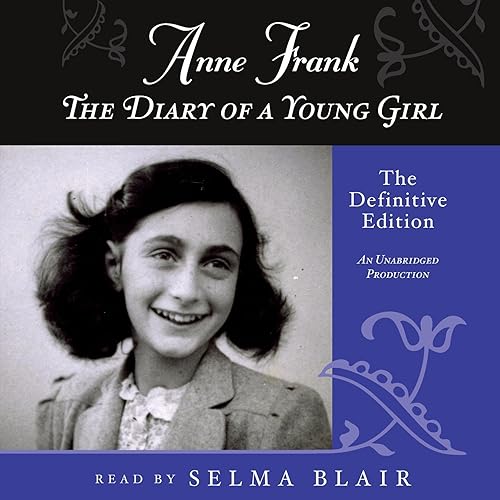
Why the Definitive Edition is the one to buy
If you grew up reading the sanitized version of Anne’s diary, you might remember her as a saintly, floating head of tragedy. The Definitive Edition (2010) fixes that. It restores about 30% of the material that was originally cut, mostly because her father, Otto Frank, wanted to protect the privacy of the other people in the Annex or thought Anne’s descriptions of her own body were a bit too much for a 1940s audience.
The result of these restorations is a book that feels startlingly modern. Anne isn't just a victim of history; she’s a teenager who is occasionally mean to her mom, annoyed by the adults around her, and very curious about her own anatomy. This version gives your kid a protagonist they can actually recognize. It’s the difference between looking at a marble statue and having a conversation with a real person.
The "Roommate from Hell" factor
While the backdrop is the Holocaust, the day-to-day reality of the book is a masterclass in claustrophobia. If your kid has ever been stuck in the house on a rainy day with siblings they can’t stand, they will find a kindred spirit in Anne. She captures the specific, grinding irritation of living in close quarters with people you didn't choose to be with.
The tension doesn't come from battlefield scenes; it comes from the sound of a door locking or the fear of a stray cough. It’s a psychological thriller where the "monster" is outside the walls, but the "drama" is all about who is eating too much of the shared potatoes. For a middle schooler, this focus on social dynamics and internal feelings is often much more engaging than a dry list of dates and battles in a textbook.
If your kid liked The Book Thief or Wonder
This is the logical next step for kids who have started moving into "heavy" realistic fiction. If they’ve read The Book Thief, they’ve seen a fictionalized version of this era. Anne Frank is the reality that inspired those stories.
It also pairs well with anything in the "diary" genre. While we usually think of Diary of a Wimpy Kid as the entry point for that format, Anne Frank is the gold standard for using a journal as a survival tool. It shows kids that writing isn't just for school assignments; it’s a way to maintain your sanity when the world stops making sense.
Handling the "Afterward"
The biggest friction point for parents is the ending—or rather, the lack of one. The diary ends abruptly on August 1, 1944. There is no closure within the pages. Most editions, including this one, include a historical afterword detailing what happened to the eight people in the Secret Annex.
It is a heavy lift. The transition from Anne’s hopeful, witty voice to the cold facts of the camps is brutal. You don't need to shield them from it, but be ready for the "why" questions that don't have good answers. If you want to provide more context on the various versions of the diary and how it was compiled, the Anne Frank House has an excellent breakdown of the "A," "B," and "C" versions of the manuscript that clarifies why this 2010 edition exists.
How to use it well
Don't treat this like a chore or a "vegetable" book they have to finish to get to the good stuff. If they’re finding the middle sections about food shortages or political radio broadcasts boring, tell them it’s okay to skim. The value isn't in memorizing the Annex’s grocery list; it’s in witnessing Anne’s internal growth.
Encourage them to look at the photos of the actual Annex if they can find them online. Seeing how small the space actually was makes her descriptions of the "unbearable strain" feel much more visceral. With an Amazon rating of 4.7, it’s clear that even decades later, her voice still cuts through the noise.