Our reviews and ratings are 100% unbiased. Screenwise is a Bookshop.org affiliate and an Amazon Associate, so if you buy a book through one of our links, we may earn a commission. Bookshop.org purchases also support independent bookstores.
Screenwise Verdict
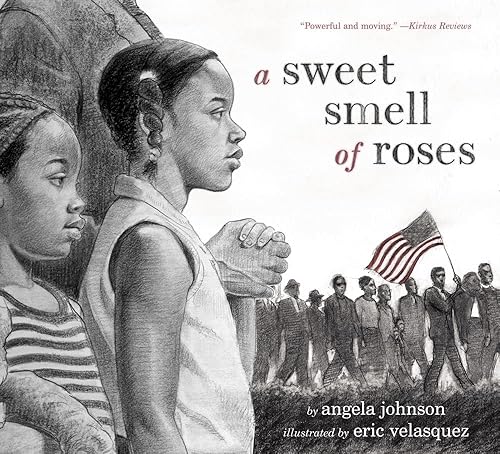
This is the kind of picture book that belongs on every elementary school shelf. Johnson and Velasquez have created something rare: a Civil Rights story that empowers young children without traumatizing them, that teaches history without lecturing, and that centers joy and agency alongside struggle.
The two unnamed girls (intentionally universal, so any child can see themselves) sneak out at dawn to join a peaceful march, and the book captures that electric feeling of being part of something bigger than yourself. The illustrations are stunning—warm, dignified, hopeful.
Is it going to hold the attention of a screen-addicted 7-year-old reading alone? Maybe not—it's quiet and contemplative. But read aloud with a parent or teacher who can pause for questions and context? Absolutely powerful. The 4.9 Amazon rating isn't a fluke. This is a book that does important work without feeling like medicine.
Age Fit
Best for ages 5-10, particularly in K-3 classrooms or homes ready to introduce Civil Rights history. The poetic, hopeful tone makes heavy topics accessible, but younger kids will need adult guidance to understand context. Older elementary students can appreciate the historical significance more deeply.
WISE Breakdown
Wholesome
92
Models courage, civic engagement, and peaceful protest through the eyes of two young girls participating in the Civil Rights movement. The tone is respectful and age-appropriate, focusing on hope and community action rather than violence or trauma. Illustrations by Eric Velasquez are described as jubilant despite the serious subject matter.
Imaginative
78
The narrative device of two girls sneaking out to join a march offers a child's-eye view of history that invites young readers to imagine themselves as agents of change. The 'sweet smell' metaphor throughout the book provides a sensory, poetic lens. However, as a picture book depicting a real historical event, it's more interpretive than wildly inventive.
Safe
88
Civil Rights content is handled with care—focused on peaceful protest and community solidarity rather than graphic violence or trauma. Age range of K-3 (5-8 years) suggests publisher confidence in appropriateness. No surprise disturbing content. Some parents may want to prepare younger kids for discussions about racism and injustice, but the book itself presents these themes gently.
Enriching
94
Exceptional historical and social education value. Introduces young children to the Civil Rights movement through an accessible, empowering lens that emphasizes youth participation. Written by three-time Coretta Scott King Award winner Angela Johnson. Builds empathy, historical awareness, and understanding of civic action. The 4.9/5 Amazon rating suggests strong parent and educator approval.
Parent Info
✓
Why It Might Be Great
Makes Civil Rights history accessible and empowering for kindergarteners—kids see themselves as potential changemakers, not just bystanders
Written by Angela Johnson (three-time Coretta Scott King Award winner) with gorgeous illustrations by Eric Velasquez that capture both gravity and joy
Focuses on peaceful protest and community solidarity rather than violence, making it a gentle entry point for difficult conversations
The 4.9/5 Amazon rating and Coretta Scott King Honor suggest this resonates deeply with families and educators
Short (32 pages) and poetic—the 'sweet smell' metaphor gives kids a sensory way to understand hope and justice
⚠
What to Watch For
You'll need to be ready to talk about racism, segregation, and why people had to march for basic rights—this book opens the door but doesn't explain everything
Some kids under 6 might not have the context yet; consider whether your child is ready for 'people weren't treated fairly because of their skin color' conversations
The girls sneak out without permission—worth a quick chat about how sometimes rules and context matter (though the book treats this as brave, not naughty)
Conversation Starters
"Why do you think the girls wanted to join the march even though they had to sneak out?"
"What does the 'sweet smell' in the story mean to you? What do you think hope smells like?"
"Have you ever seen people marching or protesting for something they believe in? What were they trying to change?"
"The book says young people played an important role in the Civil Rights movement. What are some things kids can do to make the world more fair?"