

When Gaming Friends Become Real Friends: A Guide for Parents
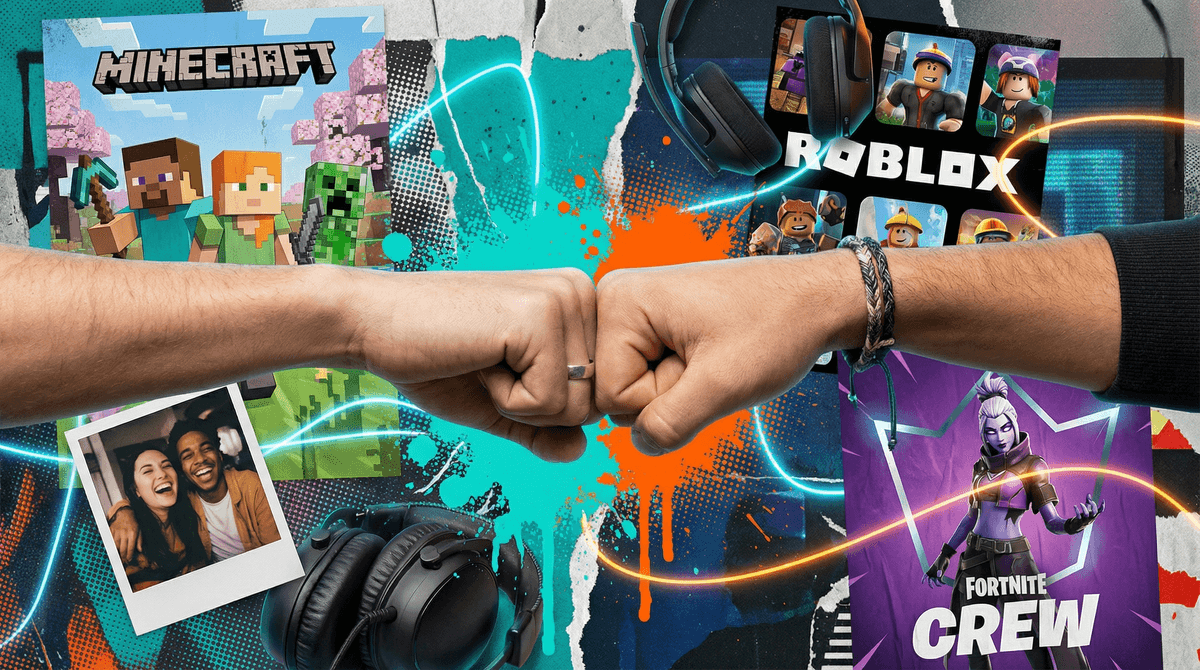
Remember when making friends meant living on the same street or sitting next to each other in class? Yeah, that's not how it works anymore. Our kids are forming genuine friendships with people they've never met IRL, bonded over shared Minecraft builds, Roblox games, or Fortnite squad wins.
And here's the thing that makes us uncomfortable: these friendships are real. Like, actually real. Not "internet friend" real in the dismissive way we might have said it ten years ago, but legitimately meaningful relationships that matter to our kids.
The question isn't really whether gaming friends can become real friends (they already are), but how we navigate this new friendship landscape where your 11-year-old's best friend might live in another state, country, or timezone.
Let's be honest—when your kid says their "best friend" is someone they met on a Minecraft server three months ago, it feels... weird. We didn't grow up this way. We had to actually see people to maintain friendships, and there was something reassuring about that.
But here's what research is showing us: online friendships can be just as meaningful as in-person ones, especially for tweens and teens. A 2023 Pew Research study found that 57% of teens have made a friend online, and for many kids, these relationships provide:
- Connection around shared interests that might not exist in their immediate community
- Lower social anxiety for kids who find face-to-face interaction overwhelming
- 24/7 availability (which is both a feature and a concern)
- Identity exploration in ways that feel safer than their school environment
For kids who are neurodivergent, LGBTQ+, or just really into niche interests (looking at you, competitive Pokémon battlers), online gaming communities can be genuinely life-changing.
Gaming creates a specific kind of bonding that's actually pretty powerful. When you're working together to defeat a boss, build a city, or survive in a hostile environment, you're:
- Collaborating toward shared goals (which builds trust faster than small talk)
- Communicating constantly through voice chat or text
- Showing up consistently (many gaming friend groups have regular play schedules)
- Being vulnerable (dying repeatedly in front of someone is oddly intimate)
Plus, gaming removes a lot of the social performance anxiety that comes with in-person interaction. No one's judging your outfit or whether you're making the right facial expressions. You're just... playing together.
For kids ages 8-12, this is often their first experience with self-selected friendships based purely on compatibility and shared interests, rather than proximity. That's actually a healthy developmental step.
Okay, but we're not naive here. There are real reasons to have your parent-radar up:
Safety Risks
- You don't know who these people actually are (that "12-year-old" could be anyone)
- Predators specifically target gaming platforms because kids are relaxed and chatty
- Personal information gets shared casually ("I can't play tomorrow, I have soccer at Lincoln Elementary")
- Voice chat can escalate quickly into inappropriate conversations
Social Development Questions
- Are online friendships replacing in-person ones? (or supplementing them?)
- Is your kid developing face-to-face social skills? (which are still crucial)
- Can they read social cues that only exist in physical spaces?
- Are they confusing online persona with real identity? (both theirs and others')
The Practical Stuff
- These friendships can be time-intensive (and hard to "pause")
- Friend drama happens online too (and can feel more intense)
- Time zones are a nightmare for coordinating play sessions
- You can't meet the parents or do the normal friendship vetting
Ages 6-9: Supervised Gaming Only
At this age, gaming friends should really be friends-who-also-game, not strangers-met-through-gaming. If they're playing online:
- Stay in the room during voice chat sessions
- Stick to games with robust parental controls and closed friend lists
- Keep it to kids they know IRL (school friends, cousins, etc.)
- Use it as practice for digital communication skills
Ages 10-12: Cautious Independence
This is when genuine gaming friendships start forming. Your role:
- Know who they're playing with (names, ages, general location)
- Random check-ins on conversations (not secret monitoring, but "hey, what are you guys talking about?")
- Teach them information safety (what never to share: full name, school name, address, phone number, plans)
- Meet the friendship where it is (if they talk about "Jake" constantly, take it seriously)
- Facilitate IRL social time too so online isn't their only option
Ages 13+: Trust But Verify
Teens need more autonomy, but they're also at higher risk for predatory behavior and social manipulation:
- Open communication about their online friendships (who, what games, how they met)
- Red flag conversations about adults who are "too interested" or want private chats
- Support healthy boundaries (it's okay to log off, say no to voice chat, block people)
- Respect the friendships while maintaining safety guardrails
Don't dismiss these friendships. If you say "they're not real friends," your kid will stop telling you about them, and you lose your window into this part of their life.
Instead, try:
"Tell me about [friend's name]. How did you meet them?" (Shows you take it seriously)
"What do you like about playing with them?" (Helps you understand the appeal)
"Have they ever asked you personal questions that felt weird?" (Opens safety conversations naturally)
"Do you know anything about them outside the game?" (Gauges how deep the relationship goes)
"Would you ever want to meet them in person?" (Important to discuss before it comes up)
If They Want to Meet IRL
This will probably come up eventually. Here's the framework:
- Not before age 13 (and even then, case-by-case)
- Only after months of consistent friendship (not weeks)
- Video chat first (multiple times)
- Public place (mall, arcade, restaurant)
- Parents present (both sets, ideally)
- Daytime (always)
- Your turf (or neutral territory, not their house)
Some parents are never comfortable with this, and that's valid. But if you shut it down without discussion, you're teaching your kid to hide things from you.
Gaming friendships are real friendships. They're not automatically dangerous, and they're not automatically harmless. They're just... friendships, formed in a different context than we're used to.
The goal isn't to prevent online friendships (that ship has sailed—it's how modern kids connect). The goal is to help your kid navigate them safely while developing good judgment about online relationships.
Some kids will have gaming friends who become lifelong connections. Others will have friendships that fade when the game loses its appeal. Both are normal and okay.
Your job is to:
- Stay informed about who they're playing with
- Keep communication open without being invasive
- Teach safety skills proactively
- Take their friendships seriously even when they seem weird to you
- Balance online social time with in-person connections
This week:
- Have a casual conversation about your kid's gaming friends (names, ages, how they met)
- Review privacy settings on their gaming platforms together
- Establish or revisit household rules about voice chat and personal information
This month:
- Check in on one gaming session (just listen for a bit)
- Talk about what makes a good friend (online or off)
- Make sure they're maintaining some IRL friendships too
Ongoing:
- Stay culturally fluent about the games and platforms they use
- Keep the door open for conversations about online interactions
- Trust your instincts—if something feels off, investigate
Explore Screenwise's guide to gaming platforms and safety features or chat with us about your specific situation .
.
Remember: you're not raising kids for the world you grew up in. You're raising them for the world they're actually living in. And in that world, some of the best friendships start with "hey, want to join my squad?"