

Let's be honest: the news is designed for adults who can contextualize tragedy, understand geopolitical nuance, and not spiral into existential dread when they see a breaking news chyron. Kids? Not so much.
Whether it's a natural disaster, a school shooting, political chaos, or international conflict, the 24-hour news cycle doesn't care about your 8-year-old's developing brain. It cares about engagement, urgency, and keeping eyeballs glued to screens. And that creates a real problem for parents trying to raise informed but not traumatized humans.
The question isn't really "should kids watch the news?" It's more like: How do we help kids understand what's happening in the world without drowning them in fear, confusion, or secondhand anxiety?
Here's the thing: your kids are going to hear about major news events whether you show them or not. A classmate will mention something at recess. They'll overhear you talking to your partner. They'll see a headline on your phone. Or they'll catch a snippet of NPR in the carpool.
The goal isn't to create a news-free bubble (impossible and probably not helpful). The goal is to control the delivery, provide context, and create space for processing.
Because here's what research tells us: kids who hear about scary events without adult guidance tend to fill in the blanks with their imagination, which is almost always worse than reality. They catastrophize. They assume the danger is immediate and local. They develop anxiety that parents don't even know exists because the kid never brought it up.
Ages 2-6: Pretty much no news, ever
Preschoolers cannot distinguish between something happening across the country and something happening in their living room. They don't understand probability, geography, or the concept of "rare events." If they see a hurricane on TV, they think a hurricane is coming to their house.
Keep adult news off around little kids. If something major happens that they need to know about (a family member affected, a local event), tell them directly in the simplest possible terms, then answer their questions.
Ages 7-10: Curated news with lots of context
This is the age where kids start asking real questions about what's happening in the world. They're developmentally ready to understand that bad things happen, but they still need heavy scaffolding.
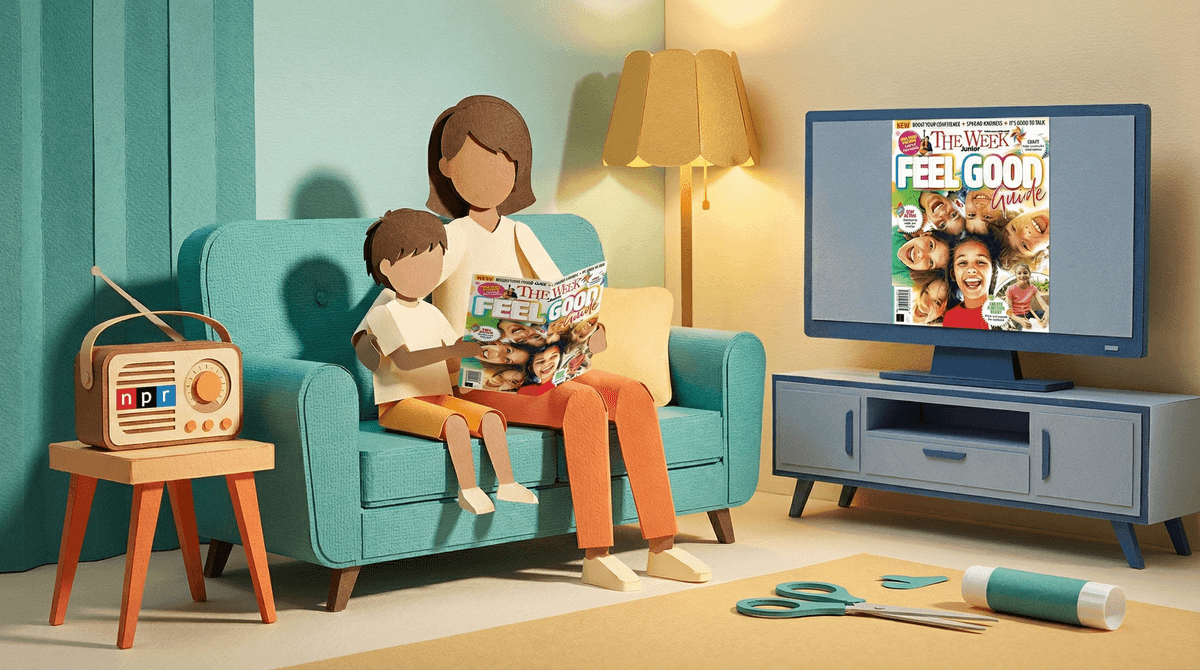
Your best bet? News sources designed for kids. NPR's Up First for Kids is fantastic—10 minutes, age-appropriate language, no graphic details. The Week Junior magazine is another solid option. These sources explain what's happening without the sensationalism, the graphic footage, or the doomscrolling.
If you're watching adult news and something important comes on, turn it off and talk about it instead. Don't let them absorb it passively. Explain what happened, why it matters, what adults are doing to help, and answer their questions honestly but without unnecessary detail.
Ages 11-14: Supervised news consumption with discussion
Middle schoolers can handle more complexity, but they're also at peak anxiety age. Their brains are wired to catastrophize, and the news will absolutely feed that tendency.
This is a good age to start watching some news together—maybe a nightly news segment or a weekly news show—but always with discussion. Ask: "What did you think about that?" "How did that make you feel?" "What questions do you have?"
Teach them to identify sensationalism. Point out when a headline is designed to scare people. Explain why news outlets use dramatic music and urgent language. Help them understand media literacy so they're not just passive consumers.
Ages 15+: Encourage critical consumption
Teens can handle adult news, but they still benefit from conversation. The goal here is to help them become informed citizens who can think critically about sources, bias, and framing.
Watch news together sometimes. Talk about different perspectives. Encourage them to read from multiple sources. And keep checking in about how they're feeling—teens are really good at pretending they're fine when they're actually spiraling about climate change or political instability.
The news is not neutral
Every news source has a perspective, and most are optimized for engagement (read: fear and outrage). Cable news is the worst offender, but even "neutral" sources make editorial choices about what to cover and how to frame it.
If you're going to watch news with kids, choose sources that prioritize information over emotion. PBS NewsHour is solid. NPR is generally good. Cable news? Hard pass for family viewing.
Graphic footage is never necessary
If a news story involves violence, disaster, or tragedy, you do not need to show your kids the footage. You can explain what happened without making them watch it. This is especially true for anything involving children—school shootings, abductions, etc. Kids will internalize that fear in ways that stick.
Your anxiety is contagious
Kids take emotional cues from you. If you're doomscrolling Twitter while watching three news channels and spiraling about the state of the world, your kids will absorb that energy even if you're not talking to them about it.
Model healthy news consumption: check in on major events, stay informed, but don't marinate in it. Show them that you can care about the world without being consumed by it.
It's okay to say "I don't know"
When your kid asks why something bad happened or what's going to happen next, you don't have to have all the answers. "I don't know, but here's what I do know..." is a perfectly good response. It models honesty and humility, which are way more valuable than fake certainty.
Start with what they already know
"Have you heard anything about [event]?" This gives you a baseline. Maybe they know nothing. Maybe they know everything but it's all wrong. Either way, you can't have a useful conversation without knowing where they're starting.
Stick to facts, skip the speculation
Kids don't need to hear every possible worst-case scenario. They need to know what happened, who's helping, and what it means for them (usually: nothing immediate).
Reassure without lying
"You are safe" is almost always true and almost always what they need to hear. But don't promise that nothing bad will ever happen. Instead: "This is very rare. Lots of people are working to keep everyone safe. Our family is safe."
Create space for feelings
"It's okay to feel scared/sad/confused about this." Name the emotion, normalize it, and then help them move through it. Ask what would help them feel better. Sometimes it's a hug. Sometimes it's doing something tangible like donating or writing a letter.
Turn it off when you're done
Don't leave the news on in the background. Have the conversation, then move on to something else. Kids don't need to hear the same story on loop for three hours.
The news is a tool, not a requirement. Your kids don't need to watch it to become informed, empathetic citizens. They need you—explaining, contextualizing, and helping them process what's happening in the world at a pace their brains can handle.
When in doubt, turn it off. Talk instead. Use age-appropriate sources. Check in on their feelings. And remember: you're not raising cable news junkies. You're raising humans who can engage with the world thoughtfully, without being paralyzed by it.
- Find an age-appropriate news source for your kids and test it out together
- Have a conversation about something in the news this week—start small, see how it goes
- Learn more about building media literacy skills so your kids can think critically about what they're seeing
- Set boundaries around your own news consumption—model the behavior you want to see