

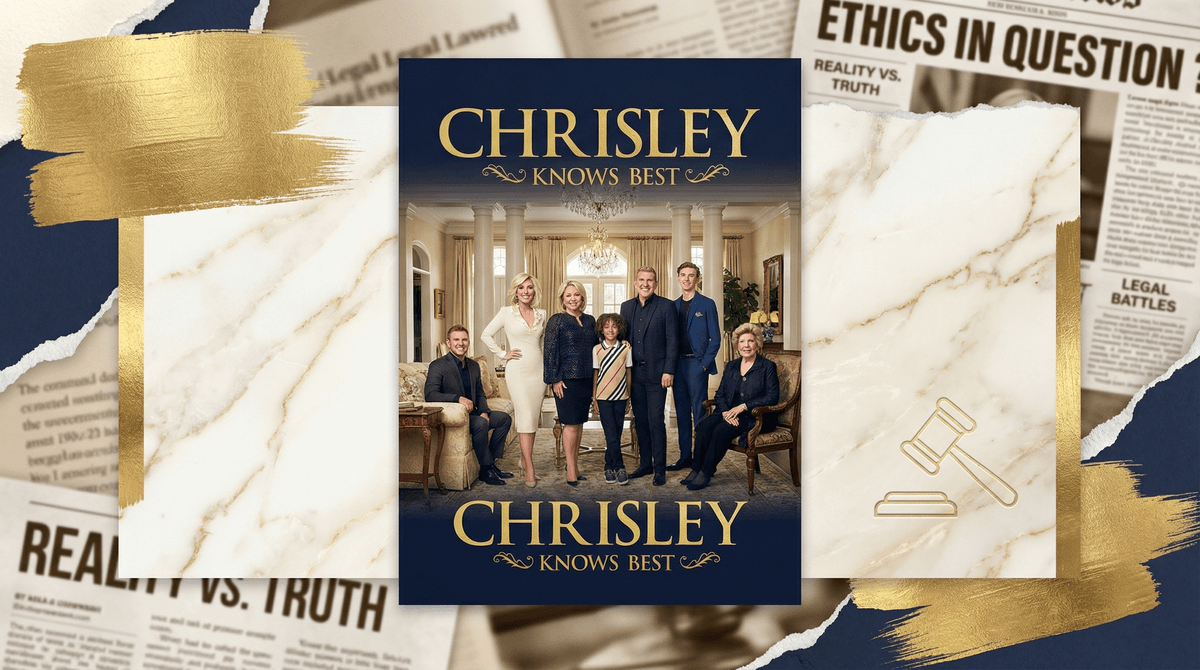
Chrisley Knows Best: What Parents Should Know About This Reality TV Family
TL;DR: This USA Network reality show (2014-2023) follows wealthy real estate mogul Todd Chrisley and his family through their lavish Southern lifestyle. While it presents as wholesome family entertainment with strong parental figures and close family bonds, the show ended after Todd and wife Julie were convicted of bank fraud and tax evasion and sentenced to federal prison. If your kids are asking about it or stumbling onto reruns, here's what you need to know about whether this belongs in your family's viewing rotation.
Chrisley Knows Best ran for nine seasons on USA Network, following Todd Chrisley—a self-made real estate millionaire with a controlling personality, sharp wit, and obsession with appearances—as he navigates life with his wife Julie and their five children. Think of it as a Southern-fried blend of Keeping Up with the Kardashians meets Modern Family, with Todd positioned as the overbearing but loving patriarch who micromanages everything from his kids' dating lives to their clothing choices.
The show's hook was Todd's particular brand of helicopter parenting: he's deeply involved in every aspect of his children's lives, often to comedic effect. He's also openly metrosexual (the show makes frequent jokes about his grooming habits and fashion sense), which was somewhat novel for a Southern reality TV dad when the show premiered in 2014.
If your tweens or teens are watching, it's likely because:
The family dynamics can be genuinely funny. Todd's one-liners and his banter with his kids and mother ("Nanny Faye") provide sitcom-style humor. The show is edited more like a scripted comedy than raw reality TV.
It's on streaming platforms. Reruns are available on Peacock and USA Network's app, making it easy to binge. Kids often stumble onto it while browsing for something light.
The wealth fantasy. Like all aspirational reality TV, the show features mansion living, luxury cars, designer clothes, and expensive vacations. For teens, this can be entertaining escapism.
It feels "safer" than other reality TV. Compared to the drama-heavy, conflict-driven shows like Real Housewives or Jersey Shore, Chrisley Knows Best markets itself as family-friendly. There's no drinking, partying, or explicit content. The conflicts are more "Dad won't let me go to the mall" than "table-flipping screaming match."
Here's where this gets complicated: In June 2022, Todd and Julie Chrisley were convicted of conspiracy to commit bank fraud, bank fraud, conspiracy to defraud the United States, and tax fraud. In November 2022, Todd was sentenced to 12 years in federal prison, and Julie received 7 years. They began serving their sentences in January 2023.
The charges? Essentially, they defrauded banks out of more than $30 million in loans by providing fake financial documents, then hid their wealth from the IRS while living lavishly. The very lifestyle being showcased on the show was built on fraud.
The show was cancelled following their conviction, and USA Network pulled it from their regular programming rotation.
This matters for parents because: If your kids are watching, they're watching people who are literally in prison for lying about money while the entire premise of the show is "look how rich and successful we are." That's not just awkward—it's a teaching moment about consequences, authenticity, and what happens when you build your life on lies.
The show itself is relatively tame content-wise. There's no violence, minimal language (bleeped when necessary), no sexual content beyond mild innuendo, and no substance use. From a pure content perspective, it's appropriate for ages 10+. The TV-PG rating is accurate.
But the context is everything. The show presents the Chrisleys as aspirational—successful, close-knit, and living the American dream. Knowing what we know now, the entire premise feels deeply dishonest. Every scene of them buying expensive items or showing off their mansion is tainted by the knowledge that it was all funded by fraud.
Todd's parenting style is... a lot. He's controlling to an extreme degree—tracking his adult children's locations, making decisions about their relationships, and inserting himself into every aspect of their lives. While the show frames this as "involved parenting," it often crosses into boundary-violating territory. Some parents might find his dedication admirable; others will see it as textbook enmeshment. Learn more about healthy boundaries with teens .
.
The materialism is off the charts. Every episode reinforces the message that happiness = expensive things. Brand names are constantly mentioned, shopping is presented as a primary activity, and the family's worth is tied directly to their possessions and appearance.
The "reality" is highly produced. Like most reality TV, this is heavily scripted and edited. Scenes are set up, lines are rehearsed, and storylines are manufactured. Kids watching should understand this isn't documentary footage—it's entertainment designed to look real.
Ages 10-12: The content itself is fine, but this age group is particularly susceptible to the materialism and may not have the critical thinking skills to question what they're seeing. If they're watching, co-viewing is essential. Use it as an opportunity to discuss: What does this family value? How do they treat each other? What do you think about how much stuff they have?
Ages 13-15: This is the sweet spot for discussing the fraud conviction and what it means. Teens this age are developing their understanding of ethics, consequences, and authenticity. The Chrisley case is a perfect real-world example of how actions have consequences, how lying catches up with you, and how social media/TV personas often don't match reality.
Ages 16+: Older teens can handle more nuanced discussions about white-collar crime, the criminal justice system, and the ethics of watching content created by people who committed serious crimes. Should we separate art from artist? Is it okay to laugh at Todd's jokes knowing where he is now? These are worthwhile conversations.
If your kids are watching or asking about the show, here are some conversation starters:
"What do you like about this show?" Start with curiosity, not judgment. Understanding the appeal helps you know what needs they're meeting (humor? escapism? family dynamics?).
"Did you know the parents are in prison now?" Don't assume they know. Many kids watching reruns have no idea about the conviction. Share the basic facts without editorializing.
"How does knowing that change how you see the show?" Let them process it. Some kids will immediately lose interest; others will be fascinated by the disconnect between image and reality.
"What do you think the show is trying to teach about family/money/success?" Help them identify the underlying messages and evaluate whether those align with your family's values.
"How do you think their kids feel now?" Build empathy. The Chrisley children (who were adults during the trial) have had their family drama play out publicly. What must that be like?
If your kids enjoy the family dynamics and humor but you'd rather steer them toward something less problematic:
-
Schitt's Creek (ages 13+): A wealthy family loses everything and has to rebuild in a small town. Actually funny, genuinely heartwarming, and the character growth is real. Some innuendo and adult themes, but nothing explicit.
-
The Middle (ages 10+): A middle-class Midwestern family dealing with real problems. The opposite of the Chrisleys' wealth fantasy, but the family dynamics are authentic and funny.
-
Modern Family (ages 12+): If they like the mockumentary style and family comedy, this is a better option. More diverse family structures, better writing, and no one goes to prison for fraud.
-
Fresh Off the Boat (ages 10+): An immigrant family navigating American culture in the '90s. Funny, warm, and actually teaches something about different perspectives.
For reality TV fans who want something more authentic, check out our guide to reality TV shows that won't rot your brain.
Chrisley Knows Best is a fascinating case study in the gap between image and reality. The show itself is relatively harmless from a content perspective—it's not going to expose your kids to anything inappropriate. But the context of the family's criminal conviction and imprisonment makes it impossible to watch without that knowledge coloring everything.
If your kids are already watching, don't panic. Use it as a teaching opportunity about authenticity, consequences, and critical media literacy. If they're asking to start watching, there are better options that offer similar humor and family dynamics without the ethical complications.
The real lesson here isn't about reality TV—it's about the importance of living authentically and the consequences of building your life on lies. That's a conversation worth having, whether or not you let them watch the show.
- Have the conversation: If your kids are watching, talk about the conviction and what it means
- Set viewing boundaries: Decide as a family whether continuing to watch aligns with your values
- Explore alternatives: Check out the shows listed above or browse family-friendly comedies
- Discuss media literacy: Use this as a jumping-off point to talk about how reality TV is produced and what "reality" actually means
Want to dig deeper into how to talk to kids about consequences and authenticity? Start a conversation about the difference between image and reality.