

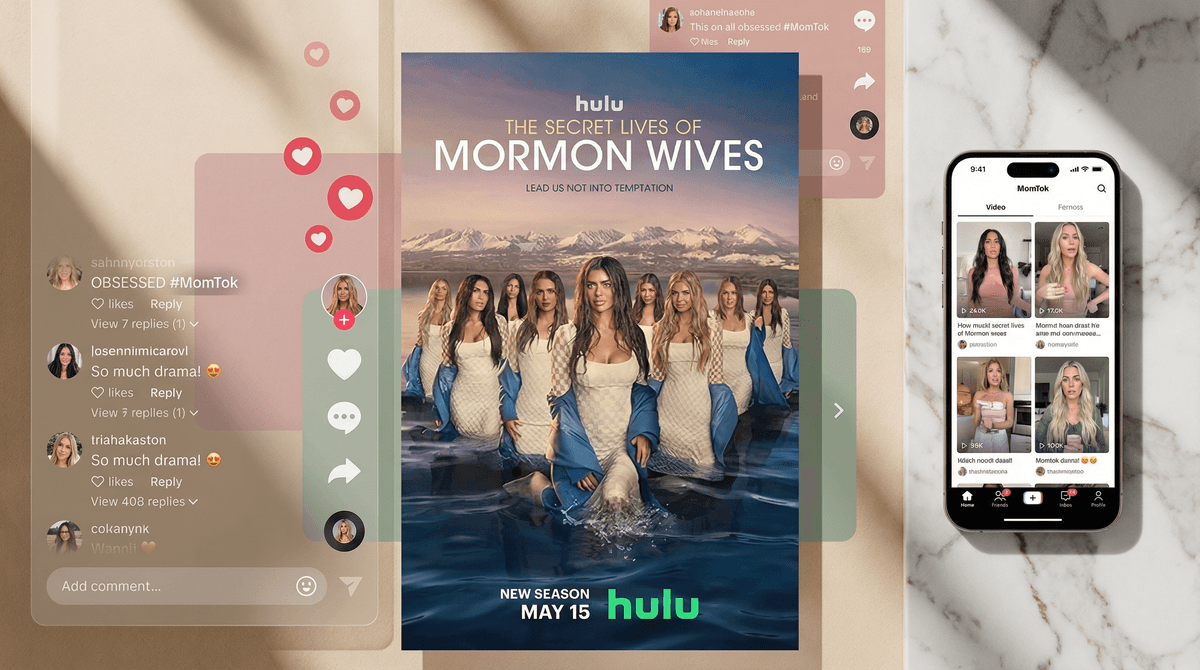
The Secret Lives of Mormon Wives: What Parents Need to Know Before Teens Watch
Hulu's The Secret Lives of Mormon Wives is a reality show following Mormon mom influencers navigating a swinging scandal, and it's absolutely not appropriate for younger teens. We're talking explicit sexual content, affairs, substance use, and intense relationship drama—all wrapped in the shiny package of TikTok fame. If your 16+ teen is asking to watch (and many are), this guide will help you decide if it's right for your family and how to have the necessary conversations around it.
Content Rating: TV-MA (really earning that rating)
Best for: Ages 17+ with parental context
Watch time: 8 episodes, about 40 minutes each
The Secret Lives of Mormon Wives dropped on Hulu in September 2024 and immediately became one of those shows everyone was talking about—especially teens who discovered it on TikTok. The series follows a group of Mormon mom influencers (yes, that's a whole thing) in Utah who call themselves "MomTok."
The drama centers around a real-life scandal that broke in 2022 when Taylor Frankie Paul, one of the main cast members, revealed on TikTok that she and other couples in their friend group had been "soft swinging"—basically, swapping partners with rules. When those rules got broken, marriages imploded, and the whole thing became very public, very fast.
The show documents the aftermath: divorces, new relationships, friendship betrayals, religious questioning, and the constant pressure of maintaining their social media empires while their personal lives are falling apart.
Your teen probably heard about this show through TikTok, where clips from the series have gone absolutely viral. The cast members were already influencers with millions of followers before the show aired, and their drama has been unfolding in real-time on social media for years.
Here's what's drawing teens in:
The influencer angle: These women built their brands on social media, and teens are fascinated by the behind-the-scenes look at influencer life—the brand deals, the manufactured content, the pressure to perform happiness online while everything's crashing offline.
The scandal: Let's be real—teens love drama, and this show delivers it in spades. The swinging scandal is shocking, especially coming from a community known for strict moral codes.
Religious hypocrisy: Many teens are drawn to stories that expose the gap between public values and private behavior. The show raises questions about authenticity, judgment, and what people really believe versus what they perform for their communities.
Relatability (sort of): Despite the extreme circumstances, themes of friendship betrayal, relationship struggles, and trying to figure out who you are resonate with teens navigating their own social dynamics.
The Content Is Explicitly Adult
This isn't one of those shows where you can kind of squint and say "well, maybe for a mature 14-year-old." The TV-MA rating is well-earned:
Sexual content: Detailed discussions of swinging, affairs, and sexual relationships. While there's no on-screen sex, the conversations are explicit and frequent. Episode 1 literally opens with the swinging scandal explanation.
Substance use: Multiple scenes of drinking, and discussions of prescription medication misuse. One cast member talks openly about taking ADHD medication that wasn't prescribed to her.
Emotional abuse and manipulation: Several relationships depicted show controlling behavior, gaslighting, and unhealthy dynamics that are never really addressed as problematic.
Religious trauma: The show touches on the psychological impact of leaving or questioning a strict religious community, which can be heavy content.
Language: Frequent strong language throughout.
The "Reality" Is Heavily Produced
Like most reality TV, this show is edited for maximum drama. Conversations are clearly producer-prompted, timelines are manipulated, and conflicts are amplified. If your teen watches, it's worth discussing how reality TV works—these are real people, but the "reality" is constructed to be entertaining, not truthful.
The Influencer Economy Is the Real Story
Beyond the scandal, this show is actually a fascinating (if troubling) look at influencer culture. These women's entire livelihoods depend on sharing their lives online, which means:
- Their children are constantly on camera (raising serious questions about child privacy and family vlogging)
- They're incentivized to create or amplify drama for engagement
- Their relationships, marriages, and personal crises become content
- They're constantly performing, even in supposedly private moments
This is worth discussing with teens who dream of becoming influencers or who consume a lot of influencer content.
The Mormon Context Matters
The show is set within Mormon (LDS) culture, which has specific beliefs about marriage, family, modesty, and gender roles. The cast members are navigating what happens when they no longer fit perfectly within those expectations—some are leaving the church, others are trying to stay while living differently.
If your family isn't familiar with Mormon culture, some context might be needed. If your family IS Mormon, this show might feel particularly loaded, and you'll want to consider whether watching it together opens up conversations you want to have or just creates unnecessary tension.
Ages 13-15: No. The sexual content alone makes this inappropriate, but add in the complex relationship dynamics, substance use, and heavy themes, and it's just too much for this age group. If they've heard about it and are curious, you can acknowledge the show exists and explain why it's not appropriate yet.
Ages 16-17: Maybe, with significant parental involvement. If you have a mature older teen who's asking to watch, consider:
- Their maturity level around sexual content
- Whether they can critically analyze what they're watching
- If you're willing to watch together and discuss
Ages 18+: Still worth discussing if they're living at home. Even young adults can benefit from conversations about what this show reveals about influencer culture, relationship health, and religious communities.
If You Do Watch Together
Watching with your teen (if they're old enough) can actually create opportunities for important conversations:
- About influencer culture: What are the costs of monetizing your entire life? What happens to kids who grow up as content?
- About relationships: What makes a healthy relationship? What are red flags they're seeing on screen?
- About authenticity: How do people perform versions of themselves online versus who they really are?
- About religious communities: What happens when your beliefs change? How do communities respond?
- About consequences: Actions have ripple effects—on spouses, children, friendships, and communities.
The Secret Lives of Mormon Wives is not appropriate for younger teens, period. For older teens (16-17), it depends entirely on your family's values and your teen's maturity level. The show has sparked important conversations about influencer culture, religious expectations, and relationship ethics—but it's also got explicit content that many families won't be comfortable with.
If your teen is too young to watch but curious about the drama, you can acknowledge that the show exists and talk about why certain content isn't appropriate yet. If they're sneaking it at friends' houses (let's be honest, some will), at least make sure they know they can talk to you about what they're seeing.
The bigger conversation here isn't really about one reality show—it's about helping teens develop critical thinking skills around the media they consume, especially reality TV and influencer content that blurs the line between entertainment and real life.
If you're considering letting your older teen watch:
- Watch the first episode yourself first to gauge the content
- Decide if you'll watch together or separately with check-ins
- Set expectations about pausing to discuss what you're seeing
- Talk about the difference between entertainment and real-life relationship models
If you're saying no:
- Explain your reasoning clearly (not just "because I said so")
- Acknowledge that they might see clips on TikTok anyway
- Keep the door open for them to ask questions about what they're hearing about the show
- Revisit the conversation in 6-12 months as they mature
Either way:
- Use this as a jumping-off point to discuss influencer culture and what your family thinks about it
- Talk about what healthy relationships look like
- Discuss how religious communities (any religion) handle members who don't fit the mold
Remember: saying no to one show doesn't make you the villain. It makes you a parent who's paying attention. And that's exactly what intentional parenting looks like.