

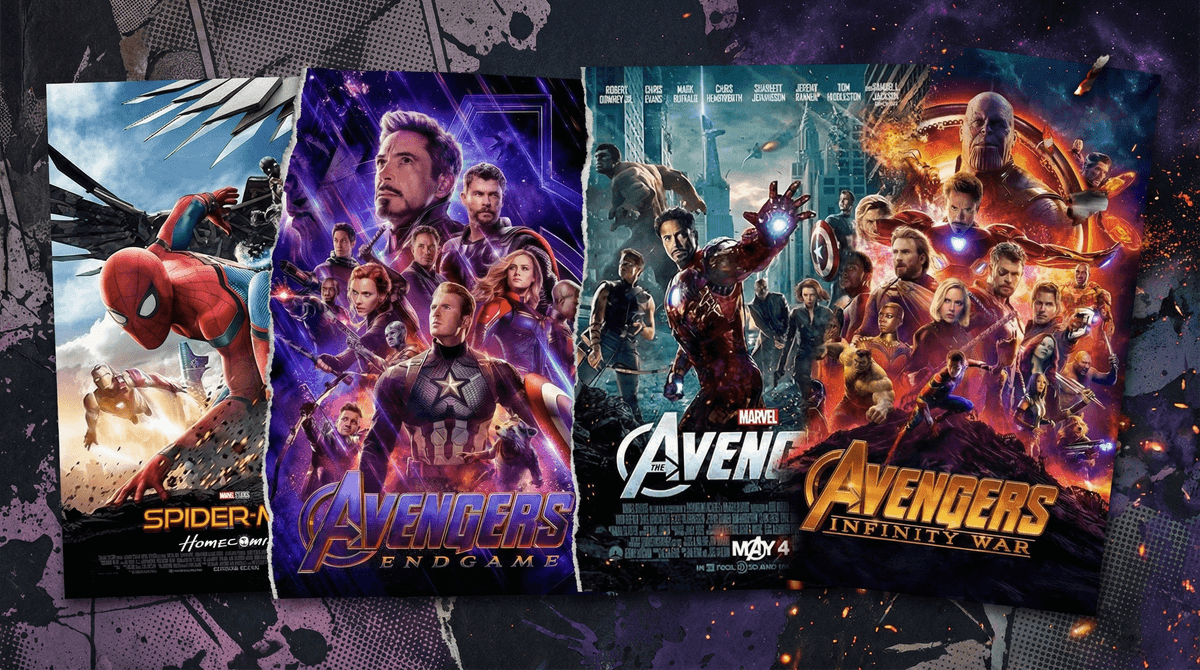
Released in 2018, Avengers: Infinity War is the culmination of 10 years and 18 films of Marvel Cinematic Universe storytelling. It's the movie where all your kids' favorite superheroes—Iron Man, Captain America, Black Panther, Spider-Man, the Guardians of the Galaxy, and more—finally team up to face the ultimate villain: Thanos, a purple alien warlord who wants to collect six magical stones that will give him the power to wipe out half of all life in the universe with a snap of his fingers.
And here's the thing parents need to know upfront: he wins.
This isn't your typical superhero movie where the good guys triumph and everyone goes home happy. Infinity War ends on a devastating cliffhanger, with beloved characters literally turning to dust on screen. It's darker, more intense, and emotionally heavier than almost any Marvel movie that came before it.
If your kid has been watching the MCU films in order, they're probably ready for this. If they're jumping in cold because "everyone at school has seen it," you need to have a conversation first.
Let's be real: if your kid is into Marvel, they've probably already seen this movie at a friend's house or caught clips on YouTube. It's a cultural touchstone. The "Mr. Stark, I don't feel so good" scene became an instant meme. The Thanos snap became playground vocabulary.
Beyond the cultural currency, Infinity War is genuinely compelling storytelling. The stakes feel real (because they are—characters die, and not just nameless extras). The action sequences are spectacular. And for kids who've been following these characters across multiple films, seeing them all interact is like the ultimate crossover episode.
Plus, Thanos is one of the most complex villains in superhero cinema. He's not just evil for evil's sake—he genuinely believes he's saving the universe. That moral complexity is interesting for older kids and teens to wrestle with.
The official rating is PG-13, and this time, that rating actually means something.
Ages 6-9: Probably too intense. The violence is pervasive (though not gory), and the ending is genuinely traumatic for younger viewers. Multiple beloved characters die on screen, and the film ends with heroes literally disintegrating into ash while crying and scared. If your 8-year-old is sensitive or has anxiety, this could lead to nightmares and genuine distress.
Ages 10-12: This is the gray area. Some mature 10-year-olds who've been watching Marvel movies and understand the concept of sequels and cliffhangers might handle it fine. Others will be devastated by the ending. You know your kid best. The question to ask: can they handle watching heroes fail? Can they sit with an unhappy ending for a year until the next movie? (Or if they're watching now, can you immediately queue up Avengers: Endgame to provide resolution?)
Ages 13+: Generally fine, especially if they're Marvel fans. Teens can appreciate the storytelling complexity and moral ambiguity. The violence is mostly fantasy-based (energy blasts, alien weapons), though there are some brutal moments.
The Violence Is Constant But Not Gory
This is a 2.5-hour war movie with superheroes. There's fighting in nearly every scene—hand-to-hand combat, explosions, energy weapons, stabbings. A character gets stabbed through the chest (you see the blade go through). Another gets their neck snapped. Several characters are choked or strangled.
But: There's minimal blood. No dismemberment or graphic injury detail. It's all very comic book in style, which makes it less visceral than, say, a realistic war movie, but it's still a lot of violence.
The Emotional Weight Is Heavy
The real intensity isn't the action—it's the stakes. Characters make impossible choices. A father figure sacrifices his daughter by throwing her off a cliff (to get one of the magic stones). A hero has to kill someone they love to save the universe—and then watches that sacrifice become meaningless when the villain reverses time.
And then there's the ending. Half the heroes die. They turn to dust while their friends watch helplessly. Spider-Man, a teenager, clings to Tony Stark crying "I don't want to go" as he disintegrates. Black Panther, Scarlet Witch, most of the Guardians of the Galaxy—gone. The movie ends with the villain watching a sunset, victorious, while the heroes sit in shock and defeat.
For kids who are emotionally invested in these characters, this hits hard.
Language and Other Content
Language is mild—a handful of "hells" and "damns," one "shit." No sexual content beyond some flirting and one kiss. No drug/alcohol use beyond a brief comedic moment.
The real concern is existential dread. This is a movie about genocide on a universal scale. Thanos's plan is to kill half of all living beings. The movie opens with the aftermath of a massacre. Characters discuss death, sacrifice, and the trolley problem in superhero form.
If your kid wants to watch Infinity War, have a pre-viewing conversation:
"This movie has a really sad ending. The heroes don't win. A lot of characters you like are going to die. Are you okay watching a movie that ends that way?"
Explain that this is Part 1 of a two-part story, and the resolution comes in Endgame. If they're watching now in 2026, you can immediately follow up with the conclusion. If they watched it when it first came out, kids had to wait a full year not knowing if their favorite heroes would come back—that was rough.
After watching, talk about Thanos's philosophy. He believes killing half the universe will save the other half from resource scarcity. He's wrong, but the movie presents his perspective seriously. This is a great opportunity to discuss utilitarianism, the value of individual lives, and why "the ends justify the means" is a dangerous philosophy.
Also worth discussing: the heroes' impossible choices. When is sacrifice heroic? When is it tragic? What would you do in those situations?
Avengers: Infinity War is one of the best superhero movies ever made, and also one of the darkest. It's emotionally devastating, relentlessly intense, and ends on a cliffhanger that left audiences stunned.
It's not for young kids. If your child is under 10, wait. If they're 10-12, gauge their emotional maturity and their ability to handle an unhappy ending. If they're 13+, they can probably handle it, especially if they're already Marvel fans.
The key is context. Don't let this be their first MCU movie. Make sure they understand it's Part 1 of 2. And maybe have Endgame ready to go immediately after, because sitting with that ending is genuinely hard.
If you want to explore other superhero content that might be more age-appropriate, check out alternatives to intense Marvel movies or learn more about the Marvel Cinematic Universe viewing order .
.
And if your kid has already seen it and is having big feelings about it? That's normal. Sit with them. Talk it through. And remind them that sometimes stories need to get dark before they can get to the light.