

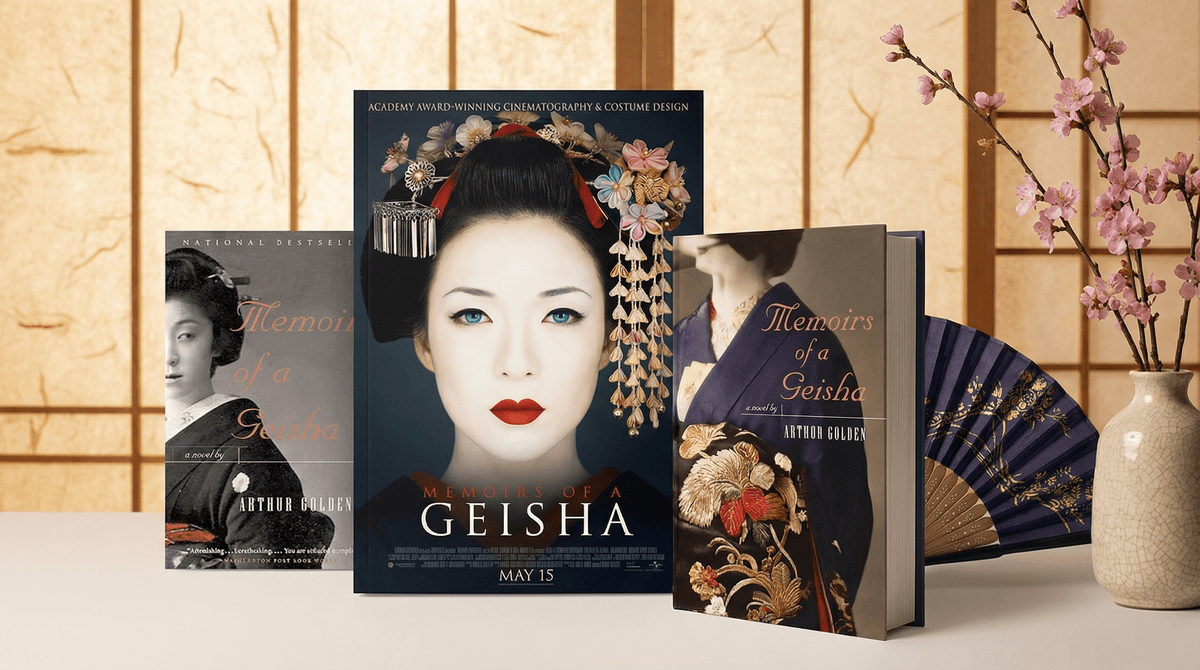
Memoirs of a Geisha: What Parents Need to Know Before Teens Watch
TL;DR: Memoirs of a Geisha is a visually stunning 2005 film that's rated PG-13, but that rating doesn't tell the whole story. While there's no explicit content, the movie deals with sexual exploitation, the commodification of women's bodies, and complex power dynamics in 1930s-40s Japan. Best for ages 15+ with context, not the 13-year-old crowd despite the rating. If your teen is interested, watch it together—this one needs conversation.
Based on Arthur Golden's bestselling novel, Memoirs of a Geisha follows Chiyo, a young girl sold by her impoverished family to an okiya (geisha house) in Kyoto. The film traces her transformation into Sayuri, one of the most celebrated geishas of her time, as she navigates rivalry, love, survival, and her place in a world where women are trained from childhood to entertain and please wealthy men.
The movie stars Ziyi Zhang, Ken Watanabe, Michelle Yeoh, and Gong Li, and won three Academy Awards for its cinematography, costume design, and art direction. It's genuinely beautiful to watch—every frame looks like a painting.
But beautiful doesn't mean easy.
Your teen might encounter this film through:
- English or history class - Some teachers assign it when studying WWII, Japanese culture, or gender dynamics
- TikTok aesthetics - The gorgeous costumes and cinematography have found new life in #cottagecore and #darkacademia adjacent content
- Book clubs or reading lists - The novel remains popular in high school reading circles
- Interest in Japanese culture - Teens exploring anime, manga, or Japanese history often stumble across it
The film's reputation as a "prestige drama" makes it feel more acceptable than, say, asking to watch an R-rated movie. But the PG-13 rating is misleading.
The Sexual Content (It's Complicated)
There's no nudity or explicit sex scenes, which is probably why it squeaked by with PG-13. But the entire premise revolves around sexual exploitation and the commodification of young girls' virginity.
Here's what happens:
- Young girls (around 9-10 years old in the story) are sold to geisha houses and trained to be entertainers
- A major plot point involves Sayuri's "mizuage" (virginity) being auctioned off to the highest bidder when she's around 15
- The film depicts this as both traumatic AND as a necessary business transaction
- Adult men pursue teenage girls, and while the camera doesn't show explicit content, the implications are crystal clear
- There are several scenes of Sayuri being dressed, undressed, and prepared for sexual encounters (clothed but clearly suggestive)
The movie tries to handle this with artistic restraint, but let's be real: we're watching a child be groomed and sold. That's the story. It's handled "tastefully" but it's still deeply disturbing content.
The Cultural Context Issue
This film sparked significant controversy, particularly within Asian American communities, for several reasons:
The casting: Chinese actors playing Japanese characters, speaking English, in a story about Japanese culture. Many found this deeply problematic—imagine a film about the American South starring only British actors.
The white gaze: The source novel was written by a white American man, and critics argue the film perpetuates Western fantasies about "exotic" Asian women rather than authentically representing geisha culture.
Historical accuracy: Actual geisha and historians have pointed out numerous inaccuracies in how geisha life is portrayed. Real geisha were (and are) skilled artists and entertainers, not prostitutes, though the film blurs these lines.
If your teen watches this, they should understand it's not a documentary and doesn't accurately represent geisha culture or Japanese history. Learn more about the cultural controversies around this film .
.
The Violence and Disturbing Content
Beyond the sexual themes:
- Scenes of child abuse (emotional and physical)
- A graphic suicide attempt
- WWII bombing scenes
- Intense bullying and psychological torture between women
- Pervasive themes of women hurting other women to survive in a patriarchal system
The violence isn't gratuitous, but it's emotionally heavy. This isn't a fun period drama—it's a story about survival in a system designed to exploit vulnerable people.
Ages 13-14: Not recommended, despite the PG-13 rating. The sexual exploitation themes are too complex and the power dynamics too nuanced for most middle schoolers to process critically.
Ages 15-16: Possibly appropriate for mature teens, but only with parental context. Watch it together and be prepared to discuss what you're seeing. This is not a "drop them off at the movies" situation.
Ages 17+: More appropriate for older teens who can engage critically with themes of exploitation, cultural representation, and gender dynamics. Still worth discussing afterward.
Red flags that your teen isn't ready:
- They romanticize toxic relationships in other media
- They struggle to distinguish between "beautiful cinematography" and "endorsement of what's being shown"
- They're not yet comfortable discussing sex, consent, and power dynamics
If you decide to let your teen watch, here are conversation starters:
Before watching:
- "This movie shows a system where young girls were exploited. The film is beautiful to look at, but what's happening to these characters is not okay. Let's watch critically."
- "The book and movie were created by non-Japanese people and have been criticized for inaccuracy. This is one interpretation, not the real story of geisha culture."
During/after watching:
- "How do you feel about how the film portrays Sayuri's 'choice' to become a geisha? Did she really have a choice?"
- "Notice how the film is shot from the male perspective—we see Sayuri primarily through the Chairman's eyes. How might the story be different if told from her perspective?"
- "What do you think about the relationship between Sayuri and Mameha vs. Sayuri and Hatsumomo? Why do you think women in this system turned on each other?"
- "This film shows a historical practice, but exploitation of young people still happens today. Where do you see similar dynamics in modern culture?"
Memoirs of a Geisha is not the "elegant period drama" its marketing suggests. It's a story about child trafficking, sexual exploitation, and survival in a deeply patriarchal system, wrapped in gorgeous costumes and cinematography.
The film has artistic merit and can spark important conversations about gender, power, cultural representation, and historical exploitation. But it's not appropriate for younger teens, and even older teens need context.
If your teen wants to watch it: Make it a shared experience. Watch together, pause when needed, and discuss afterward. Use it as an opportunity to talk about consent, cultural appropriation, and how beautiful aesthetics can sometimes obscure harmful content.
If you're looking for alternatives that explore similar themes more age-appropriately, consider Mulan (the animated version) for younger teens interested in historical Asian settings, or The Handmaid's Tale for older teens ready for dystopian examinations of women's oppression (though that's TV-MA and comes with its own content warnings).
- Check your school's curriculum: If this is assigned viewing, contact the teacher to understand the educational context and discussion plans
- Preview it yourself: Watch it before your teen does—seriously, the PG-13 rating undersells the mature themes
- Explore actual geisha culture: If your teen is interested in Japanese culture, help them find authentic resources rather than Hollywood interpretations
- Use Screenwise to set boundaries: Not sure if your teen is ready? Chat with us about your specific situation
This movie isn't inherently bad, but it requires critical viewing and honest conversation. If you're not ready to have those conversations with your teen yet, that's your answer—wait until you are.