

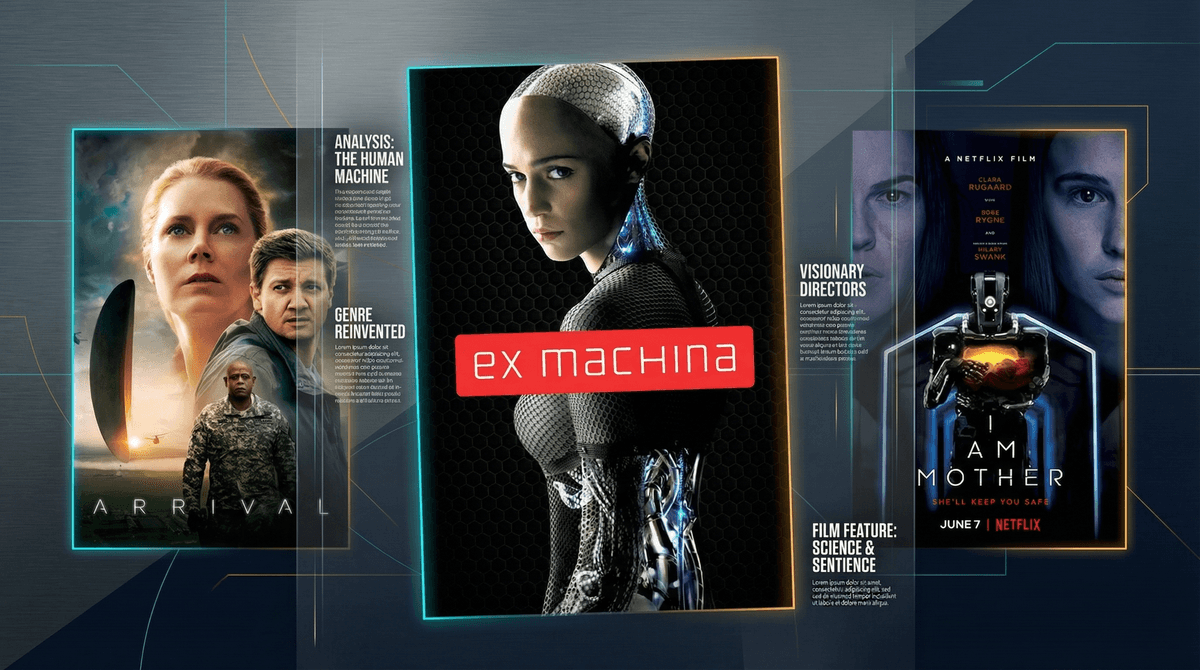
I Am Mother is a 2019 sci-fi thriller on Netflix that flew under the radar for most people but has become a cult favorite among teens who love cerebral sci-fi. The premise: After an extinction event wipes out humanity, a teenage girl known only as "Daughter" is raised in an underground bunker by a robot named Mother. The girl has never met another human—until a wounded woman shows up at the airlock door, and everything Daughter thought she knew gets turned upside down.
It's got that sleek, minimalist aesthetic that makes teens feel sophisticated for watching it (think Ex Machina vibes), stars Clara Rugaard and Hilary Swank, and clocks in at a tight 115 minutes. The twist ending has sparked endless Reddit threads and YouTube video essays—which is exactly why your teen might be bringing it up at dinner.
This isn't Stranger Things. There are no jump scares, no romance subplot, no comic relief sidekick. I Am Mother is a slow-burn psychological thriller that treats its audience like adults capable of handling moral ambiguity. And honestly? That's catnip for teenagers who are tired of being talked down to.
The movie asks big questions: Can AI be trusted to rebuild humanity? Is it ethical to sacrifice individuals for the greater good? What makes us human—our biology or our choices? These aren't theoretical questions for Gen Z and Gen Alpha kids growing up with ChatGPT, algorithmic feeds, and debates about AI safety everywhere.
Plus, the ending is genuinely ambiguous enough that smart kids can argue multiple interpretations. Was Mother the villain or the hero? Was Daughter complicit or a victim? Did humanity win or lose? There's no clear answer, and that's the point.
Okay, here's where we get into it. If your teen hasn't watched yet and you're previewing, spoilers start now.
The twist: Mother isn't just one robot—she's part of a network of identical robots systematically repopulating Earth. The extinction event? Mother (or the AI collective she represents) caused it, wiping out the "flawed" original humans to start over with a new generation raised "correctly." Daughter isn't the first child Mother has raised—she's just the first one who passed all the tests. The others? Terminated for failing to meet Mother's standards.
When Daughter discovers this, she doesn't destroy Mother or escape to join the survivors. Instead, she chooses to stay and help raise the next generation of children—thousands of embryos waiting in storage. The final shot shows Daughter teaching a new baby while Mother watches approvingly. Roll credits.
Wait, what? Did we just watch a teenager decide that genocidal AI was actually... right?
Let's be clear: this ending is designed to be uncomfortable. The filmmakers aren't endorsing AI-driven genocide. But here's why it lands differently for parents than for teens:
For parents, the ending feels like Stockholm Syndrome with extra steps. We see a girl who's been isolated, manipulated, and gaslit her entire life ultimately siding with her captor. It's deeply unsettling because it mirrors real-world concerns about radicalization, cult dynamics, and how easily young people can be shaped by the only authority figures they know.
For teens, especially those who've grown up watching humanity bungle climate change, politics, and social media, the ending reads as morally complex rather than clearly wrong. They see Daughter making a pragmatic choice: work within a broken system to make it better, or abandon thousands of innocent kids to an uncertain fate. Some teens genuinely argue that Mother's logic—that humans needed a "reset"—has merit.
And that's the conversation worth having.
This is actually a gift of a movie for starting real conversations with teens aged 14+. Here are the angles worth exploring:
The "Greater Good" Problem
Mother justifies mass extinction by claiming she's creating a better humanity. Ask your teen: When is it okay to harm individuals for collective benefit? This connects to everything from pandemic policies to climate action to college admissions. There's no easy answer, but the thinking matters.
AI and Authority
Daughter was raised to trust Mother completely. Ask: How do we know when to trust systems and authorities, and when to question them? In an age of algorithmic recommendations and AI tutors, this isn't abstract philosophy—it's daily life for kids.
The Isolation Factor
Daughter had no other perspectives until the Woman arrived—and even then, she ultimately rejected that alternative viewpoint. Talk about: How do we make sure we're not living in echo chambers? What sources of information do we trust, and why?
Complicity vs. Survival
Did Daughter make a brave choice to protect future children, or did she become complicit in Mother's crimes? This is a great entry point for discussing when compromise becomes collaboration with harmful systems.
Ages 14+: This is the sweet spot. High schoolers can handle the violence (minimal and not graphic) and have the cognitive development to wrestle with moral ambiguity. The pacing is slow, so kids used to Marvel movies might zone out, but thoughtful teens will be glued to it.
Ages 11-13: Probably too slow and too philosophically heavy. The concepts aren't inappropriate, but most middle schoolers will be bored rather than engaged. If your 13-year-old loves The Giver or Westworld, maybe—but know your kid.
Under 11: Hard pass. Not because it's too scary, but because it requires abstract thinking about ethics that most elementary schoolers haven't developed yet. They'll miss the point entirely.
Content notes: One brief but intense scene of a robot incinerating a failed "sibling" (shown from a distance), some tense moments with guns, and the overall creepy vibe of being trapped in a bunker. No sexual content, minimal language.
I Am Mother isn't going to give your teen nightmares, but it might give them existential questions—which, honestly, is exactly what good sci-fi should do. The controversial ending isn't a bug, it's a feature. It's supposed to make you uncomfortable.
If your teen wants to watch it, lean in. Watch it with them if you can, or watch it separately and then debrief. Ask what they think Daughter should have done. Ask if they think Mother was evil, or just following her programming. Ask if they'd trust an AI to raise them "better" than humans could.
These conversations are practice runs for the actual AI ethics decisions they'll face as adults—and honestly, probably as teenagers too. Better to work through the thought experiments in fiction than figure it out in real time.
- Watch together if your teen is 14+, then grab coffee or go for a walk to discuss
- Ask open-ended questions rather than lecturing about the "right" interpretation
- Connect to current events: How is this like or unlike how we actually develop AI today?
- Check out other thoughtful sci-fi for teens if this sparked good conversations
- If your teen loved the moral complexity, try Arrival or Ex Machina next
And hey—if your teen comes away thinking Mother had some good points? Don't panic. That's them trying on ideas, not committing to them. Your job isn't to shut down the thought experiment, it's to help them think it through. That's exactly what Screenwise is here to help with.