

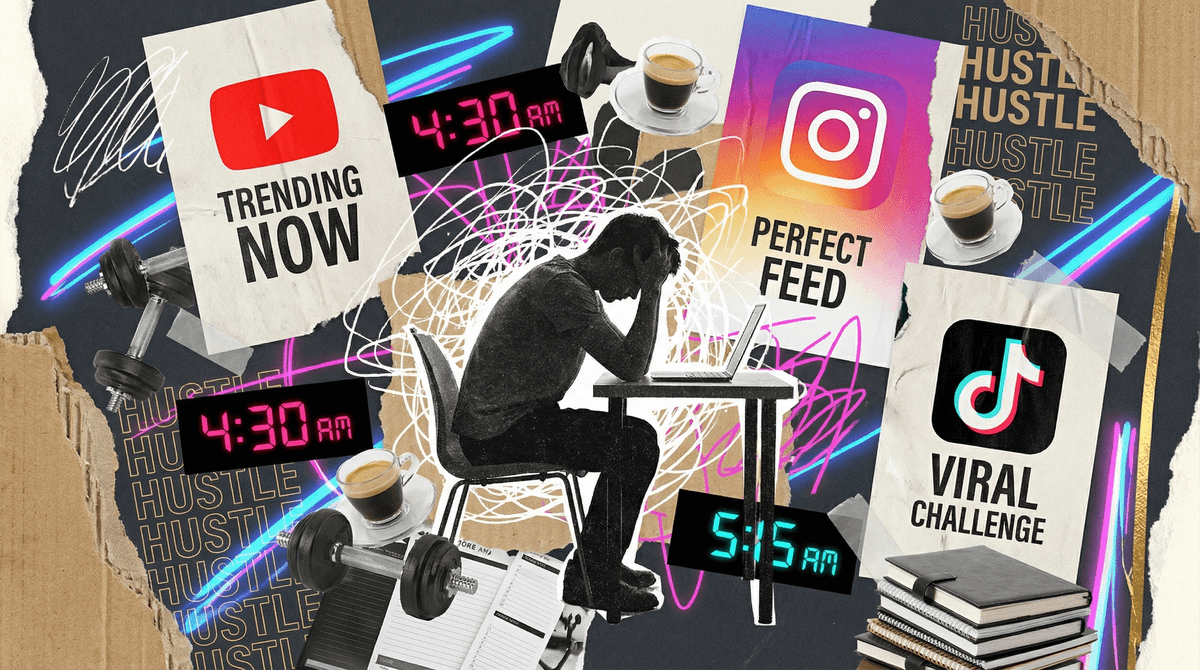
You know that TikTok where a 16-year-old is studying at 5 AM, running a side hustle, hitting the gym, and optimizing their morning routine—all before homeroom? That's grind culture, and it's absolutely everywhere your teen scrolls.
Grind culture (sometimes called hustle culture) is the glorification of constant productivity, side hustles, and the idea that rest equals laziness. It's the "sleep when you're dead" mentality repackaged for Gen Z with better lighting and lo-fi beats. On social media, it looks like:
- "That Girl" / "That Guy" morning routines showing teens waking at 4:30 AM to journal, work out, meal prep, study, and build their personal brand
- Productivity porn on TikTok and YouTube where every minute must be optimized
- Side hustle culture pushing dropshipping, crypto, NFTs, and passive income streams to teenagers
- Study influencers romanticizing all-nighters and extreme study schedules
- Fitness content that treats rest days like moral failures
The algorithm loves this content because it's aspirational and makes people feel simultaneously inspired and inadequate—which keeps them watching.
Here's the thing: teenagers are developmentally wired to care deeply about status, identity formation, and peer comparison. Social media takes those normal developmental tasks and puts them on steroids.
When your teen sees their peers (or people who look like peers) seemingly crushing it in every dimension, their brain doesn't automatically recognize that:
- It's curated content, not reality
- The algorithm shows extremes, not the boring middle where most people actually live
- These creators are often older than they look (that "high schooler" with a six-figure business? Often actually 24)
- Mental health costs are hidden behind the highlight reel
Add in college admissions anxiety, economic uncertainty, and the very real pressure to stand out in an increasingly competitive world, and you've got a perfect storm for burnout.
According to recent studies, over 40% of high schoolers report feeling burned out, and the numbers are climbing. We're seeing teenagers experiencing symptoms traditionally associated with mid-career professionals: exhaustion, cynicism, reduced efficacy, and feeling like nothing they do is ever enough.
Burnout isn't just "being tired." It's a specific pattern of physical, emotional, and behavioral symptoms:
Physical signs:
- Constant fatigue that sleep doesn't fix
- Headaches, stomach issues, getting sick more often
- Changes in sleep (insomnia or sleeping too much)
- Changes in appetite
Emotional signs:
- Feeling numb or detached
- Loss of motivation and sense of accomplishment
- Increased irritability or emotional outbursts
- Feeling helpless or trapped
Behavioral signs:
- Procrastinating more than usual
- Withdrawing from responsibilities or social activities
- Using screens, food, or substances to cope
- Declining performance despite working harder
The cruel irony? Burnout often makes teens double down on the grind because they think they just need to work harder—which makes everything worse.
Social media isn't creating grind culture from scratch, but it's absolutely pouring gasoline on the fire:
The comparison trap is constant. Your teen isn't just comparing themselves to classmates anymore—they're comparing themselves to millions of highly curated accounts. Instagram and TikTok algorithms specifically serve content that triggers engagement through aspiration and inadequacy.
Rest is invisible. Nobody posts their mental health day or their afternoon nap. The algorithm doesn't reward "I did nothing today and it was great." So teens get a completely skewed view of what normal productivity looks like.
Monetization makes it worse. Many productivity influencers are literally selling courses, coaching, or affiliate products. Their content is designed to make you feel like you need what they're selling. Learn more about how influencer marketing targets teens .
.
The metrics are addictive. Likes, followers, grades, stats—everything is quantified and gamified. Teens can become obsessed with optimizing numbers instead of asking whether they're actually happy or healthy.
1. Name it and normalize the conversation
Talk explicitly about grind culture and burnout. Watch some "that girl" morning routine videos together and discuss them. Ask questions like:
- "What do you think this person's life actually looks like off-camera?"
- "How do you think it feels to maintain that schedule?"
- "What's missing from this picture?"
Make it clear that you understand the pressure they're under—this isn't about dismissing their very real concerns about college, careers, and future success.
2. Model healthy boundaries yourself
Are you answering work emails at 10 PM? Skipping meals to be productive? Talking about how busy you are like it's a badge of honor? Kids notice everything.
Show them what healthy boundaries look like:
- Taking actual breaks
- Saying no to commitments
- Prioritizing sleep
- Doing things just for enjoyment, not optimization
3. Redefine success and productivity
Challenge the narrative that worth equals output. Have explicit conversations about:
- Rest as a productive activity (it literally is—this is when your brain consolidates learning and your body repairs itself)
- The difference between achievement and fulfillment
- Long-term sustainability versus short-term grinding
Ask questions like: "What kind of life do you actually want to live?" Not "What do you want to achieve?" but "How do you want to feel day-to-day?"
4. Create phone-free downtime
This isn't about punishment—it's about creating space where they're not constantly exposed to the comparison machine. Consider:
- Phone-free family dinners
- A charging station outside bedrooms at night
- Weekend mornings without screens
- Activities where phones genuinely don't make sense (hiking, board games, cooking together)
Check out our guide on creating family screen time agreements for practical strategies.
5. Watch for warning signs and get help
If you're seeing persistent signs of burnout, take it seriously. This isn't just "being a teenager" or "being lazy." Consider:
- Talking to their pediatrician
- Connecting with a therapist who understands teen burnout
- Working with their school counselor about workload
- Evaluating whether their schedule is genuinely sustainable
6. Help them curate their feed
Sit down together and do a social media audit:
- Who are they following that makes them feel inadequate?
- What content leaves them feeling exhausted rather than inspired?
- Can they follow accounts that show realistic, balanced lifestyles?
Recommend they follow accounts that actively push back against grind culture—there's a growing movement of creators talking about rest, sustainability, and mental health.
Grind culture is selling teenagers a lie: that their worth is determined by their productivity, that rest is weakness, and that if they're not constantly optimizing, they're falling behind.
The truth? Sustainable success requires rest, balance, and the ability to be a human being rather than a human doing. The most successful, creative, and fulfilled people aren't the ones who never stop grinding—they're the ones who understand that recovery is part of performance.
Your job isn't to shield your teen from all pressure or pretend that achievement doesn't matter. It's to help them develop a healthier relationship with work, rest, and their own worth. To recognize that they are valuable because they exist, not because of what they produce.
And sometimes, the most radical thing a teenager can do in 2026 is absolutely nothing at all.
This week:
- Watch a "productive day in my life" video together and discuss it
- Ask your teen: "When's the last time you felt genuinely rested?"
- Model taking a break yourself—and talk about why you're doing it
This month:
- Do a social media audit together
- Create one regular phone-free family time
- Have a conversation about what success actually means to them
If you're concerned:
- Take our digital wellness survey to understand your family's patterns in context
- Read about teen mental health and social media
- Consider whether your teen needs professional support
Remember: you're not trying to raise a productivity machine. You're trying to raise a healthy, balanced human who can sustain themselves over a lifetime. That requires teaching them that rest isn't optional—it's essential.