

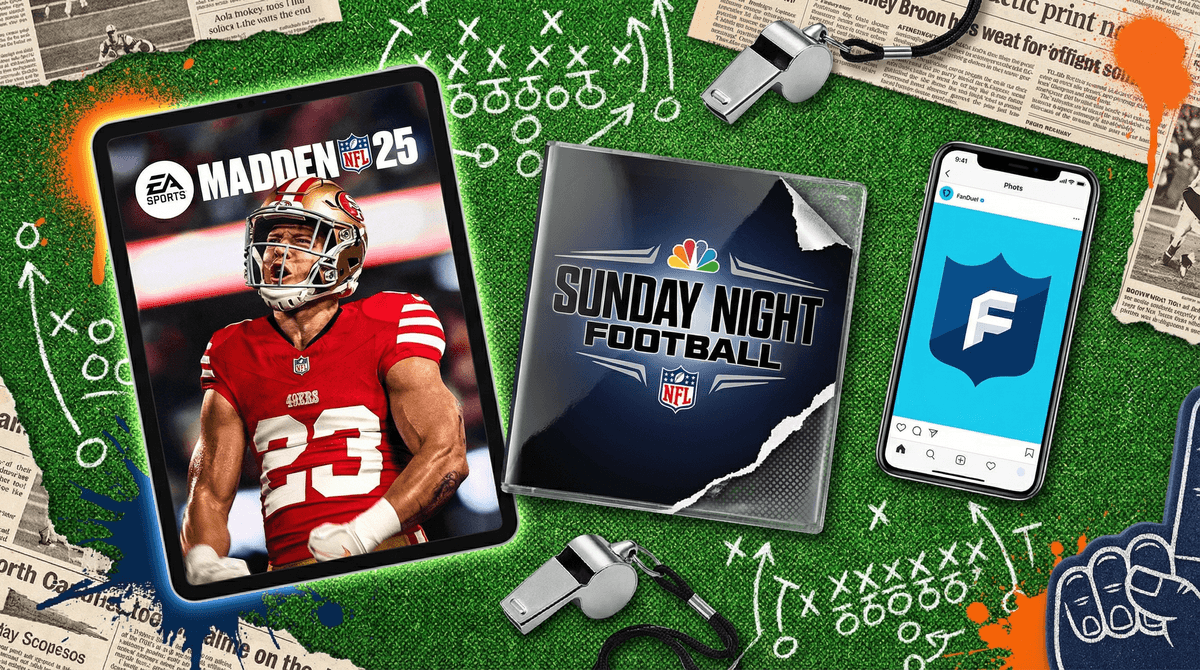
Sunday Football is basically a weekly American tradition where millions of families gather around screens to watch NFL games from roughly 1pm to 11:30pm ET every Sunday during football season (September through February).
But here's the thing – it's evolved way beyond just watching the game on TV.
Now Sunday Football means:
- Kids playing Madden NFL on their consoles while the real games are on
- Fantasy football apps being checked obsessively (yes, by 10-year-olds)
- Group chats blowing up with trash talk and memes
- YouTube highlights and TikTok replays dominating feeds
- Betting apps and prop bets (which kids definitely notice)
- Second-screen experiences where nobody's watching just one thing
For many families, Sunday Football is a genuinely positive tradition – quality time, teaching moments about sportsmanship, shared excitement. But the digital layer has made it... complicated.
And if you're a parent trying to figure out how to navigate screen time rules when YOU'RE the one glued to your phone checking your fantasy lineup while your kid asks for the iPad... yeah, we see you. No judgment here.
Let's be real about why Sunday Football hooks kids beyond just "sports are fun":
The social currency is real. Monday morning at school, kids are talking about that insane catch, that controversial call, that celebration dance. Not knowing what happened can feel like social isolation, especially for kids in 3rd grade and up.
Fantasy football makes them feel grown-up. Managing a team, making strategic decisions, competing against adults – it's intoxicating for kids who are constantly told what to do. Plus, they're often genuinely good at it, which feels amazing.
The gaming connection is seamless. Kids who play Madden feel like they understand football strategy. They recognize players, know the teams, can talk stats. The game and the sport feed each other in an endless loop.
It's family bonding time... with screens involved. Here's the complicated part – for many families, Sunday Football IS quality time together. But everyone's on a different device. Dad's watching the game. Mom's on her fantasy app. Kid's playing Madden. You're together but also... not?
The content is everywhere. Even if your kid doesn't watch the actual games, the highlights, memes, and moments flood their feeds. NFL content is designed to go viral, and it works.
Ages 5-7: The Casual Observers
At this age, most kids aren't really "watching" football – they're in and out, more interested in the snacks and halftime show.
What's appropriate:
- Watching parts of games as family time
- Playing football outside during commercials
- Simple explanations of rules when they ask
- Celebrating touchdowns together
What to watch for:
- Violence in commercials (movie trailers, etc.)
- Aggressive behavior from mimicking tackles
- Boredom leading to whining for devices
- Beer commercials and gambling ads (yes, already)
The real talk: This age is actually pretty easy. They're not deep into it yet. Enjoy this phase.
Ages 8-12: The Fantasy Football Years
This is when it gets real. Kids this age want to understand the game, join fantasy leagues, and feel included in the Sunday ritual.
What's appropriate:
- Participating in family fantasy leagues
- Learning about stats, strategy, and sportsmanship
- Watching games together with conversation
- Playing Madden with time limits
- Following favorite players/teams
What needs boundaries:
- Screen time limits (even on Sundays)
- No money involved in fantasy leagues
- Monitoring trash talk in group chats
- Teaching about gambling ads they're seeing
- Balancing football with other activities
The reality check: A 10-year-old managing a fantasy team is checking their phone constantly. "But I need to see if my player scored!" is the new "But I'm about to level up!" You need a plan for this.
Ages 13-17: The All-In Phase
Teens are fully immersed in football culture – the games, the fantasy leagues, the social media, the sports betting conversations, all of it.
What's appropriate:
- Managing their own fantasy teams
- Watching games independently or with friends
- Understanding advanced strategy and stats
- Engaging in (respectful) trash talk
- Following NFL content creators
What needs serious conversations:
- Sports betting normalization
- Healthy vs. obsessive fandom
- Handling disappointment when teams lose
- Time management during football season
- Recognizing manipulation in gambling ads
The honest truth: Your teen probably knows more about football than you do. That's fine. Your job isn't to be the expert – it's to help them maintain balance and recognize when entertainment becomes unhealthy.
The Gambling Elephant in the Room
We have to talk about this. Sports betting is now legal in most states, and the advertising is RELENTLESS during NFL games.
Your kids are seeing:
- Constant betting app commercials
- Announcers discussing point spreads
- Celebrities promoting gambling
- "Prop bets" presented as harmless fun
- The normalization of risking money on games
What to do: Start conversations early. "Did you notice how many commercials are about betting? Why do you think they advertise so much?" Help them understand that gambling companies spend billions on advertising because they make money when people lose.
For teens, be direct: "These apps are designed to make gambling feel fun and easy. But most people lose money, and gambling addiction is real."
The Fantasy Football Obsession
Fantasy football can be genuinely great for kids – it teaches math, strategy, research skills, and how to handle disappointment. But it can also create anxiety and obsessive phone-checking.
Red flags to watch for:
- Constantly checking scores during school/homework
- Genuine emotional distress over fantasy performance
- Conflict with family/friends over fantasy leagues
- Sleep disruption from late games
- Inability to enjoy games without fantasy stakes
Healthy boundaries:
- No checking during homework/dinner/school
- Family leagues only (no money, no strangers online)
- Teach that it's literally just for fun
- Model healthy behavior with your own fantasy team
The Screen Time Paradox
Here's the awkward part: Sunday Football often means 6-8 hours of screen time. For everyone. Including you.
And if you've been limiting your kid's screen time all week, then Sunday rolls around and the whole family is glued to various screens... they notice the hypocrisy.
A better approach: Be honest about it. "Sunday Football is our family's exception day for screens. But we're experiencing it together, and we're talking about what we're watching. That's different from isolated screen time in your room."
Make it actually social:
- Talk about the game together
- Share funny moments
- Explain interesting plays
- Make it interactive, not just parallel screen time
The Violence Question
Football is a violent sport. Players get injured. Some plays are genuinely scary. And we're learning more about CTE and long-term brain damage every year.
Your kids might ask: "Why do people play if it hurts them?"
Don't dodge it: "That's a really good question. Football players choose to play because they love it, and they're paid well. But yes, it can cause serious injuries. That's why there are rules to make it safer, and why you need proper equipment if you ever want to play."
For older kids, have real conversations about player safety, the NFL's responsibility, and the ethics of watching a dangerous sport for entertainment.
For Younger Kids (5-10):
Instead of: "Stop asking to check your fantasy team!"
Try: "I know you're excited about your team! We can check scores together during halftime. What do you think will happen in the game?"
For Tweens (10-13):
Instead of: "You're obsessed with football. It's too much."
Try: "I've noticed you're really into football this season. What do you love about it? Let's figure out how to make time for football AND your other interests."
For Teens (13+):
Instead of: "Those gambling ads are everywhere. Don't ever do that."
Try: "These betting apps are advertising hard during games. Have you noticed? They make it look fun, but they're designed so most people lose money. What do you think about that?"
Online Interactions
If your kid is in fantasy leagues or NFL-related Discord servers or group chats:
- Know who they're interacting with
- Check in on the trash talk (is it friendly or mean?)
- Make sure they're not in adult-only spaces
- Watch for strangers trying to connect
Commercial Literacy
Use Sunday Football as a teaching opportunity:
- Count how many gambling ads appear
- Discuss why beer companies sponsor sports
- Talk about how commercials manipulate emotions
- Point out when announcers are basically advertising
Physical Safety
If your kid wants to play actual football:
- Proper equipment is non-negotiable
- Flag football is a great alternative
- Understand the concussion risks
- Don't let them play through pain
Sunday Football isn't inherently good or bad for kids. Like most things in modern parenting, it's complicated.
It can be genuine quality family time, a way to teach sportsmanship and strategy, and a connection point with peers. It can also be 8 hours of screen time, exposure