

Stranger Things for 12-Year-Olds: Season-by-Season Age Guide
Season 1: Generally fine for most 12-year-olds
Season 2: Still okay, but ramps up intensity
Season 3: Getting dicey—more gore, body horror
Season 4: Absolutely not for 12-year-olds (seriously)
If your tween is begging to watch Stranger Things, the answer isn't simple yes or no—it's "which season?" Because while Season 1 is a nostalgic coming-of-age adventure that happens to have a monster, by Season 4 we're in full-blown horror territory with graphic violence that would make Stephen King wince.
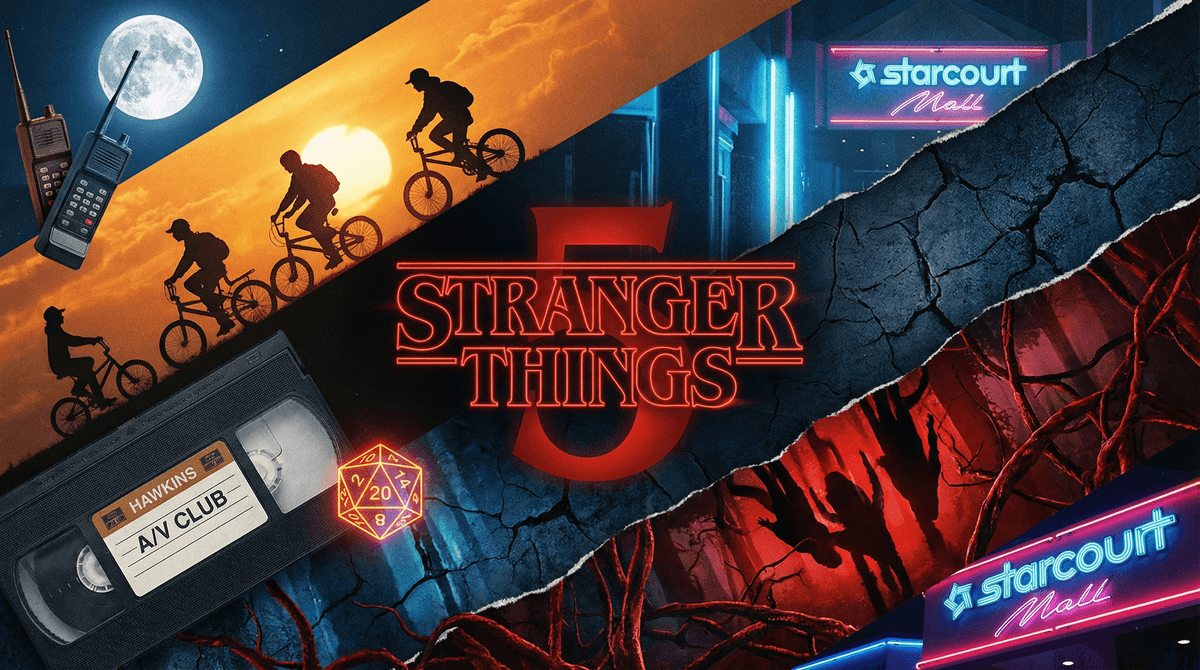
Stranger Things occupies this weird space where it looks like it's for kids—the main characters are tweens and teens, it's set in the '80s with bikes and walkie-talkies, and it has that Spielberg-esque sense of adventure. But it's rated TV-14 for a reason, and that rating becomes increasingly justified as the seasons progress.
The show also has massive cultural cachet. If your 12-year-old hasn't seen it, they're probably hearing about it constantly. The Duffer Brothers created something that bridges generations—parents love the nostalgia, kids love the adventure and friendship dynamics. Which makes it even harder when you have to explain why Season 4 is off-limits.
Season 1: The Sweet Spot for Tweens
The Good: Season 1 is essentially a love letter to '80s adventure films like E.T. and The Goonies. Four friends search for their missing buddy, there's a girl with superpowers, and a parallel dimension called the Upside Down. The violence is mostly implied or happens off-screen. The Demogorgon (the monster) is scary but not gratuitously gory.
The Concerns:
- Some jump scares that are genuinely frightening
- A few disturbing scenes of Eleven's trauma in the lab
- Bullying that feels very real (and might hit close to home)
- Some language (mostly "shit" and "ass")
- Brief references to adult themes (Barb's death is sad but not graphic)
Verdict for 12-year-olds: Most kids this age can handle it, especially if they've seen Jurassic Park or similar PG-13 fare. The scary parts are balanced by genuine warmth and humor. Watch it with them the first time to gauge their comfort level.
Season 2: Still Manageable
The Good: The core friend group remains the heart of the show. New character Max adds dimension. The "found family" theme deepens as the kids band together against a new threat.
The Concerns:
- More intense monster sequences (the Demodogs are creepier than Season 1's Demogorgon)
- A particularly disturbing scene involving Bob's death (it's graphic and happens on-screen)
- Eleven's backstory gets darker with the introduction of other lab experiments
- More language throughout
- Romantic storylines between teens (nothing explicit, mostly awkward first relationships)
Verdict for 12-year-olds: Still in the "probably okay" zone for most tweens, but Bob's death scene is rough. You might want to fast-forward through it or give a heads-up. If your kid was fine with Season 1, they can likely handle Season 2 with some parental guidance.
Season 3: Proceed with Caution
The Good: The mall setting is fun, the '80s nostalgia is cranked up, and the character dynamics continue to be the show's strength.
The Bad: This is where things take a hard turn toward horror.
- Body horror: People literally melting into goo and fusing together into the Mind Flayer's avatar
- More graphic violence overall
- Torture scenes (not of kids, but still disturbing)
- Significantly more language
- More mature romantic content (still tame by adult standards, but definitely teen-focused)
Verdict for 12-year-olds: This is the season where I'd start pumping the brakes for many tweens. The body horror is genuinely disturbing—not "cover your eyes for a second" scary, but "might have nightmares for weeks" scary. If your 12-year-old is particularly sensitive or anxious, Season 3 might be where you draw the line.
Season 4: Hard Pass for Tweens
Why it's different: Season 4 isn't just scarier—it's a different show entirely. The Duffer Brothers leaned fully into horror, and the result is genuinely disturbing content that's inappropriate for most 12-year-olds.
Specific concerns:
- Vecna's kills are graphic: Bones breaking, eyes exploding, bodies contorting in horrific ways
- Extended torture and violence
- Psychological horror that's more sophisticated and disturbing than previous seasons
- Mature themes around trauma, PTSD, and survivor's guilt
- More explicit language throughout
- Episodes are movie-length (some over 2 hours), which means sustained intensity
Verdict for 12-year-olds: No. Just no. Even mature 12-year-olds don't need this level of graphic violence. The show has evolved past its tween-friendly origins into legitimate horror. If they're begging to watch because their friends have, have a conversation about why different families have different rules and offer age-appropriate alternatives.
The peer pressure is real: According to various surveys, a significant percentage of tweens have watched Stranger Things, which means your 12-year-old is likely hearing about it constantly. They're not making it up when they say "everyone" has seen it.
Spoilers are everywhere: Between TikTok, YouTube, and school conversations, your kid probably already knows major plot points even if they haven't watched. This can actually work in your favor—they might be satisfied with knowing what happens without needing to see the graphic parts.
The soundtrack slaps: One compromise? Let them listen to the music. Season 4's use of Kate Bush's "Running Up That Hill" introduced a whole generation to '80s music. The soundtrack is genuinely great and gives them something to connect with their friends about.
Context matters: A 12-year-old who devours horror books and has watched Coraline fifty times is different from a 12-year-old who got scared during Encanto. You know your kid better than any rating system.
If your tween wants that "kids on an adventure" vibe without the graphic horror:
- The Mysterious Benedict Society: Smart kids solving mysteries, found family vibes, zero body horror
- Gravity Falls: Supernatural mystery with humor and heart, appropriate scares for tweens
- Percy Jackson: The new Disney+ series has adventure and monsters without the gore
- Lockwood & Co: Teens hunting ghosts in London, genuinely creepy but not graphic
- A Series of Unfortunate Events: Dark humor and peril without graphic violence
For more options, check out adventure shows for tweens.
If they've already watched it at a friend's house: Don't freak out. Ask what they thought, what scared them, and use it as a conversation starter about media choices. Punishment rarely works as well as discussion.
If they're begging to watch: Consider these options:
- Watch Season 1 together and reassess
- Let them read episode summaries to satisfy curiosity without the visuals
- Agree on a future date when they can watch (13th birthday, for example)
- Explain why you're saying no—tweens can handle nuanced reasoning
If you're co-parenting with different opinions: This is genuinely tough. Try to find compromise—maybe one parent pre-screens episodes, or you agree on specific seasons that are okay.
Seasons 1-2: Most 12-year-olds can handle these with parental guidance. Watch together, talk about the scary parts, and use it as an opportunity to discuss friendship, bravery, and standing up to bullies.
Season 3: This is the judgment call season. Know your kid. If they're sensitive or anxious, wait. If they're mature and have handled similar content well, proceed with caution.
Season 4: Wait. Seriously. There's no rush. The show will still be there when they're 14 or 15, and the graphic violence isn't something you can un-see.
The good news? Stranger Things isn't going anywhere. Unlike the actual '80s when the show is set, we have the luxury of streaming—which means you can let your kid grow into the later seasons rather than trying to force maturity that isn't there yet.
And if you need more help navigating these conversations, check out how to talk to kids about scary content or explore other shows that balance adventure with age-appropriate content.