

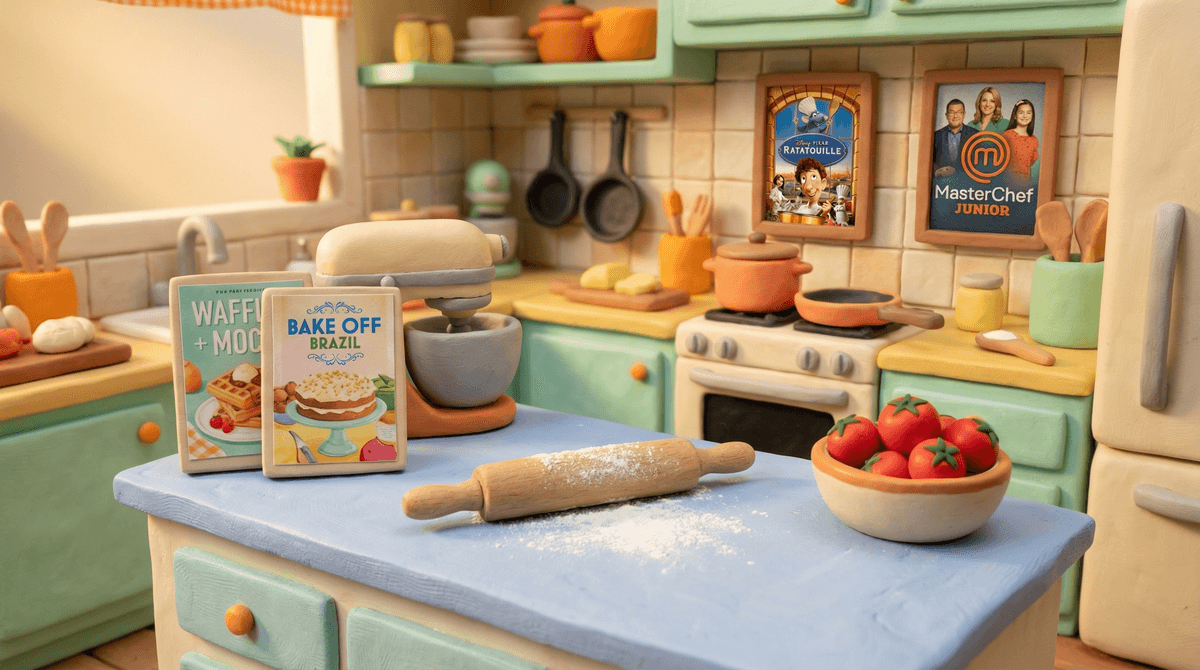
Look, we're not talking about those old-school cooking shows your parents watched on PBS. Today's food content for kids is a whole universe—from competitive cooking shows where kids actually run the kitchen, to animated adventures where food is literally the main character, to documentaries that make farm-to-table actually interesting for an 8-year-old.
The food content landscape has exploded in the last few years, and honestly? A lot of it is genuinely good. We're seeing everything from Waffles + Mochi teaching nutrition without being preachy, to Ratatouille making fine dining relatable for elementary schoolers, to competitive shows that treat kid chefs with actual respect.
According to our community data, about 80% of families are using Netflix, and 80% have Disney+, which is great news because that's where most of the quality food content lives. Meanwhile, 80% of kids are watching YouTube either supervised or solo—and let me tell you, the food content rabbit hole on YouTube is DEEP (more on that in a bit).
Kids who gravitate toward food shows often love the transformation aspect—watching raw ingredients become something completely different. There's genuine science happening (chemistry! biology! physics!), creativity and self-expression, immediate results, and often a competitive element that's engaging without being mean-spirited.
Plus, food is one of those rare topics that bridges ages. A 6-year-old and a 12-year-old can both watch the same baking show and get different things out of it. The younger kid sees colorful cakes, the older one is mentally calculating ratios and techniques.
Some kids are drawn to the competitive cooking shows because they love the challenge and strategy. Others prefer the cozy, educational content where the stakes are low and everyone's just learning together. And then there are the kids who want pure entertainment—anthropomorphic food having adventures, thank you very much.
For Younger Kids (Ages 4-8):
Waffles + Mochi on Netflix is genuinely delightful—Michelle Obama hosts puppets on a global food adventure, and it never feels like vegetables are being shoved down anyone's throat. Ratatouille remains the gold standard for "food as art" messaging. And Bluey's "Shops" episode isn't food-focused per se, but the pretend play around running a restaurant is chef's kiss (pun intended).
For Middle Elementary (Ages 7-10):
Nailed It! is chaotic and hilarious—amateur bakers failing spectacularly at recreating professional cakes. The humor is goofy, not mean. The Great British Baking Show: Junior brings that trademark British kindness to kid competitors. And Chef's Table might seem like an odd choice, but the "Pizza" episode is genuinely mesmerizing for kids who can handle a slower pace.
For Tweens and Teens (Ages 10+):
MasterChef Junior treats young chefs like actual professionals—Gordon Ramsay is surprisingly gentle with kids while still maintaining standards. Ugly Delicious with David Chang explores food culture and identity in ways that spark great conversations. Julie & Julia works for older tweens who can appreciate the dual timeline structure.
Here's where it gets tricky. YouTube food content ranges from genuinely educational (Tasty, Bon Appétit) to... questionable. The algorithm loves extreme content—giant food, food challenges, mukbangs, those videos where someone makes a "cake" that looks like a shoe.
If your kid is in that 80% watching YouTube, the supervised approach makes sense here. Not because food content is inappropriate, but because the consumption patterns around food content can get weird fast. Watching someone eat 10,000 calories in one sitting isn't exactly modeling healthy relationships with food.
That said, channels like Tasty (the recipe videos, not the "we made a 50-pound burrito" content) are actually useful. Kids can follow along and make real food. Binging with Babish recreates food from movies and TV shows with actual technique instruction—great for older kids who want to level up their skills.
The Inspiration-to-Kitchen Pipeline:
Be prepared for your kid to want to actually cook after watching this stuff. This is mostly good! Cooking is a life skill, builds confidence, involves real math and science. But it also means your kitchen might become a flour-covered disaster zone. Setting up a "yes, but" framework helps: "Yes, you can try making macarons, but we need to plan it for Saturday morning when we have time to clean up."
Body Image and Food Content:
Most of the quality shows handle food in healthy ways—it's about creativity, culture, technique, not about restriction or "good" vs "bad" foods. But keep an eye out for content that veers into diet culture territory. Competitive shows sometimes include weight loss narratives that aren't great for developing brains.
The Consumerism Angle:
Food shows love fancy equipment. Your kid will 100% start asking for a stand mixer, a pasta maker, specialty pans. This is actually a decent opportunity to talk about how marketing works and whether tools actually matter (spoiler: not as much as technique).
Ages 4-7: Stick with shows that emphasize exploration and fun over competition. Cooking together while watching is ideal—they're at the age where parallel play (you both cooking, side by side) is engaging.
Ages 8-11: Competition shows work well here. They understand rules, fairness, and can handle the tension of elimination formats. This is also prime age for starting to cook independently with supervision.
Ages 12+: They can handle more complex content about food systems, culture, and industry. Documentaries like Salt Fat Acid Heat aren't just entertaining—they're genuinely educational about how cooking actually works.
Food content for kids has come a long way from "here's how you crack an egg" instructional videos. The best stuff treats food as culture, art, science, and joy—not just fuel. It inspires creativity, teaches actual skills, and creates opportunities for family connection (cooking together is quality time that also produces dinner—efficiency!).
The key is curating intentionally. Not all food content is created equal, and the YouTube algorithm doesn't care about your family values. But with some guidance, food shows and movies can be genuinely enriching screen time—and might even result in your kid making you breakfast in bed.
Next Steps: Check out alternatives to YouTube if you want more curated food content, or explore shows that teach real skills for more hands-on learning content.