

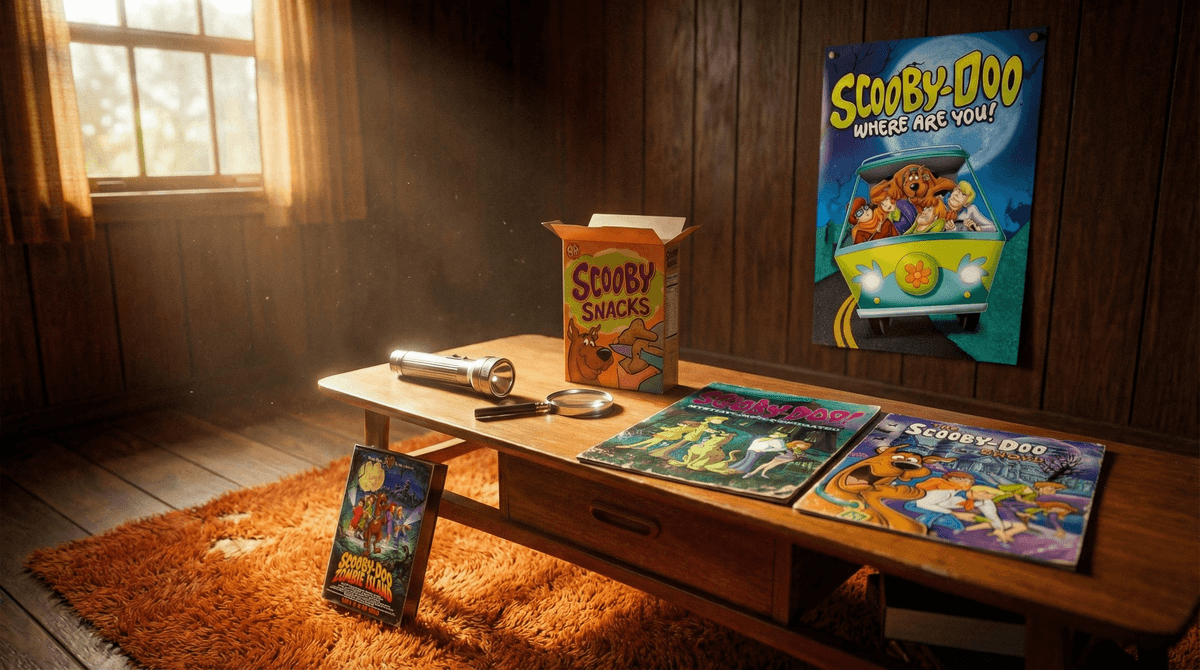
Scooby-Doo is one of those rare pieces of media that has genuinely earned the title "timeless." First appearing in 1969 with Scooby-Doo, Where Are You!, this animated series follows four teenagers—Fred, Daphne, Velma, and Shaggy—and their talking Great Dane, Scooby-Doo, as they solve mysteries involving supposedly supernatural creatures that invariably turn out to be regular people in masks.
The franchise has spawned dozens of series iterations, direct-to-video movies, theatrical films, and enough merchandise to fill the Mystery Machine ten times over. When we talk about Scooby-Doo today, we're really talking about a whole universe of content spanning multiple generations, from the classic 1960s episodes to more recent iterations like Mystery Incorporated and Velma (though we'll get to that one in a minute).
The core formula remains wonderfully consistent: the gang arrives in a new location, encounters a "monster," investigates with varying degrees of competence, Shaggy and Scooby get scared and accidentally stumble upon clues while looking for snacks, and eventually they unmask the villain who inevitably says some variation of "I would have gotten away with it too, if it weren't for you meddling kids!"
The appeal is pretty straightforward: it's spooky without being truly scary. The monsters look frightening at first, but kids quickly learn the pattern—there's always a rational explanation. It's like training wheels for horror, teaching kids that things that seem scary can often be understood and solved with logic and teamwork.
The humor lands across age groups too. Younger kids laugh at Scooby and Shaggy's physical comedy and their endless appetite. Older kids start appreciating the formula itself, the predictability becoming part of the charm. And honestly? The "guy in a mask" reveal never really gets old.
There's also something deeply satisfying about the problem-solving aspect. Unlike a lot of modern kids' content that's pure chaos and stimulation, Scooby-Doo episodes follow a clear structure: problem, investigation, solution. Kids can follow along, look for clues, and feel smart when they guess the villain before the reveal.
Here's where it gets a bit complicated for parents: not all Scooby-Doo content is created equal.
The classic series (Scooby-Doo, Where Are You! and The New Scooby-Doo Movies) are perfect for younger kids—ages 5 and up can handle them easily. The animation is dated but charming, the mysteries are simple, and the scares are extremely mild.
What's New, Scooby-Doo? (2002-2006) is probably the sweet spot for most families—modernized animation, better writing, and still appropriate for elementary schoolers while being entertaining enough that you won't want to leave the room.
Scooby-Doo! Mystery Incorporated (2010-2013) is where things get more sophisticated. This series has an actual ongoing plot, character development, and some genuinely creepy moments. It's aimed more at tweens and teens, and honestly? It's legitimately good television. If you have kids ages 10+, this is the version that might surprise you with its storytelling quality.
Then there's Velma (2023), the HBO Max adult animated series that... look, let's just say it's not for kids. At all. It's rated TV-MA, features adult themes and language, and has basically nothing in common with the franchise except character names. If your teen has heard about it and wants to watch, that's a conversation about mature content, not a Scooby-Doo conversation.
Ages 4-7: Stick with the classics or What's New, Scooby-Doo? The formula is comforting, the scares are manageable, and episodes are short enough for attention spans. Some kids this age might still find the monsters a bit much—you know your kid best. The "it's always a person in a mask" reveal is actually a great teaching moment about fear and rational thinking.
Ages 8-11: Pretty much any of the traditional Scooby series work here. Mystery Incorporated might be perfect for the upper end of this range, especially for kids who are ready for slightly more complex storytelling and sustained plot lines.
Ages 12+: If they're still interested in Scooby (and many are, often ironically at first before getting genuinely invested), Mystery Incorporated is great. The various direct-to-video movies can be hit or miss—some are surprisingly well-made, others are pure cash grabs. The live-action movies (2002's Scooby-Doo and its sequel) are PG but have some mild innuendo that goes over younger kids' heads.
The beauty of Scooby-Doo is that it's one of the safest bets in the streaming landscape. In our Screenwise community data, about 92% of families use TV/streaming services, and when parents are looking for something that won't make them cringe or worry, Scooby-Doo consistently delivers.
The values embedded in the show are genuinely positive: friendship, critical thinking, courage despite fear, and teamwork. Velma is consistently portrayed as the smartest member of the gang (and this has been true since 1969, which is pretty remarkable). The mysteries reward observation and logic. And while Shaggy and Scooby are cowards, they always come through when their friends need them.
The scariest thing about Scooby-Doo might actually be how much content there is to navigate. With dozens of series and movies available across Netflix, HBO Max, and other platforms, it can be overwhelming to figure out what's appropriate. When in doubt, start with the older stuff—it's aged surprisingly well and the animation style itself signals to kids that this is "safe" retro content.
One thing to watch: the snack obsession. Shaggy and Scooby's entire personality revolves around eating, often junk food. For most kids this is harmless comedy, but if you're working on nutrition conversations or have a child with disordered eating patterns, it's worth being aware that food is a constant punchline.
Scooby-Doo is that rare piece of children's media that actually lives up to its reputation as a classic. It's not going to rot anyone's brain, it teaches problem-solving and critical thinking, and it's genuinely enjoyable across age ranges.
Is it high art? No. Will it teach your kids advanced STEM concepts? Also no. But it's a reliable, safe, entertaining option that encourages kids to think logically about problems and not take scary things at face value. In a media landscape where parents are constantly worried about age-inappropriate content, algorithm-driven rabbit holes, and overstimulating nonsense, Scooby-Doo is refreshingly... fine. And sometimes "fine" is exactly what you need.
If your kids haven't discovered it yet, it's worth introducing. And if they're already fans? You could do so much worse. Just maybe skip Velma until they're adults with their own streaming accounts.
Pro tip: The direct-to-video movies vary wildly in quality. Scooby-Doo on Zombie Island (1998) and Scooby-Doo and the Witch's Ghost (1999) are genuinely good and slightly scarier than the TV series—great for kids ready to level up. Most of the others are perfectly adequate Saturday morning entertainment.