

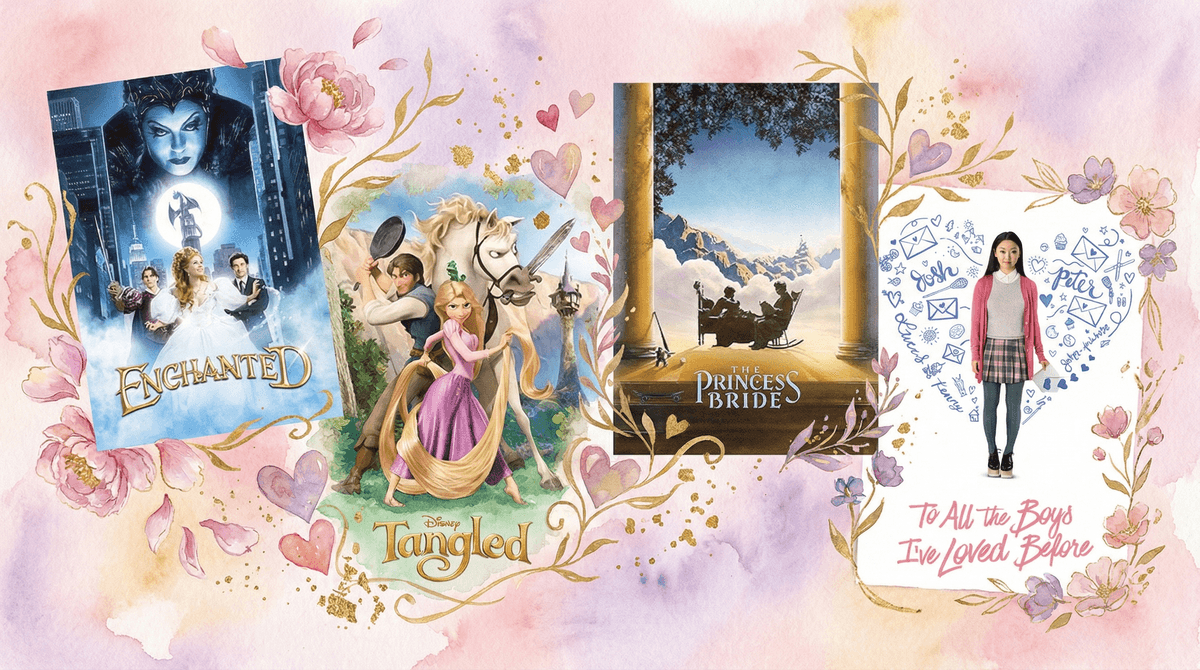
Look, we need to talk about romance movies. Not the steamy ones you watch after the kids are asleep, but the ones that pop up on family movie night — the rom-coms, the period dramas, the animated love stories that have your 8-year-old asking questions you weren't quite ready to answer.
Romance movies for families are films that feature romantic relationships as a central plot point but are designed (or at least appropriate enough) for younger viewers. We're talking everything from The Princess Bride to To All the Boys I've Loved Before, from Disney classics to modern teen rom-coms that your tween is begging to watch because "literally everyone at school has seen it."
Here's the thing: romance movies aren't just entertainment. They're teaching moments disguised as popcorn nights. Whether we like it or not, these films are shaping how our kids think about relationships, consent, what's "romantic" versus what's actually kind of creepy, and what healthy love looks like.
Romance is everywhere in kids' media, even when we're not looking for it. Every Disney movie has a love story. Every YA novel has a romantic subplot. Kids are naturally curious about relationships — it's developmentally normal and healthy.
For younger kids (ages 6-10), romance in movies is often about the fairy tale: the grand gesture, the happy ending, the idea that love conquers all. It's simple, it's safe, and it's usually wrapped up in 90 minutes.
For tweens and early teens (ages 11-14), romance movies become more complex. They're watching characters navigate first crushes, rejection, heartbreak, and figuring out who they are through relationships. These movies feel real to them in a way that animated princess stories don't anymore.
And honestly? Romance movies can be a gateway to conversations that would otherwise be awkward as hell. It's easier to talk about consent when you're discussing whether a movie character should have kissed someone without asking than it is to have that conversation in the abstract.
Not all romance movies are created equal, and some of the "classics" we grew up with are... yikes.
The good stuff:
- Movies that show communication, respect, and consent
- Stories where characters have identities beyond their romantic relationships
- Films that depict healthy conflict resolution
- Representation of diverse relationships and family structures
The problematic stuff we need to talk about:
- Grand gestures that are actually stalking (looking at you, Love Actually
 )
) - "No means yes if you try hard enough" narratives
- Toxic jealousy portrayed as romantic
- The idea that love "fixes" someone or that you should change yourself completely for a relationship
- Lack of consent in kissing scenes (especially in older films)
Here's where you get to be the film critic your kids didn't ask for but desperately need. When watching The Notebook (ages 14+), you can point out that threatening to fall off a Ferris wheel unless someone agrees to go out with you is manipulation, not romance. When watching 10 Things I Hate About You (ages 13+), you can discuss how Patrick's initial motivations were deceptive, even if the movie tries to redeem it.
Ages 6-10: Keep It Light and Magical
At this age, stick with animated films and gentle live-action movies where romance is sweet and simple. Think Tangled, Enchanted, or The Princess Bride (though heads up on some mild violence in that last one).
Key conversation points:
- What makes someone a good friend? (Foundation for healthy relationships)
- How do the characters treat each other?
- What does "true love" mean in this story?
Ages 11-13: Enter the Rom-Com
Tweens are ready for more realistic romance, but you'll want to preview anything with a PG-13 rating. To All the Boys I've Loved Before is genuinely great for this age — it shows a healthy relationship developing with communication and respect. The Half of It is beautiful and thoughtful, though better for mature 13-year-olds.
Skip: Most Netflix teen rom-coms are... not great. The Kissing Booth series is wildly popular but depicts controlling, toxic behavior as romantic. If your kid wants to watch it (and they will, because their friends have), watch it together and talk through the red flags.
Key conversation points:
- What are the signs of a healthy vs. unhealthy relationship?
- How do the characters handle disagreements?
- What would you do differently in this situation?
Ages 14+: Real Talk Territory
Older teens can handle more complex narratives, including ones that depict unhealthy relationships as cautionary tales. This is when you can watch films like The Fault in Our Stars, Lady Bird, or Everything Everywhere All at Once (which has a beautiful marriage at its core, despite all the multiverse chaos).
Key conversation points:
- How do people maintain their identity within a relationship?
- What does consent look like in different situations?
- How do you know when a relationship isn't working?
Preview is your friend. Common Sense Media is great, but also check the parents' guide on IMDb for specific scene descriptions. A PG-13 rating can mean anything from a single kiss to... significantly more than a single kiss.
Your family values matter here. Some families are comfortable with their 12-year-old watching a movie with kissing and mild innuendo. Others aren't. There's no universal "right" answer, but there should be consistency and clear communication about your family's boundaries.
Watch together, especially the first time. Yes, even if it's "awkward." The conversations that happen during and after these movies are where the real learning happens. Plus, you'll catch things your kid might not — both good and problematic.
Don't dismiss their interests. If your teen wants to watch a romance movie, that's normal and healthy. They're trying to understand something that will be part of their life. The worst thing you can do is shut down the conversation entirely.
Talk about the tropes. Help your kids become media-literate about romance narratives. Point out when movies show unhealthy dynamics. Celebrate when they show healthy ones. Ask questions like "Would you want someone to treat you that way?" or "How would you feel if a friend told you their partner did that?"
Instead of formal "talks," try these casual conversation openers during or after the movie:
- "That was sweet! What did you think about how they handled that disagreement?"
- "Okay, real talk — would that actually be romantic or kind of creepy in real life?"
- "What would you do if you were in that situation?"
- "Did you notice how [character] changed themselves completely for [other character]? What do you think about that?"
- "That ending was cute, but what do you think happens next? How do they handle actual problems?"
Romance movies aren't the enemy. Bad romance movies watched without context and conversation? Those can be problematic.
The goal isn't to shield kids from all romance in media (impossible) or to let them absorb whatever messages Hollywood wants to send (irresponsible). It's to watch alongside them, help them develop critical thinking skills, and use these movies as a springboard for conversations about healthy relationships, consent, respect, and what love actually looks like beyond the grand gestures and perfect lighting.
Also, real talk: some romance movies are just fun. The Princess Bride is a masterpiece. Crazy Rich Asians is gorgeous and has a lot to say about family and identity beyond the romance. Elemental uses a love story to talk about immigration and family expectations in a way that's actually profound.
The key is being intentional. Know what you're watching, watch it together when possible, and don't be afraid to pause and discuss. Your kids might roll their eyes, but they're listening.
Start building your family-friendly romance movie list. Check out our guide to the best romance movies for different age groups for specific recommendations.
Set some ground rules. Talk with your kids about previewing movies together, especially ones with romance as a central theme. Make it collaborative, not controlling.
Use the awkwardness. Yes, watching romance movies with your kids can be uncomfortable. That discomfort is actually useful — it signals that you're in territory worth discussing.
Remember: You're not trying to prevent your kids from ever thinking about romance. You're trying to help them develop healthy expectations and critical thinking skills. That's actually the more important work.
Want to talk through a specific movie your kid is asking to watch? We can help you figure out if it's right for your family.