

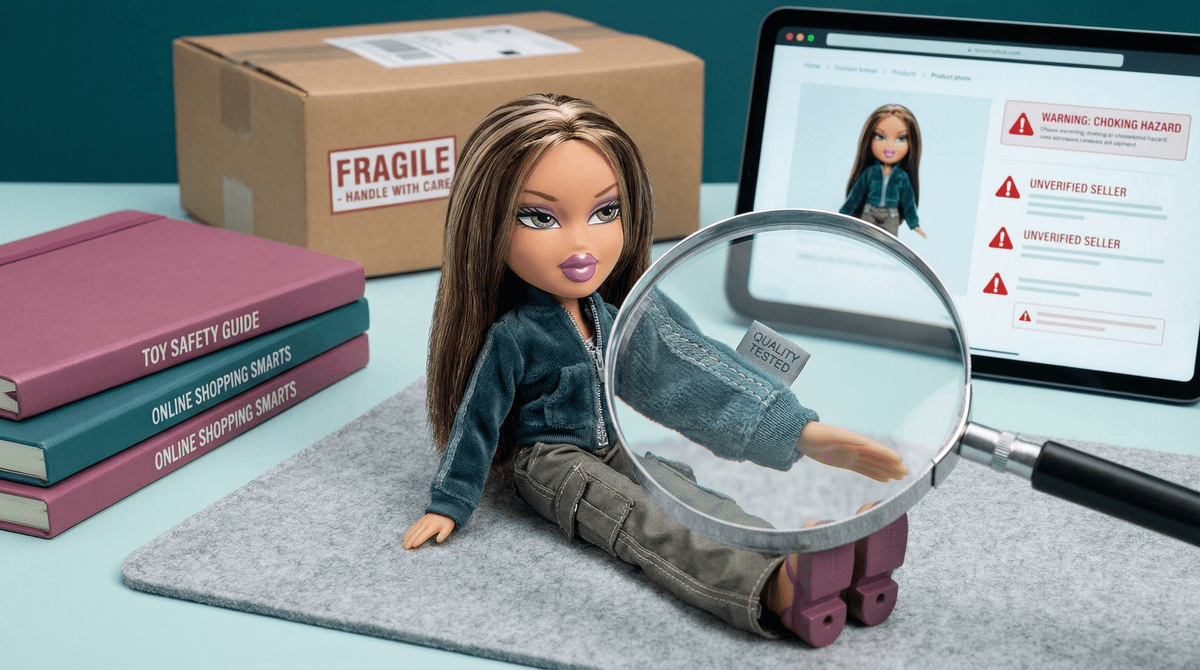
Spotting Fake Bratz Dolls: How to Shop Amazon Safely
TL;DR: The Bratz resurgence has brought a flood of counterfeits to Amazon that skip safety testing and quality standards. Here's how to spot fakes, protect your money, and keep your kids safe while hunting for those iconic dolls with "a passion for fashion."
If your kid is suddenly obsessed with Bratz dolls in 2026, welcome to the Y2K nostalgia wave that's hit Gen Alpha hard. These big-headed, glossy-lipped fashion dolls from the early 2000s are back in a major way—partly because of TikTok, partly because MGA Entertainment has been re-releasing them, and partly because kids love what their parents loved (until they don't).
But here's where it gets tricky: the secondary market for vintage and collectible Bratz on Amazon is absolutely flooded with counterfeits. And unlike knockoff handbags that just look cheap, fake toys can actually be dangerous—they skip the safety testing, use toxic materials, and have small parts that break off easily.
So if you're navigating Amazon trying to figure out if that $35 Cloe doll is legit or if you're about to get scammed, this guide is for you.
Bratz originally launched in 2001 and were the edgy alternative to Barbie—bigger heads, bolder makeup, streetwear fashion, and attitude for days. They were discontinued and relaunched a few times over the years, but the current resurgence is different.
Kids today are discovering Bratz through:
- TikTok nostalgia content and unboxing videos
- YouTube channels dedicated to doll collecting and restoration
- The 2024 Bratz re-release line from MGA Entertainment
- Older siblings or parents who kept their childhood collections
The problem? Demand is high, supply is inconsistent, and counterfeiters know parents will pay $30-60 for a "rare" doll without asking too many questions.
This isn't just about wasting money on a cheap knockoff (though that sucks too). Counterfeit toys bypass all the safety regulations that legitimate toys have to meet.
Here's what that means:
- No lead testing: Paint and plastics may contain lead or other heavy metals
- Choking hazards: Small parts that aren't secured properly and break off easily
- Toxic materials: Phthalates and other chemicals banned in children's products
- Fire risk: Some fake dolls use materials that don't meet flammability standards
The Consumer Product Safety Commission (CPSC) requires rigorous testing for toys sold in the U.S., but counterfeiters selling through third-party Amazon sellers completely skip this. They're not just breaking trademark law—they're putting kids at risk.
Check the Seller
Red flags:
- Seller name is a random string of letters/numbers or generic like "Best Toy Shop"
- No seller ratings, or ratings below 90%
- "Just Launched" badge or very few total reviews
- Ships from China with 3-4 week delivery (not always fake, but higher risk)
- Price is too good to be true (vintage Bratz in good condition rarely go for under $25)
Green flags:
- Seller is "MGA Entertainment" or "Amazon.com" directly
- Established seller with thousands of reviews and 95%+ rating
- Clear return policy and U.S.-based shipping
- Detailed photos showing actual item (not stock photos)
Read the Listing Carefully
Counterfeiters use sneaky language to avoid getting caught:
Watch for:
- "Bratz-style doll" or "Bratz-inspired" (not actual Bratz)
- "Fashion doll" without mentioning the brand name
- Vague descriptions like "collectible doll for girls"
- Stock photos that look professionally shot (stolen from MGA's catalog)
- Listings with multiple unrelated items (doll + random accessories that don't match)
Legitimate listings will:
- Say "Bratz" clearly in the title
- Include the specific character name (Yasmin, Cloe, Jade, Sasha)
- List the original release year or collection name
- Show actual photos of the item you're buying (especially for used/vintage)
- Have detailed condition descriptions for pre-owned dolls
Look at the Reviews
Red flags in reviews:
- Multiple reviews posted on the same day
- Generic language like "great product" or "my daughter loves it" with no specifics
- Photos showing different dolls than what's in the listing
- Complaints about quality, smell, or parts breaking immediately
- Reviews mentioning "not authentic" or "fake"
Pro tip: Sort reviews by "Most Recent" and look for patterns. If 10 people in the last month said it's fake, believe them.
Compare Prices
Real Bratz dolls (new or vintage in good condition) typically cost:
- New re-release dolls: $25-40
- Vintage dolls (2000s) in good condition: $30-80
- Rare collector editions: $100+
- Damaged or incomplete vintage: $15-25
If you're seeing a "rare vintage Bratz" for $15 with free shipping from overseas, it's fake. The math doesn't math.
Best Options:
- Amazon directly - Look for "Ships from and sold by Amazon.com" (not third-party sellers)
- MGA Entertainment official store - On Amazon or their own website
- Target, Walmart, or other major retailers - For new releases
- Mercari or Poshmark - Better for vintage, but verify seller reputation
- Local collectible/toy stores - Can inspect in person
- Facebook Marketplace - Meet in person, see before you buy
Avoid:
- Random third-party sellers with no history
- Listings that won't let you return items
- Sellers who ask you to complete the transaction off-platform
- "Wholesale lots" of supposedly rare dolls at suspiciously low prices
If it hasn't arrived yet:
- Check your order details—you may be able to cancel
If it's already delivered:
- Take photos immediately (packaging, doll, any defects)
- File an Amazon A-to-Z Guarantee claim within 90 days
- Select "Item not as described" or "Counterfeit item"
- Upload your photos as evidence
- Request a full refund (don't accept partial refunds for counterfeits)
Amazon's policy: They're supposed to take counterfeits seriously. If the seller refuses to cooperate, Amazon will usually side with you and issue a refund. Keep all documentation.
Don't: Let your kid play with a suspected counterfeit. The safety risks aren't worth it.
This is actually a great real-world lesson about online shopping, quality, and why "too good to be true" usually is.
Talk about:
- Why some sellers try to trick people with fake products
- How to tell if something is real or fake (quality, packaging, price)
- Why it matters (safety, supporting real creators, not wasting money)
- How to be a smart shopper (reading reviews, checking sellers)
If your kid is old enough to want specific collectibles, they're old enough to learn basic online shopping literacy. This is way more useful than memorizing state capitals.
Ages 5-8: You're doing all the shopping, but you can explain in simple terms: "Some people sell toys that aren't safe, so we have to be careful where we buy them."
Ages 9-12: They can help you check reviews and spot red flags. Good practice for future online shopping skills.
Ages 13+: They might be shopping with their own money or gift cards. Teach them to verify sellers, read return policies, and recognize scams. Learn more about teaching digital literacy to teens .
.
The Bratz resurgence is fun, and there's nothing wrong with kids wanting to collect dolls that have actual personality and style. But the Amazon marketplace is full of counterfeits that range from "disappointing" to "actually unsafe."
Your safety checklist:
- ✅ Buy from reputable sellers (Amazon direct, major retailers, or verified sellers)
- ✅ Check reviews carefully and look for red flags
- ✅ Compare prices—if it's too cheap, it's probably fake
- ✅ Read listings for sneaky language like "Bratz-style"
- ✅ Keep packaging and document everything in case you need to return
- ✅ File A-to-Z claims immediately if you receive a counterfeit
And if you want to avoid the whole mess? Stick to new releases from Target or Walmart, or hunt for vintage Bratz at local thrift stores where you can inspect them in person. The thrill of the hunt is half the fun anyway.
Next steps: If your kid is deep into doll collecting, consider teaching them about online marketplace safety and how to spot scams. It's a life skill that'll serve them way beyond Bratz dolls.